
These 5 ‘post-truth’ claims are fuelling the water wars in Australia
- Written by: Quentin Grafton, Australian Laureate Professor of Economics, Crawford School of Public Policy, Australian National University
The contest between truth and post-truth matters when trying to solve big public policy questions. One of these questions is how to sustainably manage water in Australia for the benefit of all.
Truths can be confirmed or, at the very least, can be proved false. Post-truths, however, are opinions that masquerade as facts and are not supported by verifiable evidence.
Post-truths muddy political and policy debates. They leave everyday people simply not knowing what to believe anymore. This prevents good policy being enacted.
As I outline in a speech to the National Press Club today, several post-truths, espoused by a wide range of people and organisations, are getting in the way of Australian water reforms. These reforms are essential to secure a better water future for the driest inhabitable continent.
Water policy in Australia is now at a crucial juncture. This year is the 20th anniversary of the National Water Initiative that was meant to lay the foundations for sustainable water management. The completion date of the Murray-Darling Basin Plan, accompanied by billions of dollars in funding, is just two years away.
Yet the so-called “water wars” are raging again. Here are five post-truth claims to watch out for.
1. Water buybacks to sustain rivers harm communities
The Australian government buys water rights from willing sellers to return water to the environment. These buybacks have been controversial and blamed, with little evidence, for causing many farmers to become distressed and bankrupt, and to leave farming.
It’s true some irrigators are opposed to buybacks and prefer subsidies to build more efficient irrigation infrastructure on their properties.
But converting state water licences to a system of tradeable water rights gifted irrigators rights now worth tens of billions of dollars. In return, the government was supposed to buy back enough water from willing sellers to return rivers to health.
But insufficient water has been bought back from irrigators, for a couple of reasons.
First, the federal budget for buybacks was much less than needed to reduce irrigators’ water use to sustainable levels.
Second, the Abbott government capped buybacks in 2015. Its justification was the post-truth claim, based on “low quality” consultant reports, that buybacks were “destroying” irrigation communities.
The truth is, buybacks from willing sellers are much more cost-effective than taxpayer-subsidised irrigation infrastructure. Research shows infrastructure subsidies give irrigators an incentive to use even more water.
And there is robust evidence that, overall, the net social and economic impacts of water buybacks are positive. They give sellers the flexibility to adjust their farming practices in ways that are best for them.
2. Efficient irrigation ‘saves’ water and increases stream flows
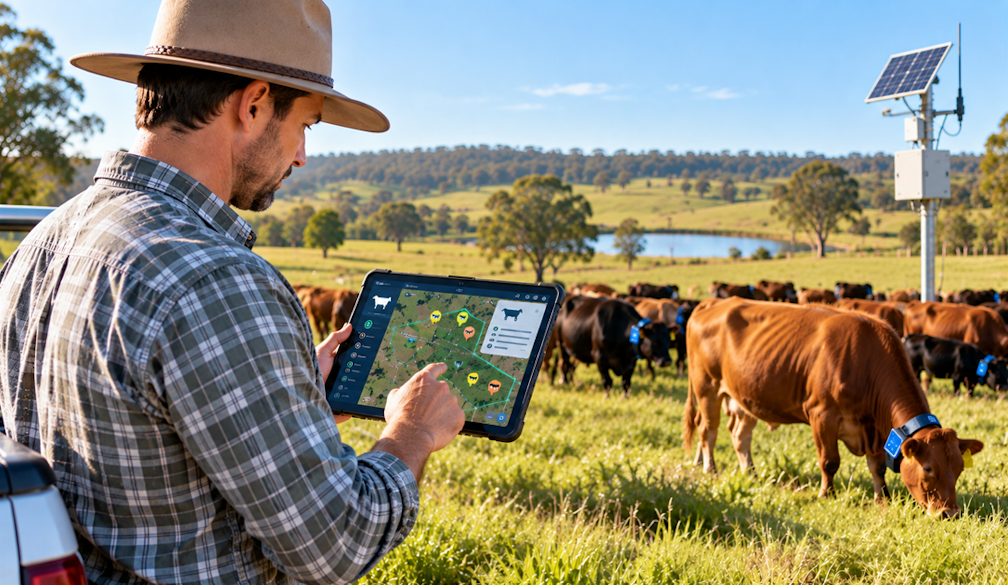
Australia’s irrigation industry, in general, uses water efficiently. It’s a result of many practices, ranging from drip irrigation to covered water channels to digital monitoring technology, among other things.
However, spending on irrigation efficiencies has not saved much water.
Landholders have been paid billions of dollars for efficiency improvements. These same taxpayer dollars, paradoxically, may have reduced stream flows in some of our largest rivers. That’s because more efficient irrigation can decrease the amount of water flowing from farmers’ fields to rivers and aquifers.
3. Australia has world-best water management
Australia has one of the world’s largest formal water markets. But that doesn’t mean everyone benefits.
For a start, the water markets are unjust. First Peoples, who were dispossessed of their land and water from 1788 onwards, still have only a tiny share of Australia’s water rights.
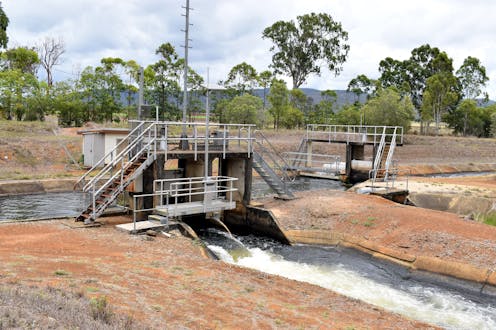
In key areas, Australian water management is also far from best practice. For example, building weirs and dams has partly or completely disconnected groundwater from surface water and prevented or restricted the water flows to floodplains and wetlands that keep them healthy.
Fish, bird and invertebrate habitats have been destroyed as a result. This must change if we are to avoid further degradation of river ecosystems.
There is no more obvious sign of the ongoing destruction of Australia’s waterways than the fish kills along the Baaka (Lower Darling River) at Menindee. This happened in 2018–19, during a drought, and again in early 2023, when there was no drought.
The New South Wales Office of the Chief Scientist and Engineer investigated the 2023 fish kill. Its report found:
Mass fish deaths are symptomatic of degradation of the broader river ecosystem over many years […] failure in policy implementation is the root cause of the decline in the river ecosystem and the consequent fish deaths.
4. All Australians have reliable access to good-quality water
It’s true that residents of Australia’s biggest cities and towns enjoy reliable, good-quality water supplies 24/7. But it’s also true that hundreds of thousands of Australians in rural and remote areas regularly face multiple drinking water threats.
These threats result in temporary public advice notices to boil water to remove microbiological pollution and health warnings about contaminants that boiling cannot remove, such as nitrates. A few dozen communities have elevated levels of the “forever chemicals”, PFAS, in their tap water.
5. Dams can ‘drought-proof’ Australia
It’s true that dams have helped Australia cope with variable rainfall from year to year. It’s also true, however, that despite building very large water storages in the 20th century, too much water is being diverted in multiple places. They include the Murray–Darling Basin, Australia’s “food bowl”.
Australia is over-extracting the available water in its dams. It’s happening in the northern Murray-Darling Basin, where there is little control over how much overflow from rivers onto floodplains can be taken.
Over-extraction is a big problem, especially during long droughts when there may be very little water to spare. It means the livelihoods of downstream irrigators with perennial plantings, such as grapes or fruit trees, are at stake. If their trees die, so do their businesses.
A sustainable future must be built on facts
Responding to Australia’s water crises is a huge challenge. It’s made even more difficult if we accept the post-truth claims, rather than verifiable facts about how we manage our waters.
Real reform is needed to secure a sustainable Australian water future. To achieve this, we must tell the truth, acknowledge what’s wrong and be clear about what works and what doesn’t.
Authors: Quentin Grafton, Australian Laureate Professor of Economics, Crawford School of Public Policy, Australian National University