

A tale of unhappy families summons the fierce politics of Louise Erdrich’s The Mighty Red
- Written by: Patrick Flanery, Chair in Creative Writing, University of Adelaide

“Happy families are all alike; every unhappy family is unhappy in its own way.” So begins Tolstoy’s Anna Karenina, first published in 1878, the year Russia’s imperial war against the Ottoman Empire concluded – a war that had prompted international alarm about Russian expansionism and fomented internal unrest.
The Mighty Red, the new novel by Pulitzer Prize and National Book Award winner Louise Erdrich, arrives at a moment with some uncanny historical parallels. Several of her characters read Anna Karenina, and her fiercely political book, like Tolstoy’s, offers its own sweeping canvas of unhappy families, infidelity and farming in an imperial nation.
At the heart of Erdrich’s novel is the centrality of family and the way unhappiness itself can be deeply political.
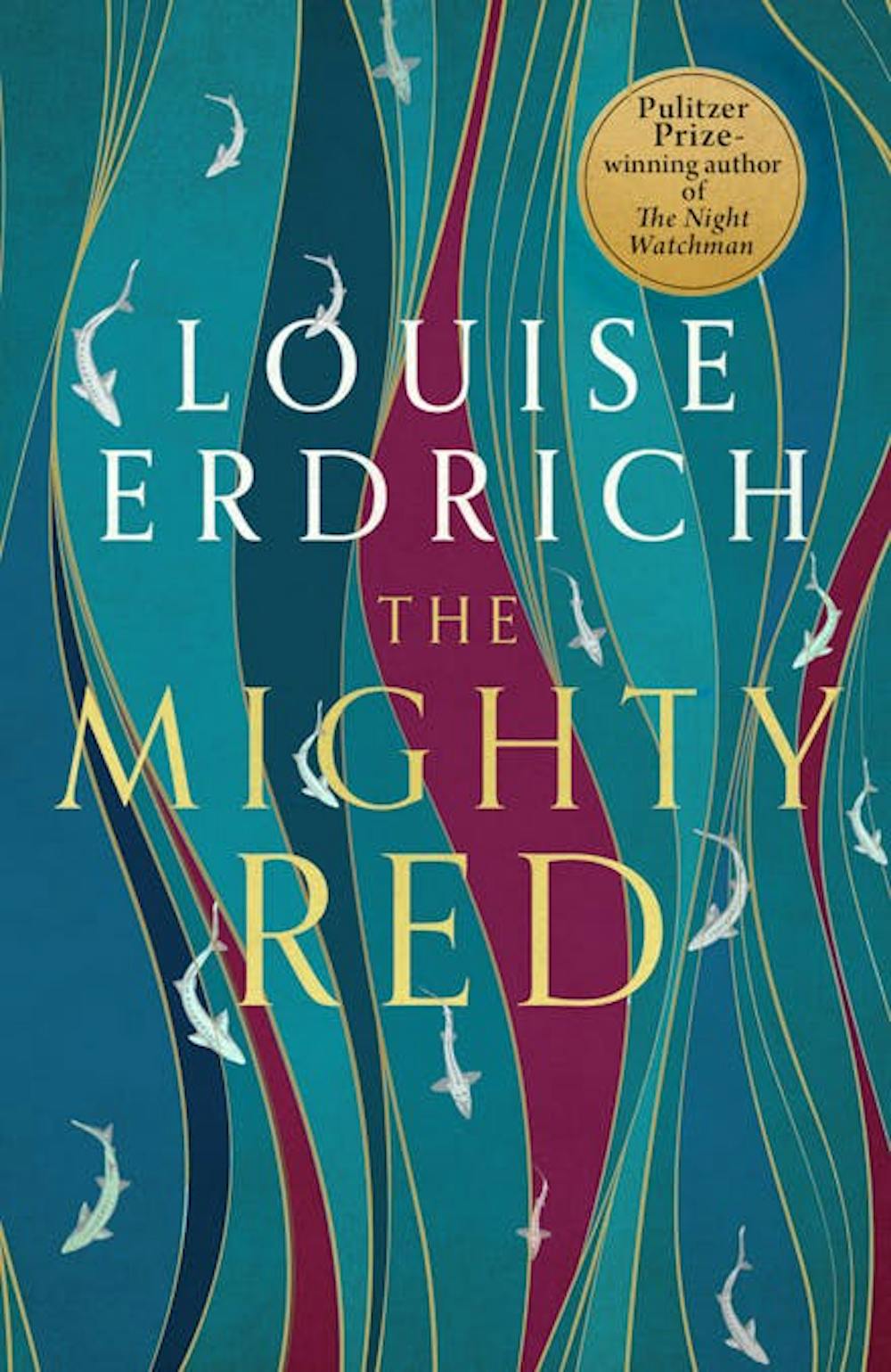
Review: The Mighty Red – Louise Erdrich (Hachette)
Set in the sugar-beet country of the Red River Valley along the eastern border of North Dakota and the booming oil fields of the state’s remote west, The Mighty Red is a complex drama of intertwined families, each suffering under its own distinct form of unhappiness.
This is country where native bison were hunted almost to extinction by European settlers and where, in our own time, “soil would be chemically altered to grow the beet, and industrial factories would spring up to make the beet into sugar”. As the poisons take hold, characters gradually awaken to the catastrophic changes: to the weird consistency of soils wrecked by chemicals, to the wholesale disappearance of birds and insects, and to unearthly “plumes of flame in the black fields” of oil extraction.
 Louise Erdrich.
Hachette Australis.
One of Erdrich’s great contributions to contemporary literature is the crafting of complex characters who hail from the economic and social margins of American life. In the hands of many other writers, such subjects are too often reduced to stock caricatures with uniform politics, predictable attitudes to gender, and a tendency to collapse into static crises of self-destruction. Stock working-class characters surrender their agency to resentment, anti-government paranoia or an unnuanced religiosity – or succumb to a ruinous cycle of intoxication and violence.
Erdrich’s characters are more believable for their nuanced and (undoubtedly for some readers) surprising range of attitudes, which run counter to any number of assumptions that continue to be made in media and literature about how farmers, truck drivers and manual labourers live, speak and think.
Among Erdrich’s most significant achievements in The Mighty Red are her depictions of truck driver Crystal Frechette and her bookish ex-goth daughter Kismet Poe, child of failed actor and itinerant drama teacher Martin Poe. The family name, we are told, was once Poésie. It has shortened over the decades so that the poetry has turned into a signifier of narrative darkness (as in, Edgar Allan Poe).
These three characters are “Turtle Mountain people who snagged each other in an oxbow on the Red River and got stuck there, like trash in the tree branches”. (Erdrich herself is a member of the Turtle Mountain Band of Chippewa.) Crystal hauls sugar beets from the farm of Winnie and Diz Geist, whose son, high school jock Gary, badgers Kismet into marrying him. In doing so, Kismet turns her back on dropout and autodidact Hugo, a bookstore owner’s son who appears to be her true love.
Crystal and Kismet realise that their precarity frames them in the wider culture as abnormal. They wear “75-percent-off clothing, from Alco, or from Thrifty Life”, while the rich locals shop in “Fargo or Minneapolis” and brag about it. Crystal makes her bread “from scratch not because it was artisanal but because it was cheaper”.
She and her daughter nevertheless “come to know on some level that they were the real Americans – the rattled, scratching, always-in-debt Americans”. Despite it always seeming “that the town well-off were considered the normal ones”, Crystal remains convinced she and her daughter will find a way to “rise” from their state of precarity.
The desire for ascent is, of course, a financial wish. But it is also an impulse towards the acquisition of more substantive cultural capital. These are characters with at least a passing knowledge not only of Tolstoy, but Chekhov, Flaubert, Proust, Brecht and Joan Didion. Such knowledge is rendered as entirely organic to their personalities, arising from particular histories, professions and experiences. Hugo and his mother’s bookstore and book club are key drivers in this area.
Louise Erdrich.
Hachette Australis.
One of Erdrich’s great contributions to contemporary literature is the crafting of complex characters who hail from the economic and social margins of American life. In the hands of many other writers, such subjects are too often reduced to stock caricatures with uniform politics, predictable attitudes to gender, and a tendency to collapse into static crises of self-destruction. Stock working-class characters surrender their agency to resentment, anti-government paranoia or an unnuanced religiosity – or succumb to a ruinous cycle of intoxication and violence.
Erdrich’s characters are more believable for their nuanced and (undoubtedly for some readers) surprising range of attitudes, which run counter to any number of assumptions that continue to be made in media and literature about how farmers, truck drivers and manual labourers live, speak and think.
Among Erdrich’s most significant achievements in The Mighty Red are her depictions of truck driver Crystal Frechette and her bookish ex-goth daughter Kismet Poe, child of failed actor and itinerant drama teacher Martin Poe. The family name, we are told, was once Poésie. It has shortened over the decades so that the poetry has turned into a signifier of narrative darkness (as in, Edgar Allan Poe).
These three characters are “Turtle Mountain people who snagged each other in an oxbow on the Red River and got stuck there, like trash in the tree branches”. (Erdrich herself is a member of the Turtle Mountain Band of Chippewa.) Crystal hauls sugar beets from the farm of Winnie and Diz Geist, whose son, high school jock Gary, badgers Kismet into marrying him. In doing so, Kismet turns her back on dropout and autodidact Hugo, a bookstore owner’s son who appears to be her true love.
Crystal and Kismet realise that their precarity frames them in the wider culture as abnormal. They wear “75-percent-off clothing, from Alco, or from Thrifty Life”, while the rich locals shop in “Fargo or Minneapolis” and brag about it. Crystal makes her bread “from scratch not because it was artisanal but because it was cheaper”.
She and her daughter nevertheless “come to know on some level that they were the real Americans – the rattled, scratching, always-in-debt Americans”. Despite it always seeming “that the town well-off were considered the normal ones”, Crystal remains convinced she and her daughter will find a way to “rise” from their state of precarity.
The desire for ascent is, of course, a financial wish. But it is also an impulse towards the acquisition of more substantive cultural capital. These are characters with at least a passing knowledge not only of Tolstoy, but Chekhov, Flaubert, Proust, Brecht and Joan Didion. Such knowledge is rendered as entirely organic to their personalities, arising from particular histories, professions and experiences. Hugo and his mother’s bookstore and book club are key drivers in this area.



















