

Why do I get so anxious after drinking? Here’s the science behind ‘hangxiety’
- Written by: Blair Aitken, Postdoctoral Research Fellow in Psychopharmacology, Swinburne University of Technology
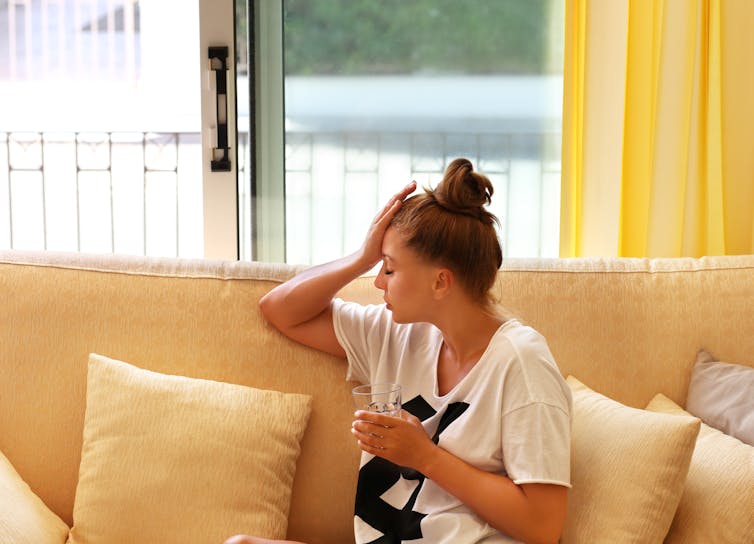
You had a great night out, but the next morning, anxiety hits: your heart races, and you replay every conversation from the night before in your head. This feeling, known as hangover anxiety or “hangxiety”, affects around 22% of social drinkers.
While for some people, it’s mild nerves, for others, it’s a wave of anxiety that feels impossible to ride out. The “Sunday scaries” may make you feel panicked, filled with dread and unable to relax.
Hangover anxiety can make even simple tasks feel overwhelming. Here’s why it happens, and what you can do about it.
What does alcohol do to our brains?
A hangover is the body’s way of recovering after drinking alcohol, bringing with it a range of symptoms.
Dehydration and disrupted sleep play a large part in the pounding headaches and nausea many of us know too well after a big night out. But hangovers aren’t just physical – there’s a strong mental side too.
Alcohol is a nervous system depressant, meaning it alters how certain chemical messengers (or neurotransmitters) behave in the brain. Alcohol relaxes you by increasing gamma-aminobutyric acid (GABA), the neurotransmitter that makes you feel calm and lowers inhibitions. It decreases glutamate and this also slows down your thoughts and helps ease you into a more relaxed state.
Together, this interaction affects your mood, emotions and alertness. This is why when we drink, we often feel more sociable, carefree and willing to let our guard down.
As the effects of the alcohol wear off, your brain works to rebalance these chemicals by reducing GABA and increasing glutamate. This shift has the opposite effect of the night before, causing your brain to become more excitable and overstimulated, which can lead to feelings of anxiety.
So why do some people get hangxiety, while others don’t? There isn’t one clear answer to this question, as several factors can play a role in whether someone experiences hangover-related anxiety.
Genes play a role
For some, a hangover is simply a matter of how much they drank or how hydrated they are. But genetics may also play a significant role. Research shows your genes can explain almost half the reason why you wake up feeling hungover, while your friend might not.
Because genes influence how your body processes alcohol, some people may experience more intense hangover symptoms, such as headaches or dehydration. These stronger physical effects can, in turn, trigger anxiety during a hangover, making you more susceptible to “hangxiety.”
Do you remember what you said last night?
But one of the most common culprits for feeling anxious the next day is often what you do while drinking.
Let’s say you’ve had a big night out and you can’t quite recall a conversation you had or something you did. Maybe you acted in ways that you now regret or feel embarrassed about. You might fixate on these thoughts and get trapped in a cycle of worrying and rumination. This cycle can be hard to break and can make you feel more anxious.
Research suggests people who already struggle with feelings of anxiety in their day-to-day lives are especially vulnerable to hangxiety.
Some people drink alcohol to unwind after a stressful day or to make themselves feel more comfortable at social events. This often leads to heavier consumption, which can make hangover symptoms more severe. It can also begin a cycle of drinking to feel better, making hangxiety even harder to escape.
Preventing hangover anxiety
The best way to prevent hangxiety is to limit your alcohol consumption. The Australian guidelines recommend having no more than ten standard drinks per week and no more than four standard drinks on any one day.
Generally, the more you drink, the more intense your hangover symptoms might be, and the worse you are likely to feel.
Mixing other drugs with alcohol can also increase the risk of hangxiety. This is especially true for party drugs, such as ecstasy or MDMA, that give you a temporary high but can lead to anxiety as they wear off and you are coming down.
If you do wake up feeling anxious:
focus on the physical recovery to help ease the mental strain
drink plenty of water, eat a light meal and allow yourself time to rest
try mindfulness meditation or deep breathing exercises, especially if anxiety keeps you awake or your mind races
consider journalling. This can help re-frame anxious thoughts, put your feelings into perspective and encourage self-compassion
talk to a close friend. This can provide a safe space to express concerns and feel less isolated.
Hangxiety is an unwelcome guest after a night out. Understanding why hangxiety happens – and how you can manage it – can make the morning after a little less daunting, and help keep those anxious thoughts at bay.
Authors: Blair Aitken, Postdoctoral Research Fellow in Psychopharmacology, Swinburne University of Technology


















