

Meltwater from Greenland and the Arctic is weakening ocean circulation, speeding up warming down south
- Written by: Laurie Menviel, Post-doctoral Research Fellow, Climate Change Research Centre, UNSW Sydney
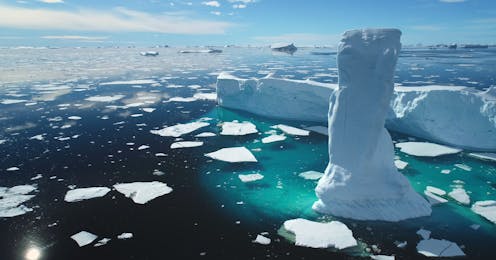
A vast network of ocean currents nicknamed the “great global ocean conveyor belt” is slowing down. That’s a problem because this vital system redistributes heat around the world, influencing both temperatures and rainfall.
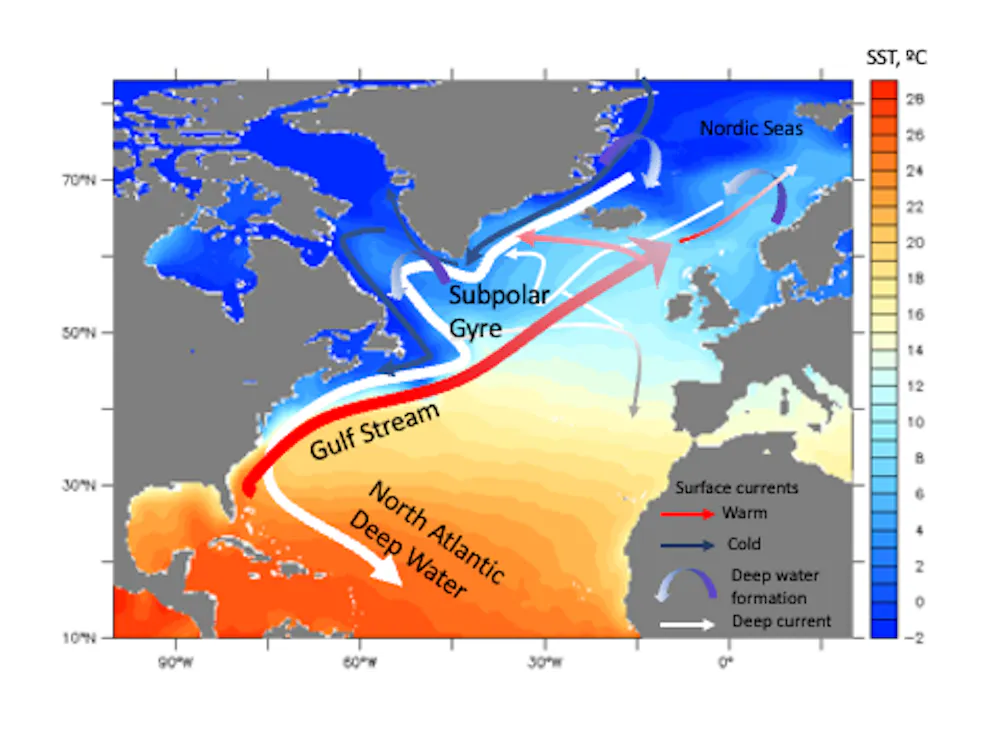
The Atlantic Meridional Overturning Circulation funnels heat northwards through the Atlantic Ocean and is crucial for controlling climate and marine ecosystems. It’s weaker now than at any other time in the past 1,000 years, and global warming could be to blame. But climate models have struggled to replicate the changes observed to date – until now.
Our modelling suggests the recent weakening of the oceanic circulation can potentially be explained if meltwater from the Greenland ice sheet and Canadian glaciers is taken into account.
Our results show the Atlantic overturning circulation is likely to become a third weaker than it was 70 years ago at 2°C of global warming. This would bring big changes to the climate and ecosystems, including faster warming in the southern hemisphere, harsher winters in Europe, and weakening of the northern hemisphere’s tropical monsoons. Our simulations also show such changes are likely to occur much sooner than others had suspected.
The Atlantic Meridional Overturning Circulation (AMOC): what is it and why is it so important? (National Oceanography Centre)Changes in the Atlantic Meridional Overturning Circulation
The Atlantic ocean circulation has been monitored continuously since 2004. But a longer-term view is necessary to assess potential changes and their causes.
There are various ways to work out what was going before these measurements began. One technique is based on sediment analyses. These estimates suggest the Atlantic meridional circulation is the weakest it has been for the past millennium, and about 20% weaker since the middle of the 20th century.
Evidence suggests the Earth has already warmed 1.5ºC since the industrial revolution.
The rate of warming has been nearly four times faster over the Arctic in recent decades.
Meltwater weakens oceanic circulation patterns
High temperatures are melting Arctic sea ice, glaciers and the Greenland ice sheet.
Since 2002, Greenland lost 5,900 billion tonnes (gigatonnes) of ice. To put that into perspective, imagine if the whole state of New South Wales was covered in ice 8 metres thick.
This fresh meltwater flowing into the subarctic ocean is lighter than salty seawater. So less water descends to the ocean depths. This reduces the southward flow of deep and cold waters from the Atlantic. It also weakens the Gulf Stream, which is the main pathway of the northward return flow of warm waters at the surface.
The Gulf Stream is what gives Britain mild winters compared to other places at the same distance from the north pole such as Saint-Pierre and Miquelon in Canada.
Our new research shows meltwater from the Greenland ice sheet and Arctic glaciers in Canada is the missing piece in the climate puzzle.
When we factor this into simulations, using an Earth system model and a high-resolution ocean model, slowing of the oceanic circulation reflects reality.
Our research confirms the Atlantic overturning circulation has been slowing down since the middle of the 20th century. It also offers a glimpse of the future.
Connectivity in the Atlantic Ocean
Our new research also shows the North and South Atlantic oceans are more connected than previously thought.
The weakening of the overturning circulation over the past few decades has obscured the warming effect in the North Atlantic, leading to what’s been termed a “warming hole”.
When oceanic circulation is strong, there is a large transfer of heat to the North Atlantic. But weakening of the oceanic circulation means the surface of the ocean south of Greenland has warmed much less than the rest.
Reduced heat and salt transfer to the North Atlantic has meant more heat and salt accumulated in the South Atlantic. As a result, the temperature and salinity in the South Atlantic increased faster.
Our simulations show changes in the far North Atlantic are felt in the South Atlantic Ocean in less than two decades. This provides new observational evidence of the past century slow-down of the Atlantic overturning circulation.
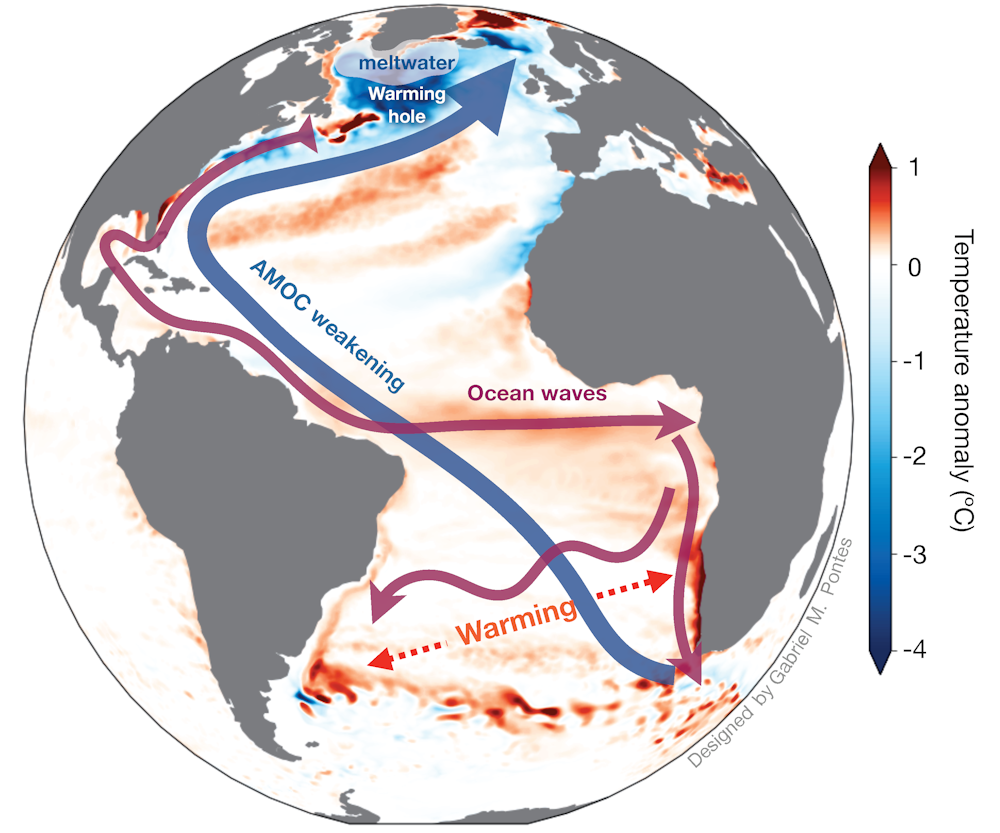 The addition of meltwater in the North Atlantic leads to localised cooling in the subpolar North Atlantic and warming in the South Atlantic.
https://www.nature.com/articles/s41561-024-01568-1
The addition of meltwater in the North Atlantic leads to localised cooling in the subpolar North Atlantic and warming in the South Atlantic.
https://www.nature.com/articles/s41561-024-01568-1
What does the future hold?
The latest climate projections suggest the Atlantic overturning circulation will weaken by about 30% by 2060. But these estimates do not take into account the meltwater that runs into the subarctic ocean.
The Greenland ice sheet will continue melting over the coming century, possibly raising global sea level by about 10 cm. If this additional meltwater is included in climate projections, the overturning circulation will weaken faster. It could be 30% weaker by 2040. That’s 20 years earlier than initially projected.
Such a rapid decrease in the overturning circulation over coming decades will disrupt climate and ecosystems. Expect harsher winters in Europe, and drier conditions in the northern tropics. The southern hemisphere, including Australia and southern South America, may face warmer and wetter summers.
Our climate has changed dramatically over the past 20 years. More rapid melting of the ice sheets will accelerate further disruption of the climate system.
This means we have even less time to stabilise the climate. So it is imperative that humanity acts to reduce emissions as fast as possible.
Authors: Laurie Menviel, Post-doctoral Research Fellow, Climate Change Research Centre, UNSW Sydney


















