

Casting a spotlight on the Black convicts of African descent who helped shape Australia
- Written by: Jane Lydon, Wesfarmers Chair of Australian History, The University of Western Australia
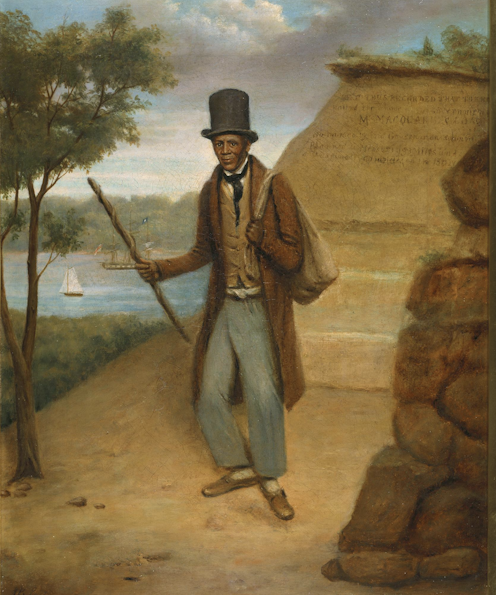
It is a new idea to many Australians that their past is connected to the tragic history of transatlantic slavery.
Some aspects of this relationship have begun to be uncovered: for instance when Britain abolished slavery in its Caribbean colonies – places such as Jamaica, Barbados, Trinidad and Grenada – it struck a deal with the slave-owners to pay them £20m compensation for the loss of their human “property”.
An online database hosted by The Centre for the Study of the Legacies of British Slavery allows anyone to search for the individuals and companies that benefited from this money. New historical research has traced the extensive investments of this compensation in the settler colonies of Australasia.
Review: Black Convicts: How slavery shaped Australia – Santilla Chingaipe (Scribner)
Along with capital, investors brought knowledge and attitudes – how to grow sugar in Queensland, for example, using techniques developed on slave plantations in British Guiana.

Likewise, British military forces violently quelled slave rebellion in the Caribbean and then travelled to Australia, where they applied the same techniques of violent punishment against First Nations Australians. Using biographical and genealogical methods, many stories are also tracking the movement of people from Caribbean slave-worked colonies to places such as Australia, New Zealand and Canada.
But this is frequently a top-down view, reflecting the continuing imbalance of power, recorded evidence, and prejudices flowing from this unequal past. In her new book, award-winning filmmaker Santilla Chingaipe sets out to explore links to slavery and their legacies from another direction, focusing on Black convicts of African descent.
 Santilla Chingaipe.
Scribner
Santilla Chingaipe.
Scribner
Ambitiously, and “with much urgency” she also aims to investigate how hierarchies of race, class and gender came to be in the Australian justice system.
Chingaipe began this journey in 2018 after visiting an exhibition about the colonisation of Australia. It mentioned at the start that Africans were among the first arrivals here – but did not further explore this history.
She undertook her own research about men of African descent on the First Fleet and in colonial Australia. “What I was not expecting,” she writes, “was for quite literally hundreds of non-white people from across the British Empire to reveal themselves in the archives.”
Her publisher tells us that Black Convicts “builds on” and takes further “Chingaipe’s critically acclaimed and award-winning [2021] documentary Our African Roots”. While not a professional historian, Chingaipe undertook study in history to acquire the tools she needed to research and tell this story.
Narrowing her focus to convicts – and consequently the convict colonies of New South Wales and Van Diemens Land – Chingaipe engages with a “handful of scholarly accounts” and archival sources, as well as drawing from newspaper accounts, radio interviews, and websites in producing her “collection of transatlantic stories”.
She is also critical of some previous historians in this field, singling out award-winning writer and historian Cassandra Pybus for her use of “racialized language and stereotyping” in writing about certain Black subjects. As a Zambian-born Australian, Chingaipe seeks to write something “beyond” history that might “act as a partial corrective to the epistemic violence of these narratives” and to help “us see these people as more than commodities and convicts”.
However Chingaipe’s aim to counter the misrepresentations of previous accounts perhaps leads her to overlook or deny existing scholarship, with some ill effects. Early in the book she states, “I have been able to conclusively identify at least ten people of African descent” who were convicts on the First Fleet, based on their archival description.
These are John Moseley, John Caesar, John Coffin, John Randall, John Martin, Daniel Gordon, John Williams, Black Jemmy Williams, Thomas Orford and Samuel Chinnery.
This misleadingly gives the impression that no one had done so before her – yet all of these figures have been previously researched and written about by historians, notably in Pybus’ 2006 Black Founders and Mollie Gillen’s 1989 The Founders of Australia: A Biographical Dictionary of the First Fleet.
Indeed almost all are subjects of online biographies published by the Australian Dictionary of Biography or People Australia. In “correcting” previous biases I believe it is important not to introduce new ones.
In places, this partial engagement with conventional historiography shallows Chingaipe’s analysis: for example, the case of Mauritian convict Eugene Doucette who in 1848 helped arrest a First Nations man has been researched by Queensland historian Libby Connors, who noted his friendship with Noonuccal man Bobby Winter and his acceptance by the Noonuccal at Amity Point on Minjerribah (Stradbroke Island).
Connors pointed out that Doucette’s and Winter’s arrest of another First Nations man “was probably a product of traditional law” as much as British colonial justice". Her analysis opens up our understanding of the sophistication and underlying logic of First Nations law rather than seeing these events through the colonisers’ lens.
A fresh perspective
These limitations aside, Chingaipe brings a fresh and urgent perspective to bear on Australian history, re-telling many stirring, surprising, captivating moments of encounter or Black experience. Over much of the book, reflecting its foundation in her documentary film, she adopts a movie-like method of gleaning a crucial point or argument from the work of an established historian, whom she then interviews or takes to visit a historical site.
This technique enlivens her narrative and links it to the present, as she literally travels from places such as the ruins of Fort Dundas in the Tiwi Islands, where a disproportionate number of Black convicts were sent in 1824, to rowing across Sydney Harbour in a boat like that of ferryman William (“Billy”) Blue.
Born into slavery in the United States, Blue became a soldier in the British army. In London in 1796 he was sentenced to transportation for stealing sugar. In Sydney he married white convict Elizabeth Williams and they had six children together. As harbour watchman and ferryman, Blue became well-known and is still remembered through landmarks such as Blues Point.
This book is perhaps best appreciated as a film rendered in words, and is no less powerful for being so.
‘Ugly truths’
With a bowerbird eye Chingaipe looks again at our seemingly well-known, White-dominated past to show Black people as active and indeed integral participants across the colonial period.
For example, she examines the status of Black emancipist John Johnstone as a perpetrator of the 1838 Myall Creek Massacre of Wirrayaraay people in New South Wales.
Johnstone was of African descent, born in Liverpool, Britain, and was transported to New South Wales in 1829. Chingaipe points out that
to presume Johnstone’s actions could be predicted from the colour of his skin is exactly the sort of blindness this book sets out to challenge.
 Scribner
As her account shows, by the time of the massacre, Johnstone had spent a decade on the violent frontier, his shifting status as victim/perpetrator shattering the binary view of colonial race relations.
In telling her cinematic stories, Chingaipe raises numerous topics and places, threading together Africa, the Caribbean, Mauritius, and the Australian colonies. Her book shows how themes such as water, sugar, capital, labour, Black protest and resistance, the survival of African religious beliefs, and the experience of Black women and children weave through Australian history, embedding it within global processes.
One revealing life journey is that of Robert James, born in 1809 in Barbados, and transported for the rape of a white woman. He made a life for himself in Hobart, where he married Lucinda, a woman from St Helena, their marriage witnessed by two other Black convicts, Thomas and Mary Jane Burrows.
The couple opened a lodging house in Collins Street, which was seemingly a haven for Black people, and James died at a venerable 86. Their friends, the Burrows family were not so fortunate. Their son Francis Burrows’ story is especially confronting.
Aged ten, Francis was living with a white farmer, ominously named Charles Slaughter, charged with looking after his cattle. Following continued mistreatment and abuse Francis died in late 1859. Slaughter was exonerated of murder. As Chingaipe comments, “it’s hard not to feel that” this injustice “had something to do with Francis being Black”.
While underlying structures linking slavery and colonisation remain implicit, as collective biography these empathetic stories build up a picture of Black experience across diverse contexts and moments.
Clearly-written, with a frequently poignant turn of phrase, the result is a fresh and compelling account of Chingaipe’s journey of discovery, that carries the reader along with her.
Foregrounding her Black perspective on a seemingly well-known narrative, Chingaipe achieves her aim to ask “us, as Australians, to confront some of the ugly truths of our history”.
Authors: Jane Lydon, Wesfarmers Chair of Australian History, The University of Western Australia
Scribner
As her account shows, by the time of the massacre, Johnstone had spent a decade on the violent frontier, his shifting status as victim/perpetrator shattering the binary view of colonial race relations.
In telling her cinematic stories, Chingaipe raises numerous topics and places, threading together Africa, the Caribbean, Mauritius, and the Australian colonies. Her book shows how themes such as water, sugar, capital, labour, Black protest and resistance, the survival of African religious beliefs, and the experience of Black women and children weave through Australian history, embedding it within global processes.
One revealing life journey is that of Robert James, born in 1809 in Barbados, and transported for the rape of a white woman. He made a life for himself in Hobart, where he married Lucinda, a woman from St Helena, their marriage witnessed by two other Black convicts, Thomas and Mary Jane Burrows.
The couple opened a lodging house in Collins Street, which was seemingly a haven for Black people, and James died at a venerable 86. Their friends, the Burrows family were not so fortunate. Their son Francis Burrows’ story is especially confronting.
Aged ten, Francis was living with a white farmer, ominously named Charles Slaughter, charged with looking after his cattle. Following continued mistreatment and abuse Francis died in late 1859. Slaughter was exonerated of murder. As Chingaipe comments, “it’s hard not to feel that” this injustice “had something to do with Francis being Black”.
While underlying structures linking slavery and colonisation remain implicit, as collective biography these empathetic stories build up a picture of Black experience across diverse contexts and moments.
Clearly-written, with a frequently poignant turn of phrase, the result is a fresh and compelling account of Chingaipe’s journey of discovery, that carries the reader along with her.
Foregrounding her Black perspective on a seemingly well-known narrative, Chingaipe achieves her aim to ask “us, as Australians, to confront some of the ugly truths of our history”.
Authors: Jane Lydon, Wesfarmers Chair of Australian History, The University of Western Australia 

















