

Australia's Winter Olympics results suggest we might need a new measure of success
- Written by: Lisa Gowthorp, Assistant Professor of Sport Management, Bond Business School, Bond University
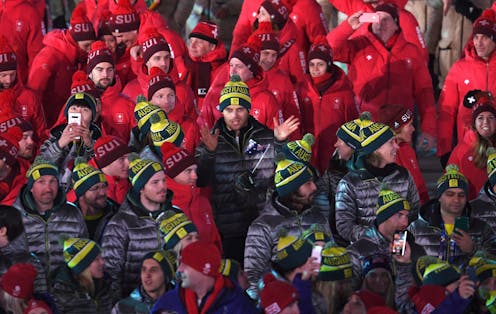
As the Winter Olympic Games wrap up for another four years, questions will be raised about the Australian team’s performance, the significance of winter sports in our sporting landscape, and the amount of taxpayer funding they receive.
The Winning Edge strategy was introduced in late 2012 as a way of allocating funding based on performance (especially international medals). After much controversy, the Australian Institute of Sport (AIS) announced late last year it will no longer use the name Winning Edge; it has replaced it with values that promote sport success as influential on national pride and inspiration.
However, measuring the success of the Australian team in Pyeongchang – and the investment of A$16 million to support it – may still be aligned to the ambitious Winning Edge targets. The target was to finish in the top 15 on the medal table. So, how will the AIS measure the success (or otherwise) of Pyeongchang?
Read more: Will a controversial sports funding strategy give Australia's Winter Olympians the winning edge?
Did the Australian team disappoint?
The Australian team finished 23rd on the medal table in Pyeongchang, with two silver medals and one bronze medal. While this is the same number of medals it won at the 2014 Sochi Winter Olympics, this team was expected to perform better. Chef de Mission Ian Chesterman said before the Games:
This is the best-performed team that we’ve taken to an Olympic Games with a large number of athletes who have established that they are among the very best in their sports globally.
Medal favourites and Olympic veterans David Morris and Lydia Lassila had high expectations, but were unable to achieve back-to-back Olympic medal wins. As a result, Australia failed to win a medal in the Winter Olympic sport it has been most successful in: aerial skiing. It was the first time in 20 years the Australian women’s aerial skiing team has not won a medal.
The three Australian medals were won by young athletes competing in the moguls, snowboard cross, and halfpipe events.
Read more: What makes a winning mogul skier like Matt Graham?
Read more: What makes a winning halfpipe snowboarder like Scotty James?
Read more: What makes a winning snowboard cross athlete like Jarryd Hughes?
While unexpected medals are always the highlight of any Olympics, it does raise questions about Winning Edge. Funding leading into these Olympics was allocated based on Winning Edge, which directed financial support to athletes with the most potential to win a medal.
Where to for funding of high-performance sport?
The federal government has made no announcement on the direction or focus of high-performance sport and its funding priorities.
While Winning Edge published clear guidelines on performance expectations and funding allocations, it is unclear how the success of Australia’s Pyeongchang Olympic team – and, very soon, its Commonwealth Games team – will be measured in terms of government policy and spending.
The performance targets and funding allocations for Winter Olympic athletes as they prepare for Beijing in 2022 are similarly unknown.
The message from the AIS is that high-performance sport is about:
consistent and sustainable success for Australian athletes and teams on the world stage
greater levels of accountability for performance results
improved governance structures and contemporary reporting and monitoring of performance
engaging, uniting, inspiring and motivating all Australians.
While these key areas are very closely aligned to Winning Edge, the ambitious targets and linking funding to podium success may be under review.
AIS director Peter Conde explained his vision for high-performance sport policy:
It is about national pride and inspiration through sporting success, and that comes from more than a medal count. We want a real focus on the value that athletes bring to the community.
Are Australians interested in the Winter Olympics?
Despite questions over Australians’ level of interest in the Winter Olympics, viewer statistics suggest they were interested. The ratings for the first week of the Games were strong: broadcaster Channel Seven attracted close to 1 million viewers nationwide per night. Overall, Australians spent 43 million minutes over the first week watching the Olympics.
Many younger viewers streamed coverage to personal devices. This demonstrates the appeal the Winter Olympics have for younger people – who, according to the International Olympic Committee, have generally lost interest in watching them.
Read more: Live from Pyeongchang: how an Olympic broadcast works
So, perhaps the AIS leaders are considering the value Australian athletes bring to the community when competing on the world stage. Do their performances inspire and excite the nation? Does our participation – as an island nation, with minimal snow or ice – bring about feelings of national pride?
While the jury may be still be out on these questions, there is no doubt many Australians thoroughly enjoyed the Winter Olympics and felt pride and admiration for our courageous athletes – regardless of the number of medals they brought home.
Authors: Lisa Gowthorp, Assistant Professor of Sport Management, Bond Business School, Bond University


















