

Educating young people about social media would be far more effective than a ban
- Written by: Susan Grantham, Lecturer in Communication, Griffith University
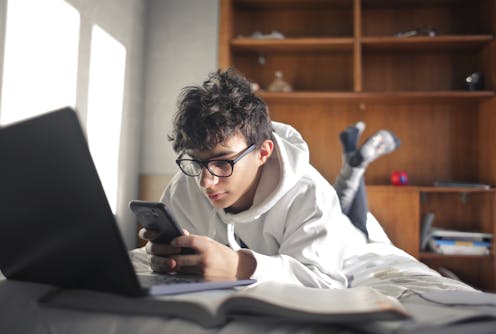
The federal government’s proposed social media ban for under-16s has sparked widespread debate, affecting millions of young Australians, their families and educators. But will it actually work?
While the aim behind this ban is to protect children from online harm, it appears to be more of a kneejerk reaction to win votes.
In a world where technological advancement is accelerating and online communication is part of our everyday lives, teaching children about safe online use, rather than imposing bans, is a more effective way to protect them from harm while still allowing them to be technologically savvy.
Critics such as independent MP Zoe Daniel highlight potential issues such as social media sites becoming less safe as adults increasingly share any content, believing that children no longer have access:
What we’re doing is saying, ‘Well, we’re going to lock everyone under 16 out, and then everyone else can do whatever they want in there’. And also, we know that some people under 16 will get in.
Daniel is not the only person to express concern. Former Labor and now independent Western Australian Senator Fatima Payman used TikTok slang to highlight that young people often feel unheard in parliament.
Why a ban is the wrong way to go
Young people live a lot of their social lives online. Shielding youth entirely could disconnect them from peers and affect their social wellbeing. This has been demonstrated in a study on international high school students, who are particularly at risk of loneliness and isolation and are often living away from family and friends. While this study was on international students, the results have implications for others who are at risk of feeling lonely and isolated.
At 16, teens might face harmful content for the first time, including behaviours glorified on social media, which could be seen as “exciting”. This risks amplifying the very problems policymakers aim to prevent.
Australia recently revoked the visa of an OnlyFans star attempting to recruit 18-year-old boys at “schoolies” to create explicit content for her OnlyFans page.
While this star’s visa was revoked, other Australian-based OnlyFans creators have posted to TikTok showing videos of young men lining up to meet them.
This is being considered by many as new predatory behaviour to which young people might be exposed for the first time, with no education or support systems in place.
If young people are not allowed to navigate social media until they are 16, how will they navigate the risks once they can? Instead, teaching young people digital resilience offers a more sustainable approach.
The Finnish approach
Finland’s approach to digital literacy education is comprehensive and integrated. It aims to equip citizens of all ages with the skills to navigate the digital world effectively.
Finland’s education system embeds digital literacy as a fundamental component of its curriculum, integrating technology across all grade levels to prepare students for the digital age.
From preschool education, students are introduced to digital tools, safety and technology to learn responsible online behaviour. As Finnish academics Sirkku Lähdesmäki and Minna Maunula highlight:
creating a secure and empowering connection with media is a shared educational responsibility that necessitates the active participation of both schools and families.
Integrating digital literacy into the education system ensures skills are not taught in isolation, but embedded across the system.
Digital literacy in Finland extends beyond formal schooling. Public libraries and community centres offer programs to improve skills among adults, ensuring that digital literacy is a lifelong pursuit. As they say, digital competencies are civic skills.
This approach has been in place, with considerable success, for a decade. In 2014, in response to the rise of misinformation, Finland’s government launched an anti-fake news initiative aimed at teaching residents, students, journalists and politicians how to counter false information designed to create division.
This initiative is part of a multi-pronged, cross-sector approach to prepare citizens of all ages for the complex digital landscape.
In addition, the education system was reformed to emphasise critical thinking. This taught students to identify bots, understand image and video manipulations, and recognise half-truths and false profiles. The approach has been practical, with Finland ranking first out of 35 countries in a digital media literacy index measuring resilience six times in a row.
Similarities to smoking
Some politicians have likened social media use to smoking in terms of addictive qualities and potential to cause harm. For example, South Australian Premier Peter Malinauskas said:
The evidence shows early access to addictive social media is causing our kids harm […] This is no different to cigarettes or alcohol. When a product or service hurts children, governments must act.
Drawing comparisons to smoking highlights the long-term challenges with tackling the issue. The proportion of Australians aged 14 and over who have ever smoked has significantly declined over the past two decades. But this is the result of a long-term change campaign that the government committed to in the 1990s. It has been successful largely due to a concerted public education campaign.
The government’s proposed legislation oversimplifies a deeply complex issue. Protecting young people requires long-term solutions such as fostering digital literacy, informed choices, and robust safeguards — not rushed, over-the-top, short-term measures.
Authors: Susan Grantham, Lecturer in Communication, Griffith University


















