

A tax on new plastic would slash waste – if built into the global treaty on plastics
- Written by: Amelia Leavesley, Research Fellow in Urban Sustainability, The University of Melbourne
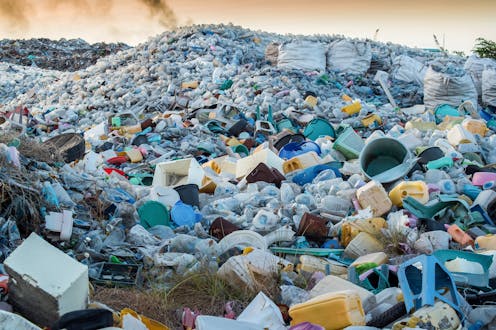
Earlier this week, the mining magnate Andrew Forrest made headlines calling for a global “polymer premium” – or plastic tax – to be placed on every tonne of newly manufactured plastics. A tax like this could form part of the Global Plastic Treaty being hammered out right now in Busan, South Korea. In fact, a treaty aimed at stopping plastic waste will have to have strong measures such as a plastic tax or a cap on plastic production to shift the status quo.
In economics, taxing things you don’t want should mean fewer get made. What Forrest is pitching is a way to curb the seemingly unstoppable rise in plastic production and tackle the plastic waste crisis at its source. While we may think recycling is all we need to solve the plastic waste problem, it’s nowhere near enough. Plastic is steadily choking seas and rivers, while toxic microplastics damage our health.
Forrest isn’t the first. Environmental groups and think tanks are also calling for a global tax on plastic producers and importers.
Many plastic products are designed to last for a long time. But manufacturers are increasingly churning out cheap plastics such as single-use items and food packaging which almost inevitably become waste.
Introducing a tax would add an additional cost to making virgin (new) plastic, to deter manufacturers from producing and selling as much non-recyclable and non-reuseable products as possible. If introduced, they would go some way to cut the overproduction of plastic.
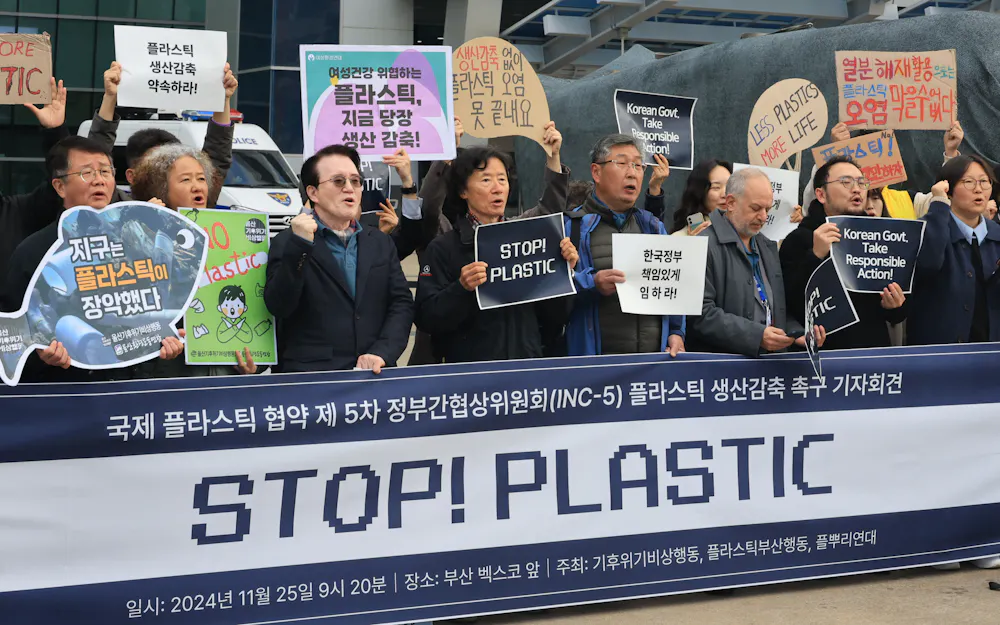
What would a plastic treaty do?
Over this week and next, negotiators from more than 170 United Nations member states are working towards a Global Plastic Treaty at the fifth and final set of talks.
Work on this treaty has progressed rapidly. It was only in 2022 that 175 nations voted to adopt a historic resolution to negotiate a legally binding international treaty to end plastic pollution. In recognition of the danger posed by unchecked plastic production, nations set an accelerated timeline. If a treaty is agreed, it could come into effect as soon as 2025.
It would operate much like the legally-binding Paris Agreement on climate change, which requires nations to regularly report their greenhouse gas emissions and efforts to cut them. A Global Plastics Treaty would include binding measures requiring signatories to commit to action on plastic pollution. But exactly what will be covered and how is yet to be decided.
Nations have already agreed on measures to improve waste management and recycling as well as new design standards for plastic products.
While positive, the hardest part is yet to come.
These final negotiations wraps up on Sunday. Still to come is a decision on the most contentious issue: whether to introduce limits on how much plastic a company can produce. Plastic industry lobbyists are arguing strongly against any cap to plastic production.
 Production of single-use plastics is expanding.
Matveev Aleksandr/Shutterstock
Production of single-use plastics is expanding.
Matveev Aleksandr/Shutterstock
Recycling isn’t enough
Plastic pollution has been a problem for decades. But to date, our efforts to respond have hardly made a dint. Today, there are about 7 billion tonnes of plastic waste in the world. So far, just 9% has been recycled.
The rest ends up burned in incinerators, in landfills, or in rivers, seas and forests. Plastics can also damage our health in many different ways.
Plastic production doubled between 2000 and 2019, reaching 460 million tonnes a year. By 2060, production is projected to almost triple that figure, to 1.2 billion tonnes a year.
An increasing proportion of plastic production is single-use packaging, which is cheap to make and almost impossible to recycle.
Researchers have found recycling and waste management will only cut plastic pollution by 7% in the long term. These tools won’t be enough.
Plastic taxes are not new
In 2021, the European Union introduced a levy on non-recycled plastic packaging waste created by its member states. Set at €0.80 (A$1.30) per kilo, the cost is borne by national governments, who in turn can pass the cost on to producers. The levy is expected to generate A$11.3 billion per year when fully implemented.
Nations in Europe have already begun to pass on the cost. Last year, Spain imposed a tax on producers and importers of single use plastic packaging, while Hungary expanded an existing scheme to include plastic products. Earlier this year, Bulgaria, Portugal and the United Kingdom introduced their own fees for single-use plastics.
Because these taxes are new, it’s difficult to fully assess their impact. But over time, these incentives should reduce plastic pollution and boost government revenue, which can be used to drive better recycling and resource recovery.
Australia’s government is consulting on new standards for packaging in a bid to phase out dangerous chemicals and boost use of recycled plastics, while some state and territory governments have introduced bans on single-use plastics. But plastic waste researchers and environmental advocates argue that stronger measures are needed to curb plastic waste.
Taxing single-use plastic packaging in Australia could raise $1.5 billion, according to one study. These funds could be used to accelerate progress on plastic pollution.
 Ragpickers look for items of value in a plastic-strewn waste dump outside Jammu, India.
Channi Anand/AP
Ragpickers look for items of value in a plastic-strewn waste dump outside Jammu, India.
Channi Anand/AP
A global treaty needs teeth
Over the last 70 years, plastics have become ubiquitous. But the convenience of cheap plastics comes at a cost to our health and the health of the natural world.
Tackling plastic pollution will take concerted effort and financing to reduce plastic production.
As Andrew Forrest and others point out, taxing virgin plastic could discourage overproduction of plastics and encourage more investment in recyclable and reusable plastic products.
But for plastic taxes to work, they need to be widely adopted. That could be as part of the Global Plastic Treaty, or done on a national level. Plastic taxes could work as an alternative to capping plastic production, if negotiators can’t reach agreement in Busan.
Plastic taxes are not a silver bullet. We would still need a suite of measures addressing plastics throughout their lifecycle, from design and production to recycling and disposal. But putting a price on plastic would help.
Authors: Amelia Leavesley, Research Fellow in Urban Sustainability, The University of Melbourne


















