Cool water from the deep could protect pockets of the Great Barrier Reef into the 2080s
- Written by: Chaojiao Sun, Research Group Leader, physical oceanographer, CSIRO
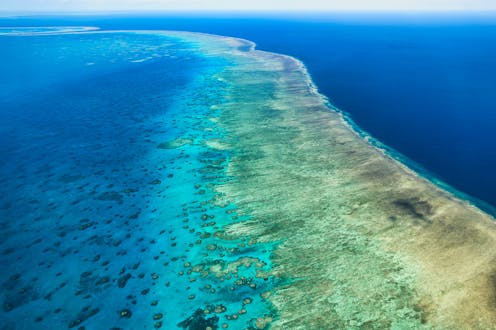
For coral reefs, climate change is an existential threat. Australia’s Great Barrier Reef has endured seven mass bleaching events over the past 25 years. Five have occurred in the past eight years.
But amid the story of decline, something curious is happening. Surveys from the air and on water show a few reef groups, such as the Ribbon Reefs in the far north and the Swains and Pompey reefs in the south, are consistently escaping severe bleaching while their neighbouring reefs suffer.
But how? In our new research, we found their survival is due to cold water. That is, most of these reefs are periodically bathed in cooler water even as other parts of the reef bake in marine heatwaves. This stems from the phenomenon called upwelling, where cooler waters from the deep mix with warm surface waters. These reefs are likely to be buffered from the worst of climate change.
While the world’s oceans are heating up steadily, the deeper waters remain cooler than surface waters. Our modelling suggests cold currents could protect these vital refuges at least into the 2080s, even if continued high emissions lead to sea surface temperatures 2-3°C hotter than now. Safeguarding these refuges offers the best chance to preserve some of the reef’s rich array of species and – potentially – to allow corals to adapt to new heat regimes and eventually repopulate degraded reefs.
Where are these refuges from heat?
Coral reefs are very sensitive to heat. When marine heatwaves strike, heat stress can make coral polyps bleach by expelling their symbiotic algae. These colourful “zooxanthellae” algae provide coral energy and nutrition from photosynthesis in exchange for shelter. Bleached coral can recover if given a reprieve. But if the heat stress continues, it can die.
Climate change is loading the dice for more heat, more often. This is why we are now seeing parts of the Great Barrier Reef record the worst coral loss in 39 years.
In our research, we looked at why some reefs are less affected by heat. We found upwellings of cool water are protecting them. The reefs are climate refuges – areas where local conditions allow species to survive while other areas become unlivable.
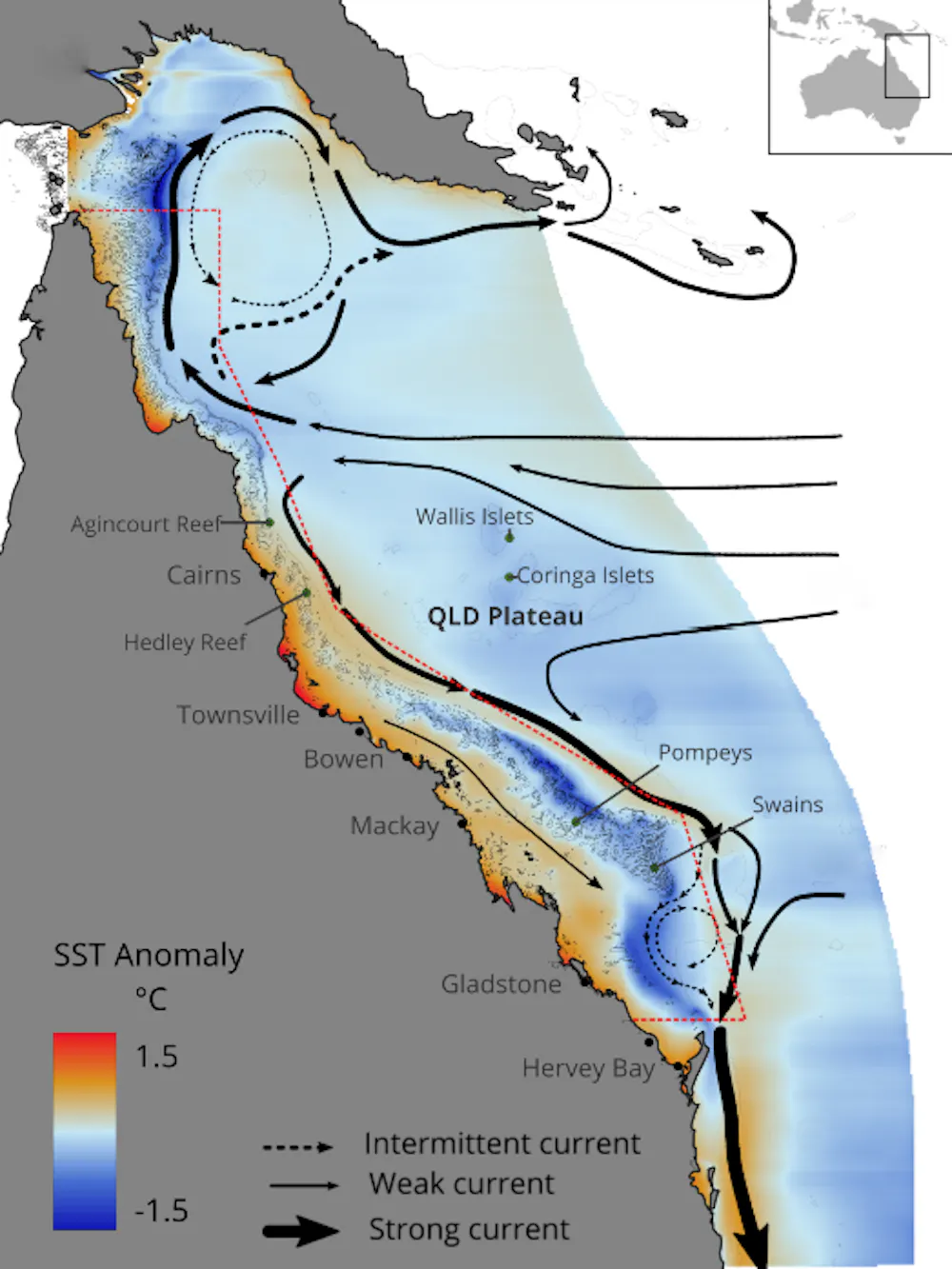
We define these cooler refuges as areas where average summer sea surface temperatures are at least 1°C cooler than nearby regions. These safer zones lie along the ends of the northern and southern Great Barrier Reef and run over 200 kilometres along the continental shelf, where coral reefs are densely packed.
Off northern Australia in the eastern Torres Strait lie the Ribbon Reefs. These climate refuges are located near a steep continental slope with deep channels.
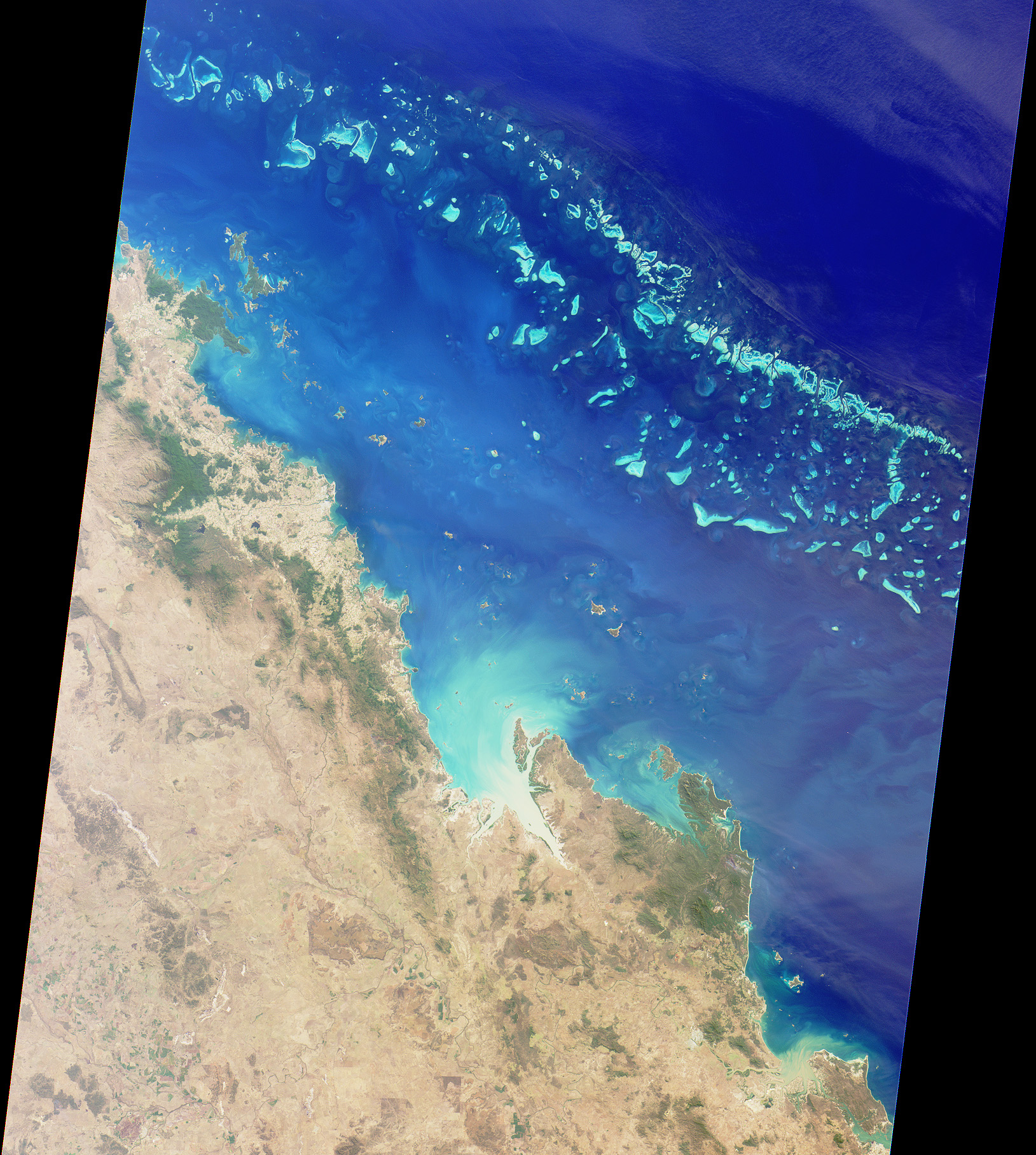
 The Ribbon Reefs are acting as a climate refuge in the far north of the reef. In this satellite image of Cape York and the Torres Strait, these reefs are the long, narrow reefs to the right.
AIMS/NASA, CC BY-SA
The Ribbon Reefs are acting as a climate refuge in the far north of the reef. In this satellite image of Cape York and the Torres Strait, these reefs are the long, narrow reefs to the right.
AIMS/NASA, CC BY-SA
On the southern reefs, a key refuge is the Swains and Pompeys reef complex, 135 km offshore from Mackay. These reefs lie right on the continental drop off where the East Australian Current raises cold water closer to the surface.
When strong tidal currents flood through narrow reef channels, cooler water from the deep can be drawn up over the continental shelf and mixed with warm surface water, acting like a cold bath for the fringing reefs and giving relief to coral.
These effects can last up to a week or more, if conditions are right, and can occur several times over a summer. Currents can trap these cooler waters behind a long, skinny ribbon reef, giving sustained relief.
 Pompey Reefs, the southern refuge. These reefs lie offshore from the Whitsundays (Whitsunday Island is pictured near top left). This is a cropped NASA image taken by satellite in 2000.
NASA/GSFC/LaRC/JPL, CC BY-NC-ND
Pompey Reefs, the southern refuge. These reefs lie offshore from the Whitsundays (Whitsunday Island is pictured near top left). This is a cropped NASA image taken by satellite in 2000.
NASA/GSFC/LaRC/JPL, CC BY-NC-ND
Will these refuges vanish?
To detect these refuges, we looked for unusually cool water in satellite temperature maps and ocean models. Then we ran these models forward in time, to see if these life-sustaining cool flows would persist in the 2050s under a high emissions scenario, and again in the 2080s. The good news: currents of cool water will continue at least to 2080.
This is because even as surface waters warm and marine heatwaves arrive more often, the currents carrying cooler water to the surface in these refuge reefs will continue. But if climate change continues unchecked, even deeper waters will warm to a level that coral cannot tolerate.
What about changes in ocean currents? At present, the South Equatorial Current carries warm water westward toward the Barrier Reef but then splits into the north-flowing Gulf of Papua Current and the south-flowing East Australian Current.
Our research found the location of the split is steadily moving southward. This could change where current-dependent larvae of coral and coral-eating crown of thorns starfish end up. But our modelling shows these changes won’t greatly affect upwellings over our time period.
Protecting these refuges is vital
If we keep these refuge reefs as intact as possible, we may be able to preserve more of the reef’s staggering biodiversity. If these corals find ways of adapting to the new heat regimes, it might be possible to use them to replenish harder hit reefs. Scientists in the collaborative Reef Restoration and Adaptation Program are already exploring ways to make coral better able to tolerate heat.
Overfishing, damage from shipping and crown of thorns outbreaks also pose threats to these remote reefs. We should protect them as best we can. That’s not to say we should give up on tackling threats to the reef more broadly – only that these reefs are particularly valuable.
Climate change poses the largest threat to coral. Every living thing has temperature limits and adaptation can only go so far. The corals of the Red Sea evolved to tolerate hotter water. But they had thousands of years to do so, while today’s climate is changing far faster. Other researchers have found coral refuges would break down when warming goes past 3°C.
Could coral on these more protected reefs adapt fast enough to take advantage of cool upwellings? If so, could heat-adapted coral larvae repopulate worse-hit areas? We don’t know yet. If they could, some version of the Great Barrier Reef might survive.
But if global warming continues unchecked, these reefs, too, could feel the heat. Sharply reducing emissions is our best option to control global warming and help the Great Barrier Reef endure into the next century.
Authors: Chaojiao Sun, Research Group Leader, physical oceanographer, CSIRO