

What’s fair in the fight to keep bank branches open and access to cash alive?
- Written by: Lee Smales, Associate Professor, Finance, The University of Western Australia
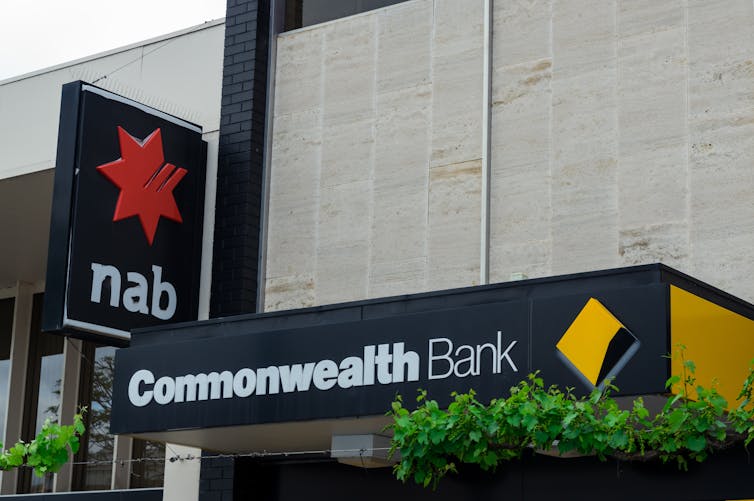
On Tuesday, Commonwealth Bank announced it was planning to move customers using one of its legacy accounts to its newer “Smart Access” account.
The catch? That migrated customers would then be charged a $3 “assisted withdrawal fee” whenever they took money out at a bank branch, post office or over the phone.
The move sparked uproar, with politicians on both sides immediately calling for a rethink of the decision.
On Wednesday, they got one, sort of. Commonwealth Bank announced it would pause the account changes for six months for the “10%” of affected individuals it said would be worse off under the change.
The spat has drawn attention to the fight over what’s fair in the effort to keep cash and bank branches alive for the Australians who still rely on them.
Clearly, letting the banks charge their own extra fees is a political non-starter. But the government has some other ideas, including a cash mandate for essentials and a possible new rural services levy to keep branches open.
Why is it so important to keep bank branches open and cash access alive, particularly in the regions? How might a levy work, and what are the alternatives?
Read more: Businesses will have to accept cash for essentials under government plan
Losing access hurts the regions
Since 2017, more than 2,000 bank branches have closed across Australia. Many of the losses have been in rural areas.
Demographic changes and population decline in rural areas, a shift to digital banking and a continued fall in cash use all mean there is simply far less foot traffic.
Branches themselves are costly to maintain. In addition to rent, wages and security costs, it is expensive to move cash around the country – often prohibitively so for the more remote reaches of Australia.
Rural bank branch closures can have significant social and economic impacts on rural communities, disadvantaging them in comparison to those in urban areas.
Of particular concern are vulnerable groups who may lack reliable transportation options or adequate internet access.
Losing a local banking presence can also have serious impacts on small businesses. Credit access is constrained if credit assessors based in urban areas fail to understand the needs of rural businesses.
Some businesses are highly dependent on cash and need access to branches to manage their cash “float” (used for providing change and covering minor expenses).
Reliable access to cash is also particularly important for businesses based in remote regions who may have unstable network access (needed to operate EFTPOS machines), or in sectors such as tourism.
A rural services levy
Last month, it was revealed that Treasury was considering a new levy on Australia’s banks to help fund regional banking.
Under the proposal, the levy paid by each bank would depend on the number of regional branches and ATMs it maintained, relative to its household deposits.
Preliminary estimates reported in the Australian Financial Review suggest the banks with large regional networks would be the biggest beneficiaries of such a scheme, as you’d expect.
This includes Bendigo and Adelaide Bank, estimated to receive about $200 million a year under the proposal. NAB and Rabobank could also be net beneficiaries due to their large agribusiness presence.
Banks with an online-only presence, such as ING and Macquarie, would predictably be among the biggest losers, a group which also includes Commonwealth and Westpac.
It’s estimated these banks could pay individual levies north of $60 million a year. For Westpac, it could be more than $100 million.
Could there be unintended consequences?
Some have expressed concerns that imposing such a penalty on online-only banks would further stifle competition in what is already a noncompetitive sector.
Between them, Australia’s big four banks currently control more than 75% of the mortgage and deposit market.
There’s also a broader risk that bank levies get passed on to customers in the form of higher mortgage rates or lower interest rates on deposits.
Research examining a levy imposed on German banks in 2011 found that on average, regional banks raised their lending rates by around 0.14% in response. That’s equivalent to more than half of the typical 0.25% move in the RBA cash rate.
Lessons from around the world
Australia isn’t the only country struggling with the challenges of regional banking.
Direct levies are rare. However, a variety of other policies focused on regulatory mandates have aimed to provide and maintain access to banking in regional areas.
India has experimented with mandates to maintain branch networks in smaller towns and rural areas.
In the US, the Community Reinvestment Act requires banks to meet the needs of regional communities, otherwise they face limits on expansion.
In Canada and the UK, banks are required to consult with communities before closing branches and must provide alternatives, such as mobile banking.
In South Africa, there is a combination of mandated services in remote areas and incentives that see banks earning points under a formal economic inclusion and empowerment framework.
Leaning on the post office
Across several countries, the post office has played a crucial role in providing basic banking services, similar to the Bank@Post program run by Australia Post.
In consultation with communities, expanding the Bank@Post program could be one of the most viable ways to support regional banking into the future.
Expanding banking services could further offer a “win-win” for Australia Post. Its own branches are also dealing with lower foot-traffic as fewer letters are sent.
The UK’s banking hub system, in which major banks are members of a not-for-profit company and operate through the Post Office, offers one possible framework for such an expansion.
Authors: Lee Smales, Associate Professor, Finance, The University of Western Australia


















