

Modern Australian
The Times

New research reveals a key evolutionary benefit of sleeping for a season – or for centuries

  • Written by Natalie Jones, Lecturer in Ecology, Griffith University
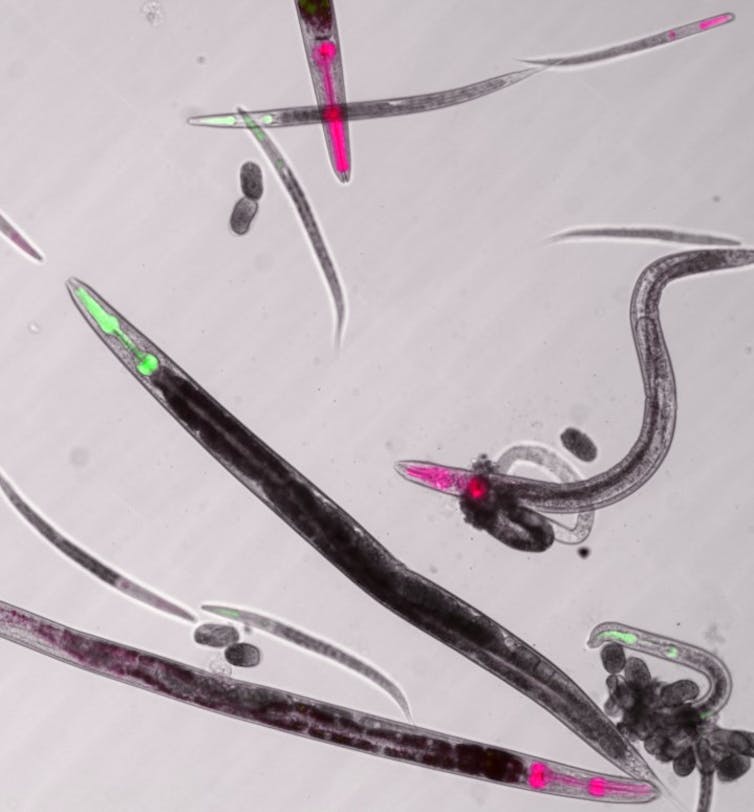
Microscope photo showing tiny translucent worms.

What can plants or animals do when faced with harsh conditions? Two options for survival seem most obvious: move elsewhere or adapt to their environment.

Some organisms have a third option. They can escape not through space but through time, by entering a dormant state until conditions improve.

As it turns out, dormancy may not only benefit the species who use it. In new research, we found that a propensity for dormancy may affect the balance of competition between species, and make it possible for more species to survive together when environments change.

What is dormancy?

Many organisms use dormancy as a survival strategy.

Bears hibernate in winter, for example, and many plants produce seeds in summer that lie dormant in soil over the cold months before sprouting in spring. In these examples, the organisms use dormancy to avoid a season where conditions are hard.

However, other organisms can remain inactive for decades, centuries, or even thousands of years.

The oldest known plant seeds to germinate are 2000-year-old seeds of a Judean date palm.

Even older plant material (though not seeds) has been brought back to life: placental floral tissue more than 31,000 years old, found in an ice age squirrel burrow.

In our research we focus on a particular kind of dormancy in animals called diapause, in which organisms reduce their metabolic activity and resist changes in environmental conditions. Here, animals usually do not eat or move much.

Does dormancy protect species from extinction?

In theory, dormancy can allow species to escape hostile conditions. However, it has been difficult to directly link dormancy to the persistence of a given species.

We tried to make this link by means of experiments using a kind of nematode worm often found in soil called Caenorhabditis elegans. In these worms, the genetic pathway that affects dormancy is well understood.

Microscope photo showing tiny translucent worms.
C. elegans and C. briggsae worms under the microscope. Natalie Jones, CC BY

We looked at four groups of worms. The first group were genetically more inclined to enter dormancy, the second group were less inclined to enter dormancy, the third group were completely unable to enter a dormant state, and the fourth were ordinary wild-type worms with a medium propensity for dormancy.

We created an experiment where all these groups competed with a common competitor species – another worm called C. briggsae – for food in different environments.

Using data from these experiments, we then ran millions of computer simulations to determine whether one species would drive the other to extinction over the long term, or if they could coexist in different environmental conditions.

Dormancy and competition between species

We found that when species are more inclined to dormancy, competing species can coexist under a wider range of environmental conditions.

When we simulated fluctuating environmental conditions, species with a higher investment in dormancy were able to coexist with a competitor over a wider range of temperatures.

This outcome is what is predicted in theory, but it is an exciting result because the prediction has been difficult to test. The experimental system we used has great potential, and can be used to further explore the role of dormancy in species persistence.

Our results also raise an important question: will species that have a dormant form be more resilient to the huge environmental fluctuations the world is currently experiencing? Organisms that can avoid heatwaves and drought may well be more prepared for this era of unprecedented global change.

We hope to begin finding out in the next phase of our research: linking the dynamics we saw in the laboratory to dormancy in plants, animals and microbes in the real world.

Authors: Natalie Jones, Lecturer in Ecology, Griffith University

Read more https://theconversation.com/new-research-reveals-a-key-evolutionary-benefit-of-sleeping-for-a-season-or-for-centuries-243804

National Survey Launched to Measure Operational Impacts of Federal NDIS Policy Reforms

The effects of recent NDIS reforms are beginning to move beyond policy papers and into day to day service delivery. A new national survey is asking ...

Beyond the Nappy Cake: Baby Shower Gifts That Get Used

What new Australian parents unwrap, keep, and quietly thank you for months later. Six weeks after my daughter was born, I did an audit of the baby sh...

Parent-Advocates Are Reshaping Frontline Disability Service Delivery

Parents have always been part of the disability sector. They advocate, coordinate services, challenge decisions and often become the person holding ev...

Vista Cruises Enters "Two-Flagship Era" as Vista Aurora Completes Inaugural Voyage

Vista Aurora Sets Sail along the Yangtze. (Photo courtesy of the company)YICHANG, China — August 5, 2026 — Vista Aurora, a high-end interprovinc...

A Digital Preparation Checklist For International Medical Conferences

An international medical conference compresses many responsibilities into a few days. A delegate may need to present research, move between venues, ...

The Growing Popularity of Lab Grown Diamonds in Sydney and Hong Kong

The diamond industry has changed significantly in recent years as more buyers seek ethical, affordable, and sustainable alternatives to mined diamon...

Modern AI SEO Agency vs Traditional SEO: What’s the Difference

Search engine optimisation has changed dramatically over the past few years. Search engines have become smarter, user behaviour has evolved, and bus...

Caravan Travel for Modern Australian Getaways: Plan a Comfortable Holiday

A family road trip is one of the best ways to explore Australia together. And, travelling by caravan gives you the freedom to take your time, stop a...

Mini Excavator and Trailer Package for Sale: What I Buy as One Deal in 2026

The first client who asked me for a mini excavator and trailer package for sale wasn’t trying to save a few hundred dollars on shipping. They we...

Make Dad a Guest in His Own Home This Father’s Day

Father’s Day can accidentally turn Dad into the unpaid event manager of his own celebration. He lights the barbecue, finds extra chairs, checks wh...

Where to Enjoy Your Off-Road Caravan on the Gold Coast

With a caravan, you can travel anywhere and everywhere without battling the rush of the peak holiday season or last-minute reservations. While the r...

How Osteopathy Supports Recovery from Sciatica and Nerve Pain

Sciatica isn't just annoying. It's genuinely painful. It sits deep in your glute and shoots straight down the back of your leg. It turns something as...

The Winter Jewellery Edit: Five Pieces You'll Wear All Season

As wardrobes shift to cosy knits, tailored coats and rich seasonal textures, jewellery becomes the finishing touch that pulls every winter outfit to...

7 Signs It's Time to Upgrade Your Piston Air Compressor

If you run a workshop, panel shop, or fabrication business anywhere around Perth, you already know what heat and dust do to equipment over a few sum...

How Long Do Bathroom Renovations Melbourne Take? Step-by-Step Process Explained

Planning a bathroom renovation is exciting, but one of the biggest questions homeowners ask is, "How long will it take?" While every project is uniq...

Why Your Skin Breaks Out: The Science of Acne Explained

Acne is the most common skin condition in the world. An estimated 85% of people experience it at some point between the ages of 12 and 24, and a gro...

10 Swimwear Trends Australian Women Are Wearing This Summer

Every Australian summer brings a fresh wave of swimwear trends, but some styles have much greater staying power than others. While fashion constantly ...

Why Regular Skills Updates Are Essential for Licensed Security Officers

A guard at a Brisbane shopping centre gets a call about a shoplifter who's turned aggressive.  They’ve done the job for six years. But their de-...

















