

Vaccination rates among Australian teens are dropping. Here’s how we can get back on track
- Written by: Archana Koirala, Paediatrician and Infectious Diseases Specialist, University of Sydney
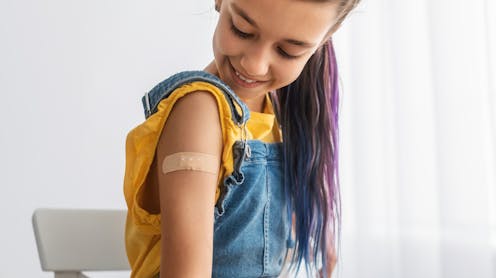
Australia has a successful adolescent immunisation program, routinely achieving high vaccine coverage for teenagers.
However, recent data shows the number of Australian teens receiving the recommended vaccines for their age group has fallen over three years during the COVID pandemic.
So how much have adolescent vaccination rates dropped, and why might this be? And how can we get back on track?
The vaccines teens need – and why they need them
The National Immunisation Program provides a series of free vaccinations for Australian teenagers. These are:
- a booster vaccine for diphtheria, tetanus and pertussis (dTpa), usually offered in year 7
- the human papillomavirus (HPV) vaccine, also usually offered in year 7
- a meningococcal ACWY vaccine, offered in year 10.
These vaccines are primarily delivered through school-based immunisation programs and health services such as general practices.
They protect teenagers themselves from diseases, but also help reduce the spread of these diseases in the community.
For example, 2024 has seen a surge in whooping cough (pertussis) cases nationally. Although adolescents won’t necessarily get very sick with whooping cough, they can spread the disease. So the dTpa vaccine helps to protect vulnerable populations, including young babies.
HPV is a leading cause of genital warts and cervical cancer. Giving the HPV shot to young teenagers, before they might be exposed to the virus through sexual activity, provides the best protection against cervical cancer.
And older teenagers and young adults are among those at highest risk of meningococcal disease, which can be fatal. They’re also most likely to carry meningococcal bacteria in their nose and throat, and to spread it to others.
A modest but concerning decline
The most recent Annual Immunisation Coverage Report from the National Centre for Immunisation Research and Surveillance (NCIRS) shows a drop in vaccination coverage among teenagers between 2022 and 2023, while the previous report shows a drop from 2021 to 2022.
For example, the proportion of teens who had received their adolescent dose of dTpa in the year they turned 15 decreased from 87.3% in 2021, to 86.9% in 2022, to 85.5% in 2023.
Meanwhile, the proportion who had received one dose of meningococcal ACWY vaccine by age 17 fell from 76.1% in 2021, to 75.9% in 2022, to 72.8% in 2023.
Vaccination coverage among Indigenous teenagers dropped by similar amounts. For example, the proportion of Indigenous teens who had received one dose of meningococcal ACWY vaccine by age 17 fell from 66.7% in 2021 to 65.6% in 2022 to 62.3% in 2023.
Overall, in 2023, around one in four 18-year-olds hadn’t received all three of the nationally recommended adolescent vaccines.
These figures show a decline in vaccination coverage among teenagers over three years. This comes after several years of generally increasing coverage before the COVID pandemic.
While the decline has been modest, the downward trend is concerning. It leaves more teenagers – and members of the wider community – vulnerable to serious infectious diseases.
Why is vaccination coverage decreasing among teenagers?
There are likely to be many contributing factors.
Although extended school closures and consequent disruption to school vaccination programs at the height of the pandemic likely played a role, these occurred almost exclusively in Victoria and New South Wales. So they can’t fully explain the ongoing drop in adolescent vaccination coverage across the country.
We don’t have good published data on what influences vaccine acceptance among teenagers. But given parents or guardians need to complete a consent form for their child to get vaccinated at school, we may be able to extrapolate from some of the challenges relating to childhood vaccination uptake.
The trends among teenagers have been consistent with a fall in the rates of younger children who are fully vaccinated. In 2023, 92.8% of one-year-olds were fully vaccinated, down from 94.8% in 2020. At five years old, the coverage rate in 2023 was 93.3%, down also from 94.8% in 2020.
A recent survey into barriers to childhood vaccination in Australia indicates a high proportion of parents who choose not to vaccinate young children have concerns about vaccine safety (48%) and effectiveness (40%). It’s possible the COVID pandemic has hindered vaccine acceptance.
Practical access barriers may also be hampering adolescent immunisation coverage. These might include lack of knowledge among parents about vaccines or immunisation schedules, complicated parental consent processes, school absenteeism, and lack of awareness of immunisation services outside school-based programs.
The NCIRS report for 2023 showed low HPV coverage for adolescents living in socioeconomically disadvantaged and remote locations. This suggests logistics such as transport may also play a role, especially for teens who miss vaccination during the school-based program.
How can we improve things? And what can parents do?
We need research to better understand the factors influencing vaccine uptake among adolescents. This can help us design and implement strategies to improve vaccination coverage in this age group.
For example, understanding the factors influencing HPV vaccination uptake among Indigenous adolescents and ensuring equitable access to targeted and culturally appropriate HPV vaccine education strategies has significantly improved vaccination coverage for this group. HPV vaccine coverage for Indigenous women aged 17 to 25 is now higher than for the general population.
Parents can support their teenagers by talking to them about the importance of immunisation, listening to their concerns and answering any questions they may have. Consent forms will generally include information about the vaccine and the disease it protects against.
If your child misses out on receiving their vaccinations at school or doesn’t attend school, families can access free National Immunisation Program vaccines from their GP, pharmacy, local council or other health services.
Specialist immunisation services are also available in most states and territories. These services are for children and adolescents who are in high-risk groups or for families who are concerned about vaccinating their children.
Teenagers are the next generation of parents, and their attitudes towards immunisation will influence coverage rates of their children in the future. This is yet another reason we need to successfully address any concerns or barriers for this group around vaccination.
Authors: Archana Koirala, Paediatrician and Infectious Diseases Specialist, University of Sydney


















