

why older people are among the biggest users of social media
- Written by: Bernardo Figueiredo, Associate Professor of Marketing, RMIT University

The Australian government’s recent decision to ban under 16s from social media has focused attention on the harms it can cause – especially for young people.
But young people are just one segment of the population who use social media. According to the Digital 2024 report, 78.3% of Australians regularly use platforms such as Facebook and Instagram – mainly for keeping in touch with friends and family.
Perhaps surprisingly, a large proportion of these users are older people. For example, the Digital 2024 report also shows that 21.3% of Meta’s ad audience in Australia (on Messenger, Facebook and Instagram) are 55 years or older. This makes it the second largest age group after 25–34 year olds (25.4%).
So what does research say about how social media affects older people’s social lives and wellbeing?
The growing presence of older adults on social media
The digital divide is shrinking as older generations embrace social media. According to data from earlier this year, more than 70% of Australians aged 65 and older use social media to some degree.
Facebook remains the most popular among this demographic, serving as a gateway to reconnect with family and long-lost friends. Beyond reconnecting, our research indicates older adults often use these platforms to share memories, participate in community groups and access news.
This growing trend is driven by both internal and external factors. Research shows many older users are motivated by the desire to stay connected with their families, particularly grandchildren, who often share their lives through social media.
For others, the COVID pandemic accelerated the adoption of digital tools, making social media a lifeline during periods of isolation.
Enhanced connection
A recent study found positive associations between internet use and mental health among older adults in 23 countries.
Social media, in particular, works by:
1. Maintaining family ties. Social media provides older adults with a virtual seat at the family table. By viewing photos, videos and updates, they can remain engaged with their loved ones’ lives, no matter the physical distance. Platforms such as WhatsApp and Facebook Messenger are particularly popular for private family group chats, enabling older adults to exchange messages and share moments in real time.
2. Rekindling old friendships. Platforms such as Facebook have proven effective in reconnecting older adults with long-lost friends. For many, revisiting old relationships provides a sense of nostalgia and belonging. Studies have shown such interactions can bolster feelings of inclusion and reduce loneliness, a significant concern for ageing populations.
3. Building new communities. Social media groups dedicated to specific interests such as gardening, photography or travel offer older adults opportunities to form new connections. These virtual communities are inclusive spaces where members exchange advice, share experiences and foster friendships based on shared hobbies.
Improved well-being
Social media’s ability to foster connection among older adults directly impacts their wellbeing.
Regular online interactions can reduce feelings of loneliness and depression, providing a sense of purpose and belonging.
Research shows active participation, such as posting photos, is associated with a feeling of competence in older users, which is related to well-being. For some, becoming “grandfluencers” on platforms like Instagram or TikTok introduces an unexpected avenue for creative expression and social influence.
Online forums are also gaining traction as a tool for health information and advocacy. Older adults participate in support groups for chronic conditions, share wellness tips and even engage in civic discussions. This demonstrates social media platforms’ broader potential beyond social interaction.
Online challenges
Despite its benefits, social media is not without challenges for older adults.
For some, navigating the complex interface of platforms can be intimidating. Our research shows half of older adults feel anxious about using communication technologies, with older women experiencing more anxiety than older men.
Issues such as privacy concerns, misinformation and online scams can also create barriers to engagement. Additionally, while social media facilitates connection, it cannot replace the depth of face-to-face interactions.
Our research shows those with higher digital literacy are more likely to experience the positive effects of social media because of ongoing “self-socialisation” without having to interact with others, which might undermine learning and confidence. For others, initiatives aimed at improving digital skills among older adults – such as digital mentoring programs – can significantly enhance their confidence and ability to engage safely online.
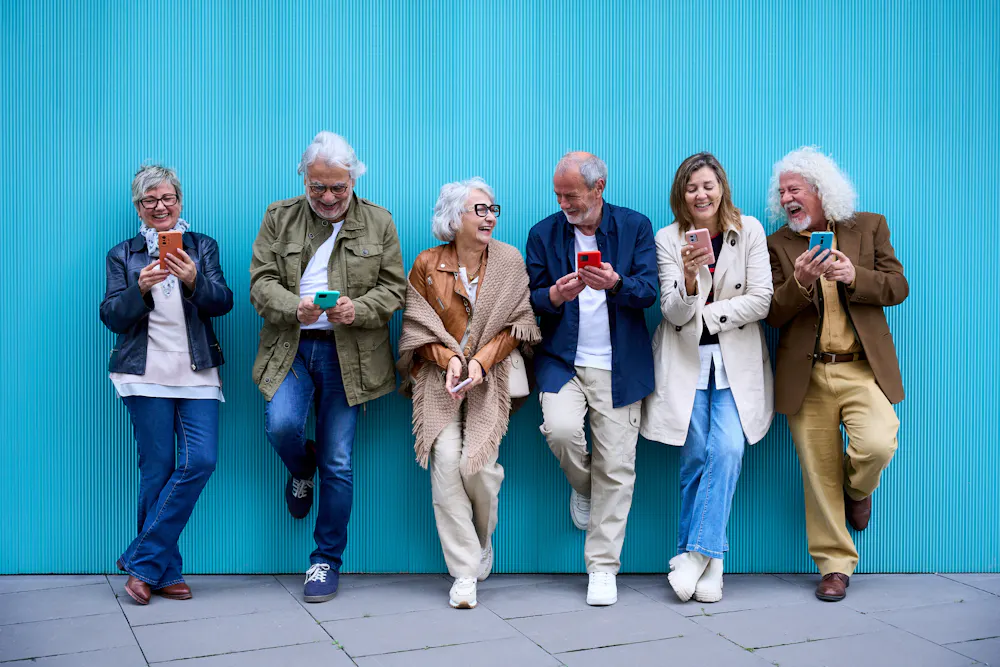
 While social media facilitates connection, it cannot replace the depth of face-to-face interactions.
TunedIn by Westend61/Shutterstock
While social media facilitates connection, it cannot replace the depth of face-to-face interactions.
TunedIn by Westend61/Shutterstock
A bridge and a barrier
Social media can keep older adults connected. But its impact depends on how it is used.
For many, it serves as a vital link to family, friends and new communities, enriching their social lives and reducing isolation. However, to unlock its full potential, addressing barriers such as digital literacy and online safety are crucial.
As the world becomes increasingly digital, empowering older adults to engage meaningfully with social media will ensure they remain not only connected but also active participants in a rapidly evolving social landscape.
Authors: Bernardo Figueiredo, Associate Professor of Marketing, RMIT University


















