

What cost-of-living crisis? Luxury travel is booming – and set to grow further
- Written by: Anita Manfreda, Senior Lecturer in Tourism, Torrens University Australia
About ten years ago, while working at Badrutt’s Palace Hotel in the Swiss town of St Moritz, I was shocked to learn a guest once requested an elephant be brought in to deliver a birthday gift to his wife. And the hotel made it happen, squeezing the elephant into the lobby.
This over-the-top gesture symbolised what luxury travel once meant: wealth and power, expressed through grand displays. Think millionaires and billionaires in lavish suites and on private yachts, enjoying exclusive services most of us would never dream of, let alone actually ask for.
Consulting group McKinsey defines the luxury traveller as someone prepared to spend US$500 or more per night on accommodation. But luxury tourism is evolving. Thanks to demographic shifts, sustainability concerns, and a post-pandemic desire for connection, luxury travel has become more personal and meaningful. And luxury travellers these days aren’t always the super rich elites.
Despite the cost-of-living crisis, luxury travel is booming. So, what’s driving this growth and how is luxury travel changing?

A trillion dollar industry
The luxury travel sector has shown remarkable resilience, even during economic downturns and the COVID pandemic. Globally, it is projected to grow from US$1.4 trillion in 2024 to $2.2 trillion by 2030.
The Asia-Pacific region is leading the surge at a compound annual growth rate of 8.6% (a way of measuring growth that assumes profits are reinvested) from 2024 to 2030.
In Australia, the trend is similar: the luxury travel market generated US$37.4 billion in 2023 and is forecast to reach US$70 billion by 2032.
This growth is driven not just by affluence among the wealthy but by younger travellers. As Forbes magazine points out, these travellers are often non-millionaires who may not earn enormous salaries or even own their own homes – but are willing to pay top dollar for meaningful experiences.
And some are splurging on trips to make up for time and opportunities lost due to the pandemic – a trend industry experts sometimes refer to as “revenge” and “revelry” travel. As one luxury travel industry observer put it:
We’re seeing travel at all costs, where people are determined to have the experience they want, regardless of what that price is.
Many consumers are prioritising luxury travel experiences over other discretionary items, including luxury goods.
Luxury can have many meanings
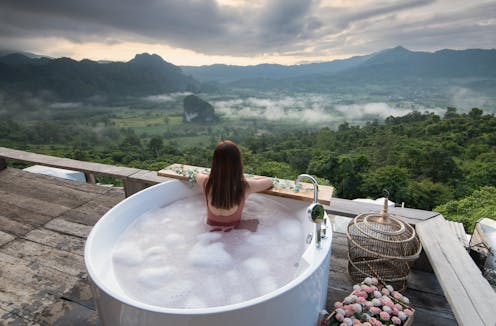
Today’s luxury travel isn’t just about extravagance; it can also include forking out for meaningful experiences. Luxury travellers are willing to pay up for holidays that promise authenticity, wellness and connection with people and places.
It can mean access to something rare, like an uncrowded natural environment or an authentic cultural experience that feels deeply personal.
It can also come from expertise – like appreciating the nuances of a rare bottle of wine, or touring a place with an expert or celebrity guide who has been there many times before.
Where it was once defined by price and status symbols, luxury travel today is about stories worth sharing (on social media and in real life) and experiences that align with personal values.
 Luxury travel can be about experiencing something worth sharing (on social media or in real life).
Raushan_films/Shutterstock
Luxury travel can be about experiencing something worth sharing (on social media or in real life).
Raushan_films/Shutterstock
Wellness, adventure and the digital detox
In my 17 years of working in and researching luxury travel, I have seen a lot of different luxury holidaymakers. Everything from humble retirees relishing the rewards of their hard work to VIP celebrities who send 32 pages of requests before even stepping foot in the hotel.
While older high-net-worth individuals from North America and Europe remain a significant demographic, a growing proportion of luxury travellers are millennials, Gen Z, and tourists from emerging markets like Asia and the Middle East.
Traditional hallmarks of luxury travel – like presidential suites and private islands – are still popular among high-net-worth individuals.
But a growing number of travellers seek cultural experiences, adventure, and small, intimate group trips.
These travellers are opting for off-peak seasons and less-visited destinations to avoid crowds, and may be more vocal about sustainable tourism.
 A new breed of luxury traveller is opting for off-peak seasons and less-visited destinations.
Jakub Maculewicz/Shutterstock
A new breed of luxury traveller is opting for off-peak seasons and less-visited destinations.
Jakub Maculewicz/Shutterstock
The future of luxury travel lies in its ability to adapt to evolving consumer values. Wellness retreats, slow travel (including by train), and sustainability-focused experiences are becoming central to the luxury travel narrative.
In a hyper-connected world, luxury travel marketing is now often linked with the idea of a digital detox. The chance to disconnect and fully immerse in the moment has become a modern indulgence.
Luxury travellers today use their trips to explore and learn, and to reconnect with the world, their relationships, and themselves.
Authors: Anita Manfreda, Senior Lecturer in Tourism, Torrens University Australia


















