

Skyrocketing prices are an age-old problem. Here’s how Roman emperors battled runaway inflation
- Written by: Peter Edwell, Associate Professor in Ancient History, Macquarie University
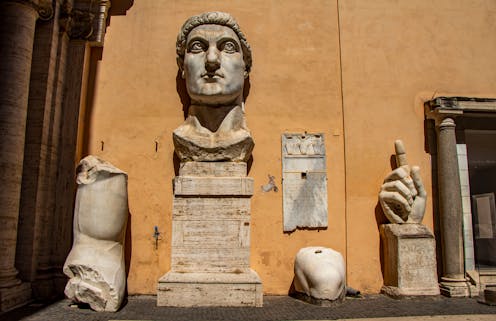
Therefore, who would not know that effrontery hijacks the public interest? […] It ratchets up the prices of things for sale, not fourfold or eightfold but so much that the human tongue’s reckoning cannot untangle what to call the accounting and the deed!
The language is different but this edict on maximum prices, issued in 301 CE by Roman emperor Diocletian, reflects a feeling familiar to many: why is everything so expensive lately?
Diocletian’s edict highlights the deep outrage he and and his imperial colleagues felt at the rampant inflation that had engulfed the Roman empire for much of the third century.
Inflation eroded the pay of the soldiers whose loyalty was the basis of the emperors’ authority.
So, how did the Roman Empire get into this mess – and how did it get out of it?
Too many coins with too little value
For much of the third century, the Roman Empire faced unprecedented crises, including foreign invasions by the Persian Sasanians and conflict with various Germanic tribes, such as the Goths.
There were also civil wars, plagues, disease outbreaks and food shortages. This period is now known as the Crisis of the Third Century.
Political stability was a distant memory; dozens of short-reigning emperors were installed and deposed as these problems grew worse.
With the scale of the military problems Rome faced in the third century, the Roman army grew larger. By the time of Diocletian’s reign (284-305) it numbered around 600,000 men. This compares with 250,000 in the first century.
A larger army (demanding ever higher salaries and bonuses) meant Roman mints needed to produce more silver coins to pay the soldiers.
Coins also functioned as political propaganda and helped cement a new emperor’s legitimacy. Every new emperor would issue new coins bearing his image. With so many emperors ruling in the third century, this contributed further to the increase in coin production.
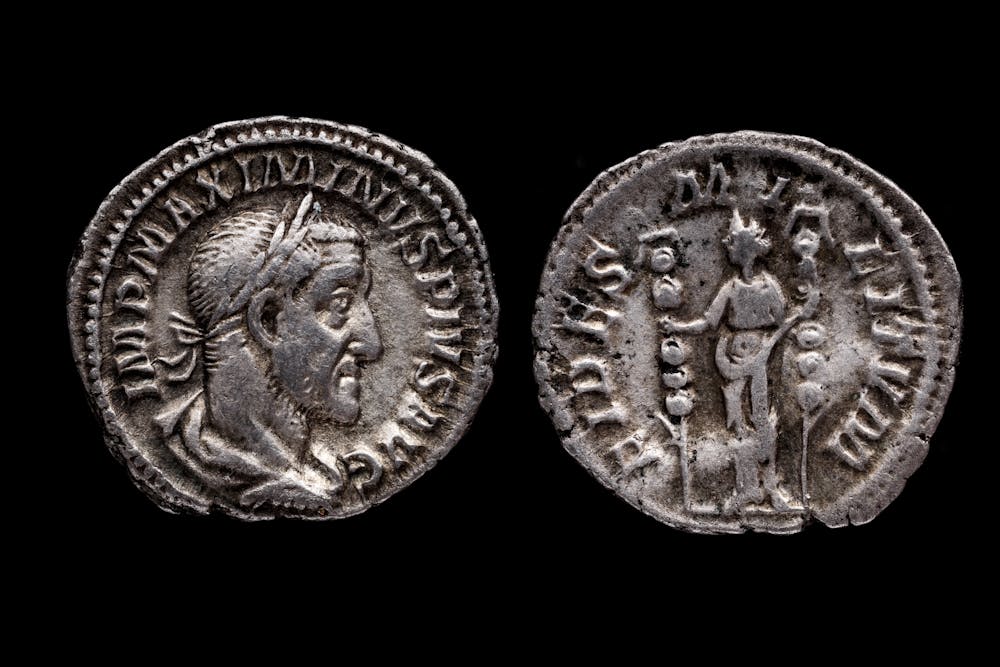
Today’s authorities sometimes use “quantitative easing” – which is often (and somewhat inaccurately) described as “printing more money” – as a way of stimulating economic activity. The vast increase in coin production and its inflationary effects in third century Rome might bear some comparison.
With ever more coins in circulation in the Roman Empire during this time, the individual value of these coins fell.
As the empire began to contract in the third century, silver became harder to get. This saw a precipitous drop in the amount of precious metal that was actually in the silver coins, a process known as debasement.
In short, they became less valuable; people (especially the soldiers) had less faith in the capacity of these debased coins to retain value, so they demanded more coins.
If they didn’t receive them, the emperor was often dispatched in quick time.
Another factor contributing to inflation will be familiar to anyone who lived through the era of COVID restrictions: supply chain bottlenecks.
War and disease (including the epidemic known as the Plague of Cyprian, which caused manpower shortages) drove instability. This led to supply chain problems that helped drive up the price of goods.
Currency reform
The Romans did not have an understanding of modern economic theories to help control inflation. Neither did they have institutions such as central banks to curtail the peaks and troughs of inflationary cycles.
What Roman authorities did control, however, was coin production.
They attempted to address the lack of faith in silver coins via currency reforms in the third century, which included a slight increase in silver content under the emperor Aurelian (270-275).
However, none of them worked. Faith in the silver currency had been permanently damaged.
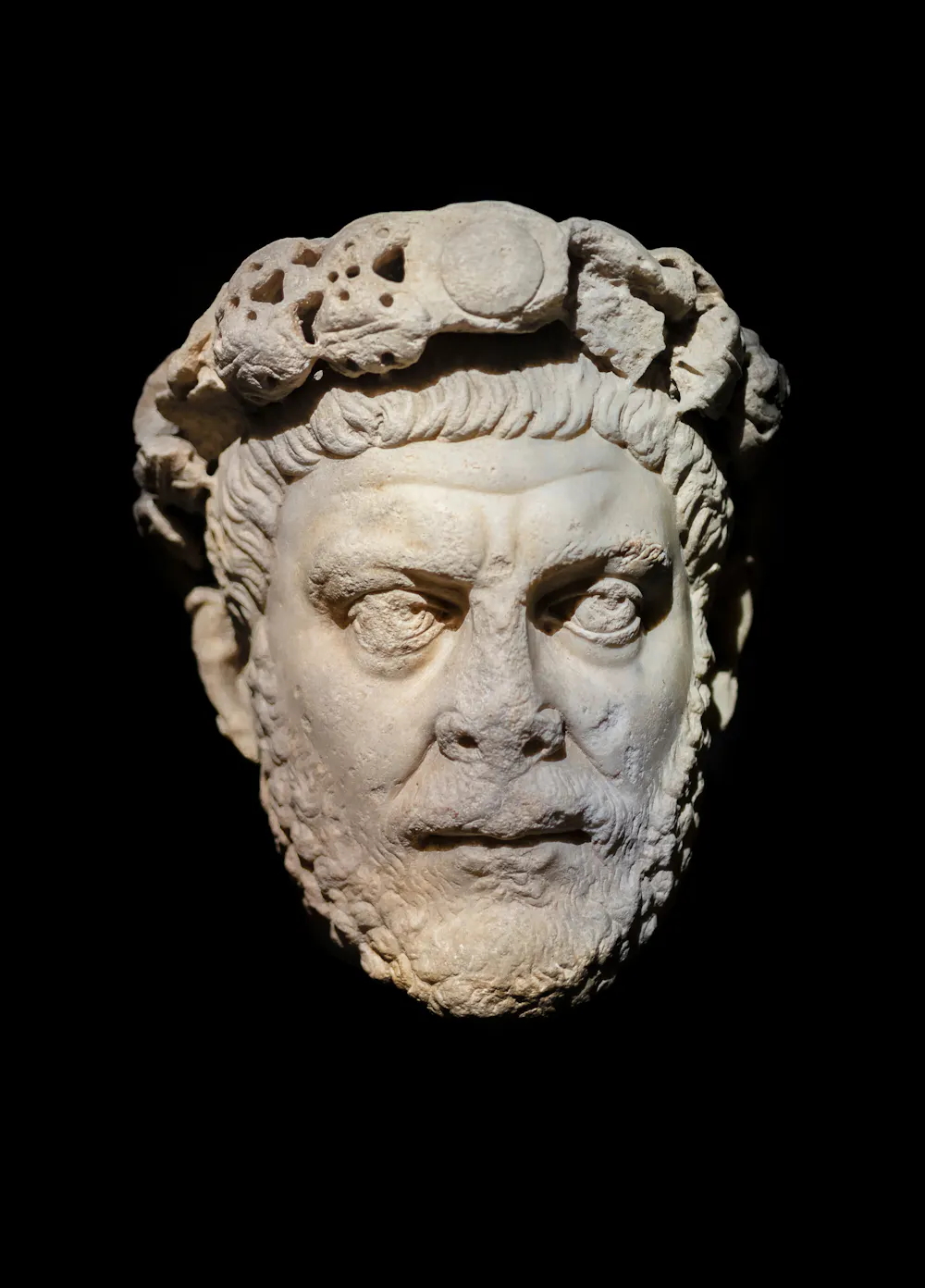 Emperor Diocletian despaired at the economic mess he’d inherited.
Gokhan Dogan/Shutterstock
Emperor Diocletian despaired at the economic mess he’d inherited.
Gokhan Dogan/Shutterstock
Emperor Diocletian came to power toward the end of the third century, and despaired at the political and economic chaos he’d inherited.
When he issued his edict on maximum prices in 301CE, he legislated an empire-wide cap on prices of around 1,200 items.
In this law, he emphasised the impact of inflation on the soldiers. The army was the key constituency on which his imperial authority lay.
The edict, however, failed.
It was unenforceable across the vast territory of the Roman Empire, and placing official caps on prices inevitably created a black market. He brought some political stability to Rome during his reign but having failed to cure it of hyperinflation, Diocletian later retired to become a cabbage farmer.
When the emperor Constantine (306-337) reformed the currency in the fourth century, he introduced a new gold unit known as the solidus.
Faith in this unit was higher due to its status (it was used chiefly by soldiers and wealthy people), high precious metal content and more controlled output. This appears to have reduced inflationary pressures.
Constantine also brought a return to political stability and single rule of the empire (compared to a fraught system of co-emperors, known as the Tetrarchy, under Dicoletian). This stability helped with inflation. Supply bottlenecks were reduced and minting of coins became more consistent across the empire.
Today’s cost-of-living crisis
There are good reasons to be critical of how today’s inflation problems have been managed by central banks and governments. But we can at least be thankful that, compared to the Roman Empire, periods of high inflation in modern economies have been and will likely be short.
Much of this is due to our advanced capacity to analyse economic data and devise theories to control inflation before it runs rampant – undermining the economic, political and social stability we so often take for granted.
Authors: Peter Edwell, Associate Professor in Ancient History, Macquarie University


















