

parasites are bizarre yet vital for life on Earth
- Written by: Euan Ritchie, Professor in Wildlife Ecology and Conservation, School of Life & Environmental Sciences, Deakin University
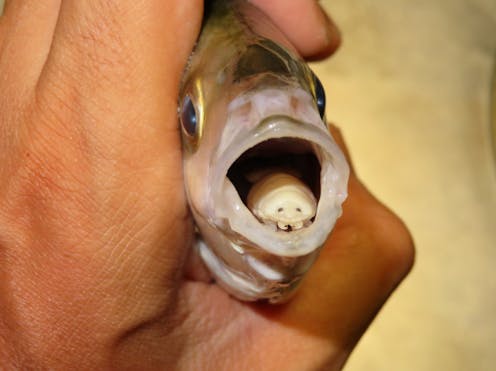
Parasite, zombie, leech – these words are often used to describe people in unkind ways. Many of us recoil when ticks, tapeworms, fleas, head lice or bed bugs are even mentioned. Coming across such unwelcome guests – in our hair, on our skin or in our beds – can be a real nightmare.
Some parasites cause horrific deformities and diseases, maiming and killing millions of people and wildlife. Others may help boost immunity or provide the basis of food chains.
Parasites are often demonised and misunderstood. But the more we study these oddities and wonders of evolution, the more we appreciate their vital roles in ecosystems and our complex relationships with them. They’re essential to life on Earth.
As an ecologist with a focus on wildlife and conservation, I wrote this article to share some of my fascination for parasites and the importance of their extraordinary lives.
Cuckoos are known as brood parasites, tricking other birds into raising their own young.What is a parasite?
Parasites rely on living organisms for food, to grow and to reproduce.
They can either live on the outside (ectoparasites) or inside (endoparasites) of their hosts. Far from being invited dinner guests, parasites typically turn up of their own accord and feed at the host’s expense, consuming part or all of them.
Parasites can live within their host (or hosts) for short or extended periods – in some cases many years – going largely unnoticed. For instance, one man lived with a tapeworm in his brain for more than four years until the headaches and strange smells become too much to bear. In other cases, parasites can kill their host.
Perhaps the most gruesome type of parasite, parasitoids, kill their hosts in order to reproduce. The disturbing chest-bursting scene from the 1979 movie Alien is a truly visceral sci-fi example of a parasitoid.
In real life, examples include spider wasps that first immobilise their spider prey, lay an egg on them, and bury them. Then when the egg hatches, the wasp larvae devour the incapacitated spider. That is, of course, if another animal such as a “bin chicken (Sacred Ibis)” or insect doesn’t intervene.
Parasites are widespread and profoundly affect our world.Parasites are typically much smaller than their hosts. Many are furnished with equipment for latching on and remaining attached, including hooks, suckers and “teeth”.
Endoparasites such as tapeworms are often flat, allowing them to live within the tight spaces inside other organisms. The flatworm Diplozoon paradoxum that lives in gills of some fish must conjoin with another to reach adulthood and reproduce. Once fused, they form a permanent, lifelong bond and mate with each other over many years.
As much as 40% of all animal species may be parasites, and this mode of life might have evolved more than 200 times in the animal kingdom. But parasitism is not solely confined to animals. Many plants, fungi, protists, bacteria and viruses are parasites too.
Parasite powers
The leech scene in the iconic 1986 movie Stand By Me comes back to me every time I walk through a damp forest. The idea of providing a blood meal for another species sparks fear in many people. But leeches may also come to our aid, either by helping to reduce pooling of blood or reestablishing blood flow to areas post-surgery. Their anaesthetic saliva also has anti-inflammatory and anticoagulant properties, which are advantageous for medical procedures.
As the blood of leeches contains DNA from their past meals, conservation scientists can use them to search for rare and cryptic wildlife.
Leeches are aiding wildlife conservation.One of the world’s most widespread parasites is Toxoplasma gondii. Some estimates suggest as many as one in three people are affected. This parasite’s main host is cats, large and small species. House cats are frequently infected, spreading this parasite through their faeces.
While many infected people appear to have no symptoms, serious effects can include organ damage, complications with pregnancy or abortion, erratic risk-taking behaviour, mental conditions, and more traffic accidents than unaffected people.
There are potential “benefits” too. Research suggests Toxoplasma infection, which can increase confidence and risk-taking, may even be linked with increased entrepreneurial and business-related activities. Indeed, this same study found that nations with higher rates of toxoplasmosis had a lower proportion of individuals concerned about failure related to new business ventures.
Toxoplasmosis is associated with a vast array of symptoms and medical conditions.Toxoplasma gondii manipulates its host to increase transmission and continue its life cycle. Infected rodents may become unwitting participants in a game of cat-and-mouse-and-parasite in which they lose their fear of cats and instead become attracted to them.
Rather than manipulating host behaviour, as in the case of fungi that turn ants into zombies, some parasites cause body malformations. This makes hosts more likely to become prey for subsequent hosts and hence to continue the parasite’s life cycle. One of the most striking examples is a trematode (flatworms often known as flukes) that causes missing legs, extra legs or deformed legs in frogs and other amphibians. Extra legs, in some cases several, serve no function and simply impede movement, making it harder to escape predators.

Parasites are fundamental to ecosystems and require conservation
Parasites are a big part of life on Earth. A study on the Californian coast found the sheer mass of parasites exceeded that of top predators. In particular, the biomass of trematodes was greater than that of birds, fish, burrowing shrimps and polychaetes (marine worms).
Evidence suggests ecosystems rich in parasites are healthier than those with fewer parasites. But there is increasing concern for the survival of these species amid a growing extinction crisis. So a global plan for parasite conservation was proposed in 2020, with priorities including increased data collection and genetic analysis, making conservation assessments, and raising public awareness.
Sadly, parasites can inflict great pain, meat allergies, suffering, and a heavy death toll. Malaria, schistosomiasis (sometimes referred to as snail fever, bilharzia, and Katayama fever), and sleeping sickness are just a few examples.
But they also shape our world in profound ways, have crucial ecological roles, and paradoxically, may in some cases help keep us healthier. Though it may be confronting to admit, we need parasites as much as they need us.
 The presence of parasites (Gyrodactylus turnbulli) can affect how colourful male guppies are, influencing their ability to attract mates.
Wikimedia commons, CC BY
The presence of parasites (Gyrodactylus turnbulli) can affect how colourful male guppies are, influencing their ability to attract mates.
Wikimedia commons, CC BY
Authors: Euan Ritchie, Professor in Wildlife Ecology and Conservation, School of Life & Environmental Sciences, Deakin University


















