

In Our Evenings, Alan Hollinghurst takes an elegiac look at class, sexuality and race in post-Brexit Britain
- Written by Andrew van der Vlies, Professor, English and Creative Writing, University of Adelaide
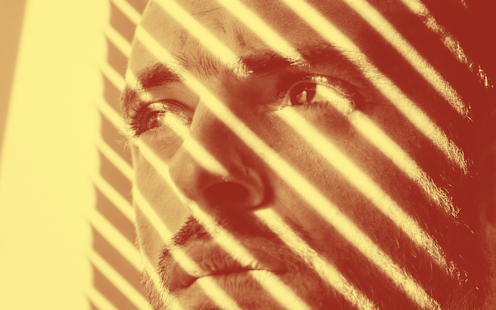
Late in Alan Hollinghurst’s new novel Our Evenings, the narrator David Win, gracefully ageing doyen of the British stage, experiences one of those moments when the world is revealed to be other than he thought it was.
Rehearsals for a play – a work in translation from the German, with a French star and a Danish designer – are advancing at the Almeida Theatre in Islington. On the day of the Brexit referendum, David discovers that a cast member, another august theatrical personality, is not going to be voting Remain. From a veteran of the Avignon Festival, who declares he loves Europe and France, this is startling news.
“It’s the immigration, really. It’s out of control. I’m sorry, Dave,” he said, as if I were an immigrant myself.
Though British born and raised, Win is of English and Burmese heritage.
“I don’t like being bossed around,” his fellow actor complains. What is left unsaid, we infer, is “by foreigners”.
Review: Our Evenings – Alan Hollinghurst (Picador)
Whether or not this category includes Britons of Asian or African heritage has been one of the most difficult, and often unspoken, questions of the period since Brexit. The actor’s aside (“I’m sorry, Dave”) hardly suggests a settled answer in the affirmative. And while a majority of ethnic-minority voters supported Remain, the picture was more complex than many assumed.
In Our Evenings, the players soldier on, trying to find common footing on limited, shaky ground, though it is clear that new affects are at large. Things once unspeakable are suddenly in the open. As the novel draws to a close, the violent effects of such discourse hit close to home, forcing a shocking and poignant – if not mordant – denouement.

To cast Our Evenings only as a work of “Brexlit” would be a mischaracterisation. It is, in fact, less obviously a work in this genre than substantial recent fictions by Ali Smith, Ian McEwan and Andrew O’Hagan.
Rather, the novel is an elegy for a generation now passing, whose professional lives preceded the era of Diversity, Equity and Inclusion. In particular, it is concerned with people who tried their best to fit in, but whose experience of British life was marginal, whether on account of class, race or (a recurrent Hollinghurst theme) sexuality.
Dave Win fits these categories of marginalisation. He is visibly darker than his mother, though he has no connection to Burmese relatives or community; he is the son of a dressmaker in a market-town in England’s South-East; and he is gay.
Hollinghurst has long been interested in the imbrication of class and sexuality, going back to his debut The Swimming Pool Library (1988). The theme was memorably explored in The Line of Beauty (2004), which won the Booker Prize.
The addition of racial otherness in Our Evenings is a departure – brave, given recent debates about identity politics in narrative fiction – that feels urgent and necessary. Indeed, Brexit, and later COVID (also a key context for the final turn in the novel), have reframed debates about ethnic nationalism in the UK.
Read more: 'Only disconnect' – in Caledonian Road, Andrew O'Hagan depicts Britain's great unravelling
Role models
Dave’s narrative is offered in the form of discrete vignettes from key moments in his youth, young adulthood and acting career. It is directly linked to Britain’s approach to Brexit via his entanglement with a wealthy family, the Hadlows, whose scion, Giles, ends up a key Brexiteer.
In the novel’s earliest episodes, Dave recalls transferring from a local state school to a minor private school, Bampton, on a scholarship endowed by the Hadlows. We see Dave on the obligatory visit to the family estate in the Cotswolds, where he is bullied by Giles and discovers his talent for acting (recognised by Giles’ grandmother, who happens to be French). He establishes a relationship of mutual respect and mentorship with Giles’ parents, Mark and Cara, who will become estranged from their son.
Dave does not, in the end, lack role models. His mother, Avril, turns out to be queer too. She moves in with one of her wealthy clients, Esme Croft, with whom she lives happily and modestly for the next three decades. Dave recounts how, at a party they hosted as he prepared to go off to Oxford, he saw them through the eyes of others for the first time. Their friends take “their being together […] for granted”. It is a seminal moment in his own self-acceptance.
Dave’s vocation in the theatre means he can largely move in circles sympathetic to his sexuality, if not always to his skin colour. He is often typecast. He is frequently mistaken for the handful of other actors of east or south-east Asian ancestry on the English stage. He also suffers racist abuse, though he downplays this, as one might expect someone of his generation to do – someone eager to get on and belong to a notional establishment.
Ultimately, the novel – or the fictional memoir that is its major portion – suggests that a life well lived is not adequately captured by these (memorably) unpleasant encounters, but in the personal relationships that unfold over the course of seven decades.
The lark ascending
“In your fifties and sixties your father-figures drop away,” Dave declares early in the narrative, “the ones who had licensed, enabled and witnessed your life – and no one can replace them.” A reader might here note Our Evenings’ dedication: “E. L. H. 1919–2016”.
If Our Evenings is an elegy, then, it is Hollinghurst’s as well as Dave’s. In both cases, it is elegiac about a particular vision of Englishness: more cosmopolitan and open to Europe, more accepting of difference (however grudging), more attuned to its multiple inheritances.
 There are early models for such cosmopolitanism in a couple of the Bampton masters. Mr Gregson, whom Giles declares a “ponce”, recommends the work of Lawrence Alma-Tadema in art class. “I’m starting to wonder about Mr Gregson,” quips Giles’ older sister.
Then there is Mr Hudson, who runs the “Record Club”, keeping Dave behind to listen to Janáček’s On an Overgrown Path. They rhapsodise over a moment entitled “Our Evenings”. Mr Hudson writes to Dave over the holidays.
These teachers model queerness for the young Dave, though it is a quiet, straight-acting variety that allows them to keep their posts in repressive times.
There are crushes and lovers, too – notably Hector, a player in the experimental troupe to which Dave devotes his young adulthood, who is Black, briefly contracted by the Royal Shakespeare Company, and later a film star. There is Chris, a civil servant. And finally, there is Richard, whom Dave meets as the chair of a panel at a literary event where he is promoting his theatre memoir The Stage is All the World.
Giles is speaking at the same literary festival, promoting his book Our Laws, Our Borders. The festival is one of three occasions for set-piece encounters between Dave and Giles, Dave’s (or more accurately the novel’s) bête noire.
Each of these encounters is played partly for laughs. They first cross paths as adults at a Bampton reunion (Giles is speaking on “Making Our Own Way: Britain and the EU”, Dave on stage careers), then at the festival, which is being held in a stately home.
The final encounter comes at Snape, near Aldeburgh, where Dave is appearing as “the Speaker in a strange late piece by Vaughan Williams, An Oxford Elegy”. Giles is in attendance as Minister for the Arts, a position for which he seems grossly unqualified, and he disrupts the performance when his military helicopter whisks him off, mid-show, to a late-night summit in Brussels. Dave ad-libs: “Ladies and gentlemen, the lark ascending!” – a campy joke for those who know Vaughan Williams’ oeuvre.
This is perhaps meant to cast Brexiteers in the farcical role they deserve in Hollinghurst’s – and many other writers’ – estimation. Yet Dave makes it clear that “for a long time” he “barely thought of Giles at all”. He reiterates the point elsewhere: “there were whole years when I barely thought of him at all.”
The reader is left to consider whether Our Evenings grants Giles an unwarrantedly large role in Dave’s life, or life story. On the one hand, there is the fascination of those who learn of the connection and ask Dave, repeatedly, about Giles rather than about himself. Their curiosity makes a point about the news cycle and the celebrity culture that feeds the narcissism of ethno-nationalist politicians.
On the other hand, Our Evenings confirms, despite the introduction of race to Hollinghurst’s clutch of concerns, the author’s ongoing fascination with what we might think of as proximate belonging. I mean by this the experiences of those excluded from privilege, who long to be admitted to its secrets nonetheless.
There are early models for such cosmopolitanism in a couple of the Bampton masters. Mr Gregson, whom Giles declares a “ponce”, recommends the work of Lawrence Alma-Tadema in art class. “I’m starting to wonder about Mr Gregson,” quips Giles’ older sister.
Then there is Mr Hudson, who runs the “Record Club”, keeping Dave behind to listen to Janáček’s On an Overgrown Path. They rhapsodise over a moment entitled “Our Evenings”. Mr Hudson writes to Dave over the holidays.
These teachers model queerness for the young Dave, though it is a quiet, straight-acting variety that allows them to keep their posts in repressive times.
There are crushes and lovers, too – notably Hector, a player in the experimental troupe to which Dave devotes his young adulthood, who is Black, briefly contracted by the Royal Shakespeare Company, and later a film star. There is Chris, a civil servant. And finally, there is Richard, whom Dave meets as the chair of a panel at a literary event where he is promoting his theatre memoir The Stage is All the World.
Giles is speaking at the same literary festival, promoting his book Our Laws, Our Borders. The festival is one of three occasions for set-piece encounters between Dave and Giles, Dave’s (or more accurately the novel’s) bête noire.
Each of these encounters is played partly for laughs. They first cross paths as adults at a Bampton reunion (Giles is speaking on “Making Our Own Way: Britain and the EU”, Dave on stage careers), then at the festival, which is being held in a stately home.
The final encounter comes at Snape, near Aldeburgh, where Dave is appearing as “the Speaker in a strange late piece by Vaughan Williams, An Oxford Elegy”. Giles is in attendance as Minister for the Arts, a position for which he seems grossly unqualified, and he disrupts the performance when his military helicopter whisks him off, mid-show, to a late-night summit in Brussels. Dave ad-libs: “Ladies and gentlemen, the lark ascending!” – a campy joke for those who know Vaughan Williams’ oeuvre.
This is perhaps meant to cast Brexiteers in the farcical role they deserve in Hollinghurst’s – and many other writers’ – estimation. Yet Dave makes it clear that “for a long time” he “barely thought of Giles at all”. He reiterates the point elsewhere: “there were whole years when I barely thought of him at all.”
The reader is left to consider whether Our Evenings grants Giles an unwarrantedly large role in Dave’s life, or life story. On the one hand, there is the fascination of those who learn of the connection and ask Dave, repeatedly, about Giles rather than about himself. Their curiosity makes a point about the news cycle and the celebrity culture that feeds the narcissism of ethno-nationalist politicians.
On the other hand, Our Evenings confirms, despite the introduction of race to Hollinghurst’s clutch of concerns, the author’s ongoing fascination with what we might think of as proximate belonging. I mean by this the experiences of those excluded from privilege, who long to be admitted to its secrets nonetheless.
 Evelyn Waugh (1940).
Carl Van Vechten, Public domain, via Wikimedia Commons
This has been fertile territory for writers, of course, from Henry James to F. Scott Fitzgerald and E.M. Forster, all of whom are clear models for Hollinghurst’s social comedy and, in some cases, prose style. Another writer who comes to mind is Evelyn Waugh. The Line of Beauty is surely in conversation with Brideshead Revisited. Its protagonist Nick Guest is a modern-day Charles Ryder, witness to a grand family’s fantasies and flaws. He not immune from their attractions, despite their apparently corrupting effects.
If Nick Guest’s relationship to power is made clear in his name (even apparently realist fiction can tease with the suggestion of allegory), is this also the case with Dave Win? Dave succeeds, certainly, in leaving us his story. But it is necessarily partial, constrained by the silences of his generation. It is also shot through with a small-c conservatism: a result of his vicarious adjacency to the power and privilege that, like all of Hollinghurst’s fiction, the novel thinks it is critiquing.
Authors: Andrew van der Vlies, Professor, English and Creative Writing, University of Adelaide
Evelyn Waugh (1940).
Carl Van Vechten, Public domain, via Wikimedia Commons
This has been fertile territory for writers, of course, from Henry James to F. Scott Fitzgerald and E.M. Forster, all of whom are clear models for Hollinghurst’s social comedy and, in some cases, prose style. Another writer who comes to mind is Evelyn Waugh. The Line of Beauty is surely in conversation with Brideshead Revisited. Its protagonist Nick Guest is a modern-day Charles Ryder, witness to a grand family’s fantasies and flaws. He not immune from their attractions, despite their apparently corrupting effects.
If Nick Guest’s relationship to power is made clear in his name (even apparently realist fiction can tease with the suggestion of allegory), is this also the case with Dave Win? Dave succeeds, certainly, in leaving us his story. But it is necessarily partial, constrained by the silences of his generation. It is also shot through with a small-c conservatism: a result of his vicarious adjacency to the power and privilege that, like all of Hollinghurst’s fiction, the novel thinks it is critiquing.
Authors: Andrew van der Vlies, Professor, English and Creative Writing, University of Adelaide 


















