

why our brains struggle to believe in randomness
- Written by: Milad Haghani, Senior Lecturer of Urban Risk & Resilience, UNSW Sydney
We are surrounded by random events every day. Will the stock market rise or fall tomorrow? Will the next penalty kick in a soccer match go left or right? Will your lottery ticket finally win?
Often, we experience these events not as isolated occurrences but as part of a sequence. In these sequences, our brains crave certainty and patterns.
Sometimes there really is something meaningful behind the patterns we observe. But often, we’re simply reading into randomness.
How can we tell the difference? One thing to keep in mind is the idea of independent events. In probability, this means the outcome of one event doesn’t influence the outcome of another.
The failure to understand independence lies at the heart of two famous phenomena: the gambler’s fallacy and the “hot hand” in sports.
When we do understand independence, we can make better decisions in a world full of uncertainty.
The gambler’s fallacy
On August 18 1913, at the Monte Carlo Casino, gamblers witnessed one of the most extraordinary roulette streaks in history. The ball landed on black once, twice, five times, ten times — and it kept going.
Imagine you’re there, watching as black comes up 15 times in a row. What would you do? Would you bet on black, thinking the streak will continue? Or would you bet on red, convinced it’s “due” to appear?
That night, most gamblers chose red. By the 20th spin, the table was packed with players staking everything on red, certain the streak of black couldn’t last forever.
But the ball continued to defy them, landing on black again and again. It wasn’t until the 27th spin that red finally appeared — by which point, many gamblers had lost a fortune.
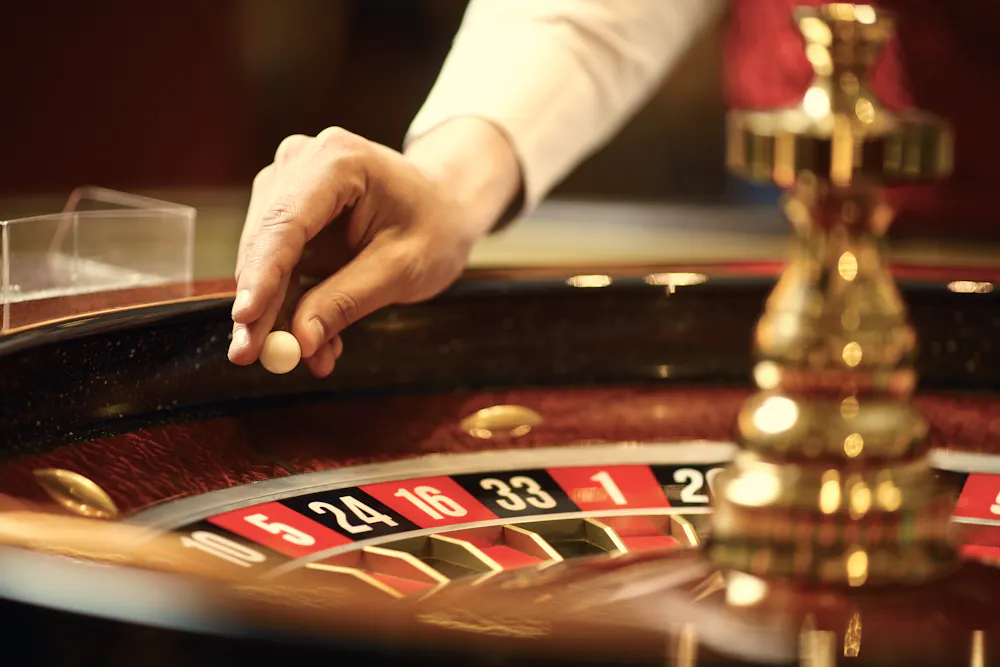
While the exact amount lost by gamblers during the 1913 Monte Carlo roulette event isn’t documented, it’s reported they collectively lost millions of francs.
This historic night is now a textbook example of the gambler’s fallacy: the mistaken belief that past events influence the likelihood of future outcomes in a sequence of independent trials.
In reality, the roulette wheel is fair, meaning each spin is random and independent of the last. The probabilities of landing on red, black or green remain the same every time, no matter what happened before.
Lotteries, kids and kicks
Such randomness traps don’t just catch us at the roulette wheel. We fall for them in other situations, too.
Lottery players often assume a number is “due” after not appearing for weeks. This often leads to debates about when to change picks based on patterns observed in recent draws.
Parents who have had several children of the same sex may (mistakenly) believe they are more likely to have a child of the opposite sex next.
Soccer goalkeepers too fall victim to the gambler’s fallacy. A study analysing 37 penalty shootouts in World Cup and European Cup matches found goalkeepers were 70% more likely to dive in the opposite direction after three consecutive kicks had gone to the same side, believing the streak must “balance out”. Interestingly, strikers didn’t exploit this predictable behaviour, as their kick directions remained random.
The ‘hot hand’ phenomenon
Not all sequences of random events are independent. Sometimes, events in a sequence can influence one another, creating patterns that are real rather than imagined.
This brings us to the “hot hand” phenomenon. This is the widespread belief that players performing well — such as scoring consecutive basketball shots — are more likely to continue performing well.
But does the hot hand really exist, or is it just another example of our tendency to impose patterns on random events? The short answer: it’s complicated.
Unlike the gambler’s fallacy, which can be ruled out by clear statistical principles, the hot hand phenomenon resists definitive dismissal.
There’s no way to prove that consecutive basketball shots are entirely independent. Skill, confidence or momentum could play a role in creating real streaks.
Empirical evidence, however, remains mixed and context-dependent. Some studies have observed mild effects in certain sports, but others have ruled out the effect.
While the question originated in basketball, later research has extended to other sports, including baseball, darts, tennis and bowling. Most studies suggest that the effect, if it exists, is far weaker than many players, coaches and fans believe.
What does this all mean?
As humans, we’re wired to seek patterns and trends to make sense of the world and navigate decisions. But often, we only have access to small batches of information, which can lead us astray when interpreting randomness.
One common mistake is assuming that streaks or clusters of similar outcomes indicate something unusual or rigged. In reality, these clusters are normal features of randomness.
Fairness or balance only emerges over a very large number of events, not in small samples. Independent events such as coin flips have no memory. Each outcome stands alone, unaffected by what came before.
This tendency to see patterns where none exist, also known as the clustering illusion, can often fuel superstitions such as “bad luck comes in threes”. It’s the same bias that leads us to expect a losing streak at the casino to end soon, or to believe a series of unrelated misfortunes in life means we’re “due” for some good luck.
However, events aren’t always independent. Sometimes, a cluster of good outcomes — such as a series of career successes — may genuinely reflect skill, momentum, or changing circumstances, and could signal future opportunities.
So next time you encounter a streak of events – good or bad — pause and reflect. If there’s no reason to believe the events are connected, resist the urge to overinterpret. Understanding randomness can free us from unnecessary worry or false hope, allowing us to focus on decisions grounded in reality.
Authors: Milad Haghani, Senior Lecturer of Urban Risk & Resilience, UNSW Sydney


















