

Your fuzzy flannel pyjamas could be incredibly flammable – here’s what to know
- Written by: Rebecca Van Amber, Senior Lecturer in Fashion & Textiles, RMIT University
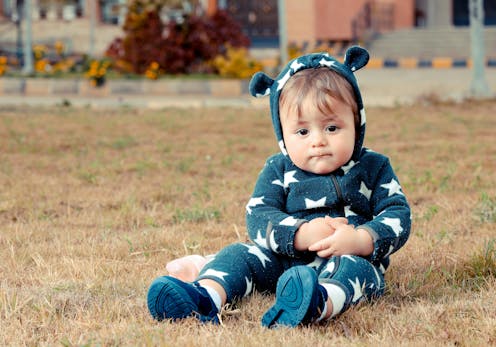
Last year, the Australian Competition and Consumer Commission (ACCC) issued at least nine recall notices on products that didn’t comply with the mandatory standard for nightwear for children. All of these items posed a fire hazard, but didn’t have the required labelling.
The latest of these recalls, a glow-in-the-dark jumper sold on the website Temu, caused severe burn injuries to an 8-year-old Queensland girl. The incident has exposed significant gaps in Australian product safety standards.
Brands will use warning labels to meet legal requirements (such as the mandatory standard mentioned above), but they continue producing and selling these dangerously flammable textiles. This shifts the responsibility to shoppers who purchase items with fire warning labels, but may not fully understand the implications of the warning.
Highly flammable fabrics are far more common than you might realise – and it’s not just synthetic ones that can easily catch flame.
What makes a fabric flammable?
Textiles are lightweight materials, often with a high surface area meaning they ignite and burn easily. The next time you light a candle, just look at the wick – it’s usually a cotton yarn.
The only naturally flame-resistant fibre is wool, along with all other animal protein fibres such as silk, alpaca, mohair, cashmere and others. These fibres are slow to ignite and form ash when burned.
Synthetic materials melt when burning. If they stick to the skin, they can cause severe injuries that are difficult to treat. Polyester made up over 57% of global fibre production in 2023.
Acrylic is the most flammable of all synthetics. Acrylic fibres are commonly used to make jumpers that look and feel like wool, but are much less expensive to produce. Without checking the label, shoppers can easily mistake acrylic sweaters for wool ones.
Not all synthetic fibres are equally flammable. Somewhat confusingly, there is a flame-resistant fibre called modacrylic. Modacrylic was developed to address the flammability problems with acrylic. Other flame-resistant human-made fibres are kevlar and glass.
However, there is more to fabric flammability than just the fibres alone. Textile fabrics are complex materials – a fabric’s flammability is affected by the fibres, yarns, structure (knit or weave), and any finishes used.
For example, smooth, tightly woven or knitted fabrics will be slower to burn than lightweight or fuzzy fabrics. Fabrics can also be treated with flame retardant finishes.
Fabrics with the highest fire risk are those with a pile or brushed surface (think cosy, fuzzy or furry fleeces, flannelettes and faux furs) and are composed of cotton, acrylic, polyester and other synthetic fibres. These soft and fuzzy (and highly flammable) textile products are everywhere, and often at affordable prices.

‘Not intended for children’s sleepwear’
Despite well-known fire risks of different materials, Australian rules for fibre content labelling lapsed in 2019. Now, products only legally need care instructions.
Most brands still list the fibre content (for example, “100% cotton”) to meet American and European requirements, but it’s no longer legally required here.
Current safety rules focus mainly on protecting children, particularly in sleepwear and some daily clothes. However, risk from flammable clothing extends beyond children. Women, older people and any person who tends to wear loose-fitting garments that can catch fire more easily are at risk.
Many costume pieces like capes, hoods, wings and tutus are also excluded from children’s product safety rules in Australia. The exclusion of these types of items from regulation is especially baffling, as they often pose a high flammability risk due to their combination of materials and loose-fitting designs.
All this means shoppers may not know the item they are purchasing is highly flammable.
Consider a shopper who encounters flannel fabrics printed with bunnies and dogs at a major Australian retailer. These fabrics come with mandatory warnings like “not intended for children’s sleepwear” or “fire warning: flannelette is a flammable material and care should be taken if using flannelette for children’s sleepwear and loose-fitting garments”.
What are these cutesy flannel fabrics to be used for, if not children’s products?

We need stronger consumer protection
While Australia has consumer protection laws, the ACCC has acknowledged there is no direct ban on selling unsafe products.
Without stronger legislation prohibiting the production and sale of highly flammable textiles, Australia risks becoming a market for hazardous clothing and textile products that don’t meet stricter international standards.
At the very minimum, Australia needs to reintroduce mandatory fibre content labelling for textiles and clothing products to be in line with US and EU requirements.
In the meantime, consumers need to take action in other ways. Take any product with a “fire warning” label seriously – don’t let children wear fuzzy, fleecy, furry or loose clothing items such as costumes around open flames or as sleepwear. Older adults can also be at risk. Wearing a favourite fuzzy bathrobe when cooking over open flames, such as a gas stove top, is extremely dangerous.
Better yet, don’t purchase any items with a “fire warning” label – brands will stop producing items that don’t sell.
Consumers are encouraged to report any products they suspect are unsafe to the ACCC.
Authors: Rebecca Van Amber, Senior Lecturer in Fashion & Textiles, RMIT University


















