

Does ‘made with love’ sell? Research reveals who values handmade products the most
- Written by: Tuba Degirmenci, PhD Candidate School of Advertising, Marketing and Public Relations, Queensland University of Technology
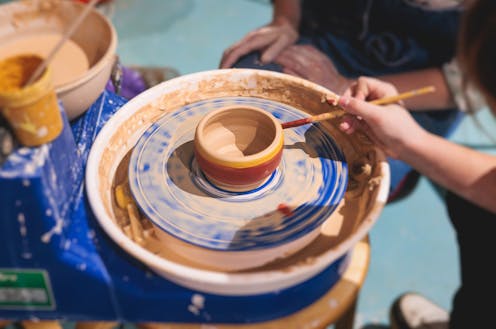
We’ve all seen the marketing message “handmade with love”. It’s designed to tug at our heartstrings, suggesting extra care and affection went into crafting a product.
As Valentine’s Day approaches, many businesses will ramp up such messaging in their advertising.
Handmade gifts are often cast as more thoughtful, special options than their mass-produced, machine-made alternatives.
But does “love” actually sell? Our new research, published in the Journal of Consumer Behaviour, reveals not everyone feels the same way about these labels.
Why do some people feel handmade products are made with love, while others don’t really care? We found it’s all about how they approach purchase decisions.
A deeper, human connection
Why do businesses market products as handmade? Previous research has shown handmade labels can lead to higher positive emotions. This tendency is known as the “handmade effect”.
In a world of seemingly perfect and polished products, research shows consumers increasingly prefer human (as opposed to machine) interactions, including in their shopping experiences.
It’s also been shown that giving handmade gifts can promote social relationships.
We often associated handmade products with smaller “cottage” retailers. But many major global retailers – including Amazon and IKEA – have strategically introduced handmade products, aiming to connect on a deeper emotional level with their consumers.
Our research found not all consumers respond in the same way to these marketing messages.
IKEA has previously run a dedicated handmade marketing campaign.Who cares about love?
Across two studies, we found that the response to marketing products as “handmade” depends on a consumer’s locomotion orientation – put simply, how they approach decisions and other actions.
Low-locomotion individuals take things more slowly. They take their time and can thoroughly consider their purchase decisions. Think of them as the “mindful”.
In contrast, high-locomotion individuals are “doers”. They like to get things done quickly without getting stuck in the details. They are the “grab-and-go” shopper.
When the way they perform an action – such as making a purchase – matches their fast-paced mindset, something remarkable happens: they experience what’s called “regulatory fit”.
This fit boosts their emotions and engagement.
Our first study
In our first study, participants imagined buying a gift for a loved one. They were split into three groups and presented with a photo of the same mug.
One group was informed that the mug was “handmade”, one group informed it was “machine-made”, and the last group was not offered any “production cue”.
We also asked and measured how much “love” they felt the mug contained – and how much they would pay for it.
The handmade mug evoked more love and led to a higher willingness to pay – but only for those with a “low-locomotion” orientation.
High-locomotion individuals didn’t react in the same way. For these “doers”, the backstory of how the mug had been made wasn’t as important as just getting a product they needed.
For the “doers”, the benefits of marketing the mug as handmade actually backfired.
They felt more love for the mug if it had no label at all.
Our second study
By communicating with consumers on social media, marketers can trigger a mindset called “regulatory locomotion mode”. Put simply, this is the mode where we take action and make progress toward goals.
Marketers can do this by using locomotion-activating words such as “move” and “go” to encourage active decision-making.
To borrow one famous example from Nike: “Just Do It”.
Our second study examined the marketer-generated content of over 9,000 Facebook posts from the verified Etsy Facebook page.
We analysed how locomotion-activating words in social media posts for handmade products influence consumer engagement.
In other words, we wanted to understand how these words affected social media engagement with the potential consumers reading them, particularly in terms of social media shares.
We found the higher an individual’s locomotion orientation was, the fewer social media “shares” for handmade products occurred.
So, does handmade really matter?
As we get closer to Valentine’s Day, understanding these differences can help retailers tailor their marketing strategies.
For “mindful” customers, retailers should highlight the story of the craftsmanship, care, and love behind a handmade product for Valentine’s Day. Use emotional language such as “made with love”.
But be aware this mightn’t work on everyone. For a customer base of “doers”, keep it simple, leaving out unnecessary details about production methods.
There are a range of website analytical tools that can help retailers identify how their customers approach their purchase decision-making.
Do they browse quickly, hopping from one product to the next, opting for “one-click” purchasing? Or do they take their time, browsing slowly and considering their product selection?
Personalised marketing messages can then be crafted to emphasise the aspects – love or efficiency – that matter most to each group. The key lies in knowing who you’re speaking to.
Authors: Tuba Degirmenci, PhD Candidate School of Advertising, Marketing and Public Relations, Queensland University of Technology


















