

Simply returning rescued wildlife back to the wild may not be in their best interest
- Written by: Bruce Englefield, PhD Student. Faculty of Veterinary Science, University of Sydney
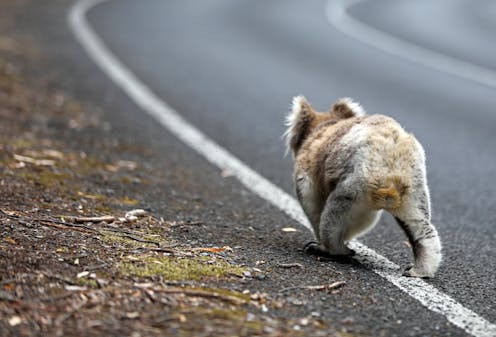
There are few checks done to see how well injured or orphaned Australian animals survive after they’ve been released into the wild, we found in our new research published on Sunday.
That’s a worry for the more than 50,000 native animals that are released in Australia each year. It’s especially worrying for any orphans who’ve never experienced life in the wild.
But we found the rules governing the return of wildlife are not always in the animal’s best interest.
Read more: Not just activists, 9 out of 10 people are concerned about animal welfare in Australian farming
Our review of Australian animal welfare legislation, regulations, codes of practice and policies found a complex regulatory system that varies between states and territories. It’s a system that is fragmented, contradictory and inconsistent.
This makes it difficult for the many thousands of volunteers and others who try to rescue and rehabilitate native animals.
Australia lags in animal welfare
We believe Australia lags behind the developed world in animal welfare and animal law. This situation evolved haphazardly and is hampered by policies that rely on assumptions based largely on neither scientific nor factual evidence.
Current policy mandates that rehabilitated rescued animals must be placed into the wild. The survival of these animals after release depends on their behavioural and physical attributes, yet some could be ill-equipped to survive.
From our reading of current regulations, any such assessment of an animal’s suitability for release is either negligible or questionable.
There is also no reliable method of identifying animals after release. Indeed, most jurisdictions forbid it and, perhaps as a direct result, there is minimal monitoring to show what happens to released animals.
Return to where?
In general, all Australian jurisdictions require rehabilitated animals to be returned to the wild. But rather than using a more general definition of rehabilitation we should think of returning the animal to its natural habitat or state.
The distinction between these two possible destinations is far from semantic. It can be argued the natural habitat (or state) of a hand-reared orphan animal, is one of captivity.
Many wildlife carers releasing an animal and seeing it disappear into the wild may equate this with success, but this may be an unfortunate convenient illusion.
The released animal may not be the happy state that carers may prefer to assume. Vague assumptions that naturalness in releasing animals to the wild is reliably associated with better well-being are largely unfounded.
But wildlife carers have no choice in the matter. They are required to consign the animals, to which they have devoted hours of care, to an uncertain fate for which they may be very poorly prepared.
And they must do so even if their knowledge, experience and pragmatism directs their thinking to more favourable alternative solutions. These include allowing some native animals to be kept in large-scale facilities such as private fenced enclosures, national parks, islands and other fenced options.
Concern for orphans in the wild
The regulations make no distinction between animals that are injured, rehabilitated and released, and those that are rescued as orphans. These are often physically unharmed but require milk substitute feeding from a bottle and nurturing by – and possible inadvertently bonding with – humans prior to release to the wild.
Adult and juvenile native animals raised in the wild usually have all their innate and learned behaviour instincts intact when they are injured and rescued.
Unless they remain in captivity for a prolonged period, or are subjected to inappropriate housing and handling, their instincts generally persist and kick-in once they have been released. They have an opportunity to survive.
In contrast, the chances for orphans to survive after release seems remote.
Orphans that needed hand-rearing generally become habituated to the smells, sounds and sights of human presence and the captive environment.
The requirement to return orphans to the wild, with no account taken of their mental state, may be difficult to defend on conservation, ethical, moral and practical grounds.
Think of the carers
The physical and mental protection of Australian injured or orphaned native wildlife should be recognised as an important animal welfare issue. The physical and mental well-being of the wildlife carers who rehabilitate them is just as important as a human welfare issue.
Read more: Man's stressed friend: how your mental health can affect your dog
In the absence of criteria that take into account the mental well-being of the animals and their carers, the current policy of releasing all hand-reared wildlife to the wild must be reviewed.
Using a One Welfare approach – that considers the the animals, the humans and the environment – would see a regulatory framework that balances the needs of rescued wildlife, wildlife carers and conservation.
The public and Australia’s extraordinary wildlife carers deserve to be confident that regulation is consistent among jurisdictions and reflective of best practice for the rescued wildlife and the environment.
Authors: Bruce Englefield, PhD Student. Faculty of Veterinary Science, University of Sydney


















