

‘Mum, what’s the meaning of life?’ How to talk about philosophy with little kids
- Written by: Ben Kilby, PhD candidate in Education, Monash University
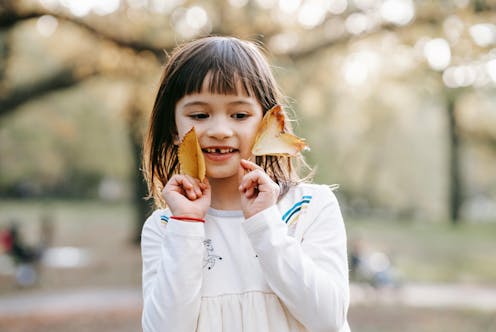
If your young child asks “what’s the meaning of life?” you might laugh it off (how cute!) or freeze in panic (where do I even begin?).
It’s tempting to dismiss these big questions as too advanced for kids. Plato and Aristotle both believed children weren’t ready for philosophy. In fact, they didn’t think people were ready to study philosophy until they turned 30.
But children know otherwise. They ask big questions like “Why are we here?” and “What does it mean to be fair?” and “Why do we keep feeding the cat, even though she never says thank you?”
American researcher and author Jana Mohr Lone has taught philosophy to young children for more than 20 years. As one second-grade child told her:
[…] children don’t know as many things about the world and so our minds are more free to imagine.
This openness makes children natural philosophers. By encouraging these conversations, you can help them grow into curious, thoughtful and reflective individuals.
How can parents do this?
Read more: Who am I? Why am I here? Why children should be taught philosophy (beyond better test scores)
3 steps for philosophical dialogue
One of the difficulties of engaging in philosophy is people may be unfamiliar with how it works.
But you can have a philosophical discussion by following three steps:
- reflection
- generalisation
- abstraction.
When your child asks a deep question like “What’s the meaning of life?” you don’t need to have the answer, you just need to start a conversation.
First, prompt your child to reflect on the question. You could ask: “What do you think?”
This allows your child to explore their own experiences. They might say, “I live for football and Bluey!”
Second, move to generalisation. You can ask, “Do you think that’s the meaning of life for everyone?” This opens up a philosophical discussion beyond the self. Your child might say, “Well, Stella lives for gymnastics and cheese.”
Finally, prompt towards abstraction, by asking “What makes life meaningful for all people?”
Football, Bluey and handstands won’t appeal to everyone, but something else might. Now we’re looking for examples (or counter-examples) as a method of inquiry.
This prompts your child to look for what is common to all people in living a meaningful life. They may respond with something like:
A lot of people love chocolate but not Aunty Grace. Most people love dogs but maybe not people who really love cats. Everyone loves time with their friends and family.
Suddenly, you’re having a rich philosophical dialogue. You can continue further inquiry into what really is love, or what makes certain relationships more important than others.
What we’re doing here is having a dialogue through concepts, academically known as conceptual analysis.
Read more: What is love? A philosopher explains it's not a choice or a feeling − it's a practice
Why should you do this?
Educational research has found philosophical dialogue improves children’s logical reasoning, reading and maths comprehension, self-esteem and turn-taking.
Studies have found it benefits children’s academic and social development in early childhood, primary school and high school.
But beyond these skills, philosophy empowers children to engage meaningfully with the world around them.
Happiness, identity, fairness, death, reality, time, nature, good, knowledge and purpose are all things children encounter every day. Philosophy with your child can simply be the exploration of what these concepts mean and how they impact our lives.
Understanding concepts and being able to apply that understanding to life is the foundation of philosophy.
Questions to ask your child
To engage your child in philosophy, start a conversation with them about the concepts they’re encountering.
If they’re drawing, you could ask what is art? What is imagination?.
If they don’t want to share their favourite toy: what is fairness? What is kindness?
If they’re talking to the dog: what is language? What is understanding?
If they’re emotional: what is happiness? What is sadness?
If they want to know why they should go to school: what is knowledge?
If they’re telling you about their dream: what is real?
Next time your child asks a big question, embrace the moment. By exploring concepts like fairness, love and happiness, you’re helping them interpret the world and become more thoughtful people.
By asking them to reflect, explore different perspectives and consider the bigger picture, you’ll embark on a philosophical journey that can grow into something meaningful for you both.
Authors: Ben Kilby, PhD candidate in Education, Monash University


















