

Carnivorous dinosaurs thrived in Australia 120 million years ago, new fossils show
- Written by: Jake Kotevski, PhD Candidate, School of Biological Sciences, Monash University and PhD Candidate, Museums Victoria Research Institute
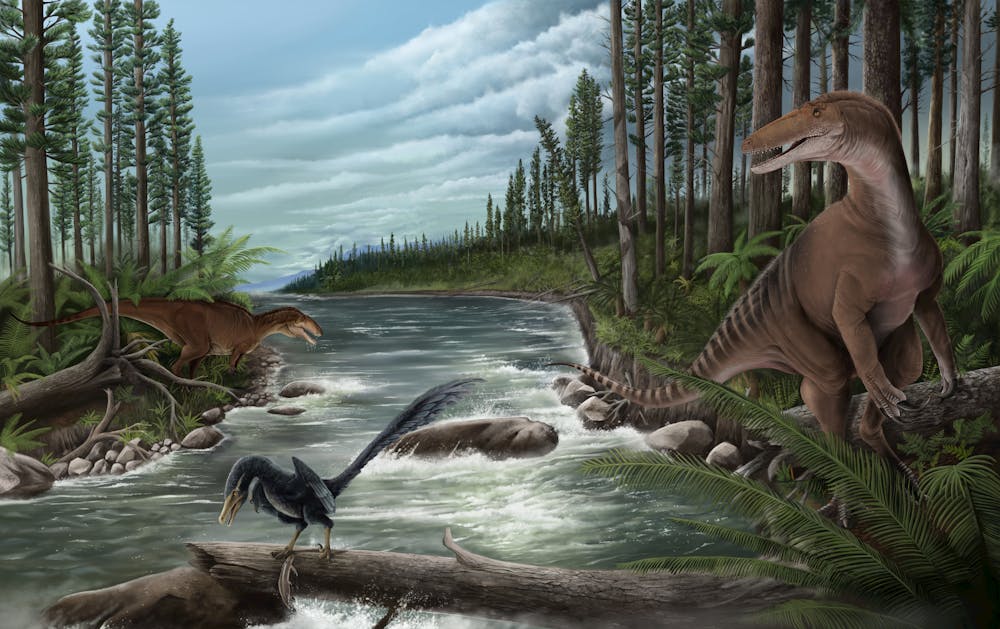
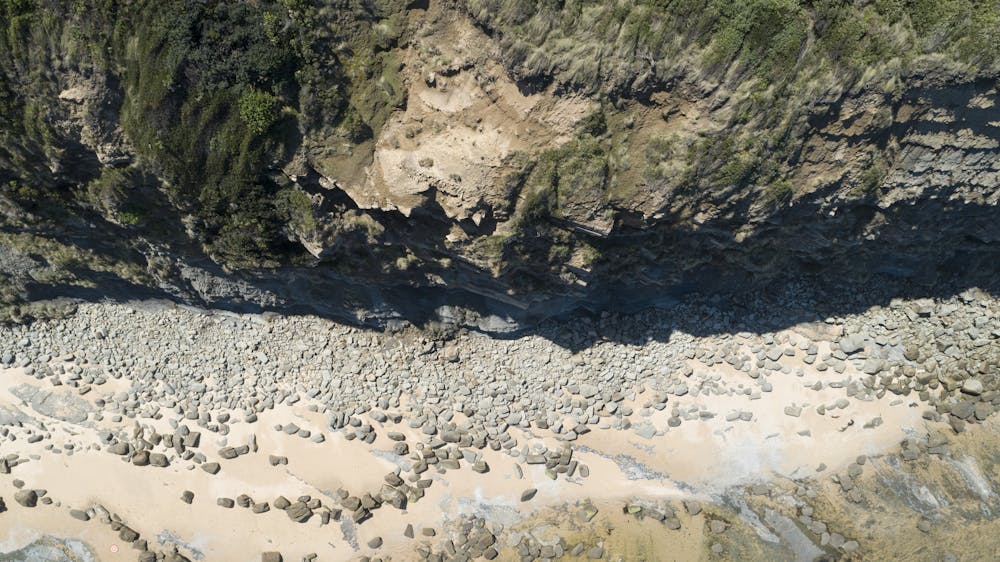
Between 122 and 108 million years ago, the Australian landmass was much farther south than today. Victoria was positioned within the Antarctic Circle, separated from Tasmania by a vast rift valley rather than open sea.
This was the Early Cretaceous, and lush forests filled with dinosaurs dominated the landscape. We still find traces of these animals in Victoria’s fossil record.
Most of the dinosaur fossils found in Victoria belong to small plant-eaters called ornithopods. But there are also a few theropod fossils — a diverse group that includes all known carnivorous dinosaurs, as well as modern birds.
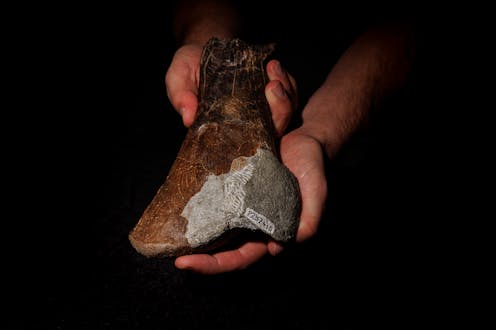
More than 250 theropod bones have been found in the Victorian Cretaceous. In the palaeontology collections of Museums Victoria, we have now identified five theropod fossils of particular importance. Our work on these bones has been published today in the Journal of Vertebrate Paleontology.
Shinbones and tail bones
Research over the past decade has revealed striking similarities between Australian and South American dinosaurs. These include megaraptorids with claws shaped like scythes, and small, fleet-footed elasmarian ornithopods. There were also armoured parankylosaurians and colossal sauropods with long necks and small heads.
These parallels may seem surprising at first, but both continents retained a connection to Antarctica throughout much of the Cretaceous Period.
Our newly described fossils show that a bunch of different carnivorous dinosaurs seen in South America also thrived in the Cretaceous of southeastern Australia.
Two shinbones provide the first evidence of carcharodontosaurs (“shark-toothed lizards”) in Australia. A third shinbone provides strong evidence for the presence of unenlagiines, a southern group of dromaeosaurs (“running lizards”).
A fourth shinbone and two tail vertebrae with their chevrons, which are from a megaraptorid, represent one of Australia’s largest-known carnivorous dinosaurs.
A first for Australia
Carcharodontosaurs were apex predators in South America and Africa for much of the mid-Cretaceous. This group of theropods had large skulls, massive teeth and small arms. They were some of the largest predators to ever walk the Earth.
Despite their success in South America and Africa, carcharodontosaur fossils had never been found in Australia – until now. With the two shinbones, we now have the first evidence of the group on this continent.
Curiously, these Australian carcharodontosaurs are much smaller than their African and South American cousins, and the bones we have most closely resemble a carcharodontosaur from Thailand.
One of the Victorian carcharodontosaur shinbones was found on the Otway Coast. The other was found on the Bass Coast, in rocks nearly 10 million years older. This demonstrates these predators were successful in this area for at least 10 million years. It’s a notable find.
The large-bodied carcharodontosaurs of Africa and South America were seemingly specialised for hunting long-necked sauropods. However, this food source was likely not available to the Victorian polar carcharodontosaurs: sauropod fossils have never been found in Victoria.
The Australian ‘raptors’
Unenlagiines were lightly built (and likely feathered) predatory dinosaurs, related to Velociraptor of Jurassic Park fame.
Most unenlagiine fossil remains have been found in South America. Historically, Australia had limited evidence for their presence, as well.
Our description of a new unenlagiine shinbone from Victoria provides robust evidence for their success in polar Australia during the Early Cretaceous.
The snouts of unenlagiines were relatively longer, and their arms relatively shorter than those of their dromaeosaur cousins from the Northern Hemisphere. This implies they had a rather different diet. The Victorian unenlagiine presumably ate fish or small land-dwelling animals. One possibility is the small mammals for which the Victorian Cretaceous is perhaps most famous – more than 50 mammal jaws have been found to date, and some are from ancient relatives of platypus and echidna.
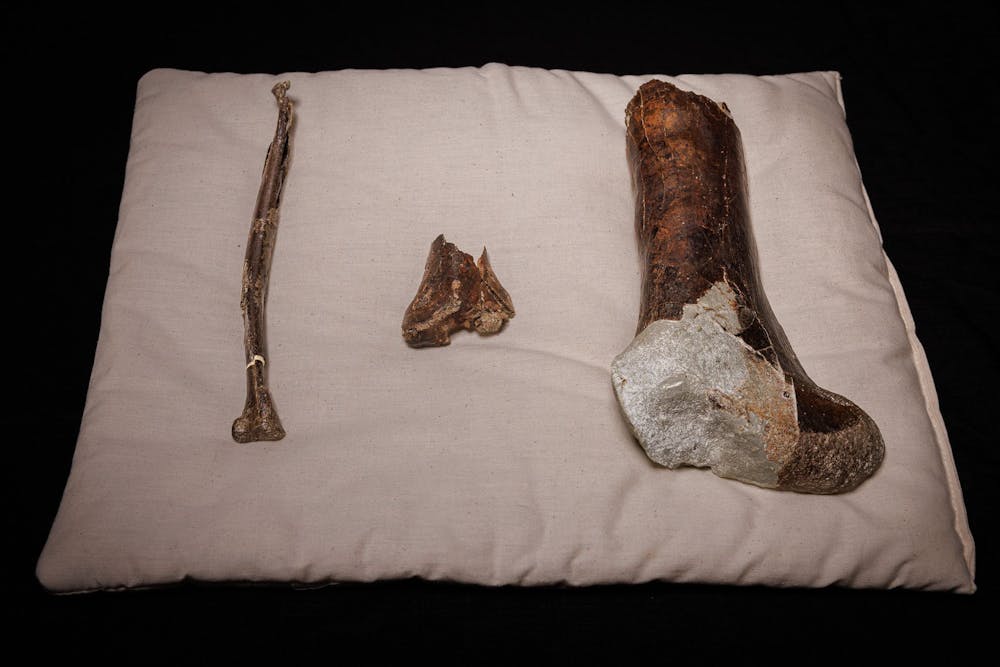 Theropod shin bones from the Bass Coast. From left to right: unenlagiine, carcharodontosaur and megaraptorid.
Nadir Kinani/Museums Victoria
Theropod shin bones from the Bass Coast. From left to right: unenlagiine, carcharodontosaur and megaraptorid.
Nadir Kinani/Museums Victoria
The apex predators of Victoria
Large predatory dinosaurs – on the scale of Tyrannosaurus – are notably absent from the Australian fossil record. Instead, Australian dinosaur populations seem to have been dominated by medium-sized carnivores called megaraptorids.
Megaraptorid fossils are only known from South America and Australia. The most complete skeletons are from South America, including a relatively large one – roughly nine metres long. Australia’s only reasonably complete megaraptorid is Australovenator wintonensis from Winton, central Queensland.
The shinbone and tail vertebrae we describe provide evidence for a large megaraptorid in southeast Australia. Despite being almost 30 million years older than the roughly five- to six-metre-long Australovenator, the Bass Coast megaraptorid was at least 5% larger: approaching the size of its South American relatives.
The large, muscular arms and fingers tipped with fearsome scythe-like claws were presumably the primary weapons of megaraptorids. In contrast to almost every other group of medium-sized carnivorous dinosaurs, megaraptorids had elongated snouts with small teeth.
The abundance of ornithopods in Victoria presumably made this region more suited to smaller prey specialists like megaraptorids, rather than sauropod-stalking carcharodontosaurs.
 Back row: two megaraptor fossils. Front row: the shinbone of a unenlagiine; two shinbones of carcharodontosaurs; the shinbone of a megaraptor.
Nadir Kinani/Museums Victoria
Back row: two megaraptor fossils. Front row: the shinbone of a unenlagiine; two shinbones of carcharodontosaurs; the shinbone of a megaraptor.
Nadir Kinani/Museums Victoria
More discoveries yet to come
We have much to learn about Australia’s Cretaceous dinosaurs. Our study shows how even five isolated and incomplete bones can improve our understanding of our continent’s fossil heritage.
Carcharodontosaurs might have been the apex predators in South America, but megaraptorids ruled the roost in the land down under.
The fantastic dinosaur fossil record of Victoria has grown over nearly 40 years thanks to the efforts of Dinosaur Dreaming, an ongoing volunteer palaeontology project, and citizen scientists like Melissa Lowery. Thanks to their efforts, our window into Victoria’s ancient past continues to become ever clearer.
Authors: Jake Kotevski, PhD Candidate, School of Biological Sciences, Monash University and PhD Candidate, Museums Victoria Research Institute


















