

After 3 years of war, Ukrainian business leaders share their lessons on survival
- Written by: Amy L. Kenworthy, Professor of Management, Bond University
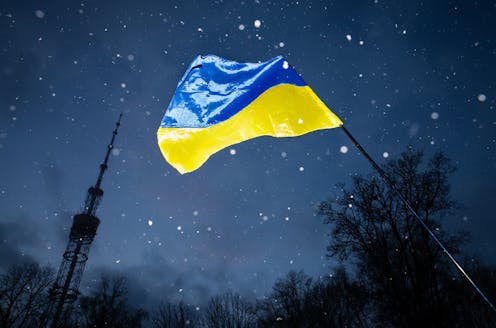
It’s exactly three years since Russia began its full-scale invasion of Ukraine.
During that time, Ukrainians have lived through one of the world’s largest and most brutal humanitarian crises. Yet their resilience remains high.
The United Nations estimates that 64% of micro, small and medium enterprises had to either suspend or close their operations in Ukraine at some stage after the war began.
But the vast majority of these have since opened back up.
Over the past year, our international team of researchers from both Australia and Ukraine sought to find out what might drive such extraordinary resilience. The answer, according to Ukrainian business leaders, is their people.
Running a business in a war
Ukrainians are currently living through their third winter of this war. Some of Russia’s latest attacks have targeted the gas infrastructure and other energy facilities crucial for keeping people alive.
These daily attacks have made previously safe cities no longer safe, leaving residents without water, heat and electricity in bitterly cold conditions.
According to the UNHCR’s 2025 Global Appeal, Russia’s targeting of homes, hospitals and communities has resulted in civilian deaths, mass displacements, restricted access to humanitarian aid, and severely disrupted essential services.
For businesses, the war has impacted virtually every aspect of commercial activity. Beyond the immediate threat of coming under direct attack, firms have had to deal with everything from disrupted supply chains through to frequent power outages.
As one interviewee put it:
Many of us are afraid our main businesses may go bankrupt. We are constantly facing periods with no electricity which stops businesses and cuts us off from the world. We live with constant air raid alarms, moving in and out of underground shelters. We have a significant shortage of personnel because so many have gone to fight on the front lines or left the country.
The UN estimates that utilisation of production capacity for Ukraine’s micro, small and medium enterprises dropped from 72.4% before the war to 45.7% in 2023.
To make matters worse, with millions of people having fled Ukraine, finding and retaining qualified personnel has become extremely difficult.
Women have been stepping into historically male dominated professions such as mining, truck driving and welding to fill the gap left by men who’ve joined the fight. But there is still a significant labour shortage.
Over the past year, our international team of researchers from both Australia and Ukraine surveyed business leaders from 85 different small and medium-sized businesses across 19 different industries in Ukraine.
These spanned engineering, transportation, aviation and mining through to agriculture, tourism, IT, healthcare, entertainment and finance.
We asked which resources were – and still are – key to the survival of their organisations.
Finance and access to funding came in at number two, followed by production and energy, new customers & markets, equipment technology & information and policy & regulations.
The most important resource
The most important resource, highlighted by 82% of the business leaders we surveyed, was their people.
When operating within an environment of severe crisis and disruption, the pressure can be enormous. But the Ukrainian executives we interviewed figured out a way to unite and lead their teams into the future.
As one reflected:
When team members are motivated, they are more likely to be optimistic and resilient when facing difficulties. Motivated employees are more productive than demotivated ones. This is important when people need to accomplish more with fewer resources.
Forcing positive adaptation
For many organisations in our research, operating within a crisis had pushed them to implement valuable human resource practices other businesses often struggle with.
Some had transitioned to a “flatter” organisational structure, speeding up decision making by giving employees more autonomy. Others invested in team training which focused on empowering employees to share their thoughts on how to best move forward.
Our processes and planning horizons have changed completely. We’ve had to become more agile and flexible in our approach to leadership, often reducing planning cycles and adapting to new realities much faster than before.
A focus on wellbeing was another common theme. Some organisations hosted more meetings to allow their employees to share stories – not only about work but also about their personal fears and victories.
Some also encouraged their employees to complete volunteer work together during work hours.
There was an emphasis across interviews on the fact all employees need additional rest and recovery time, and encouraging them to take time off whenever needed.
Making sacrifices
Many of the new support mechanisms had financial consequences for the organisations.
One business cancelled the salaries of its top management team one month after the war started. Another hired a full-time psychologist to provide counselling in both formal and informal sessions.
Some continued to pay the salaries of their serving members:
All our mobilized employees who are serving in the military have been receiving their salaries for the past three years. We also ensure they are equipped with everything they need, stay in constant contact with them, and support their families.
Knowing their business was supporting the war effort had a positive impact on employee motivation:
The only difference in employee motivation is the understanding that our company actively supports the Armed Forces of Ukraine. Thus, every employee in the company understands that through their work, they are involved in this support.
In the end, it is the connections between people these leaders saw as the key to their organisational resilience.
No matter how hard things get, how much grief and suffering we endure, we know for certain that tomorrow the sun will rise. And even if it’s not for us, it will be for our children. This is what gives us the strength to continue living, creating, and preserving Ukraine — for us and for future generations.
The authors would like to acknowledge their academic partners and coauthors from the Ukrainian Catholic University in Lviv, Ukraine, Yaryna Boychuk, Valeria Kozlova, Sophia Opatska, and Olena Trevoho, and thank all the Ukrainian business leaders who participated in this research.
Authors: Amy L. Kenworthy, Professor of Management, Bond University


















