

We looked at what supermarkets in 97 countries are doing to our waistlines. Here’s what we found
- Written by: Tailane Scapin, Postdoctoral Research Fellow, Deakin University
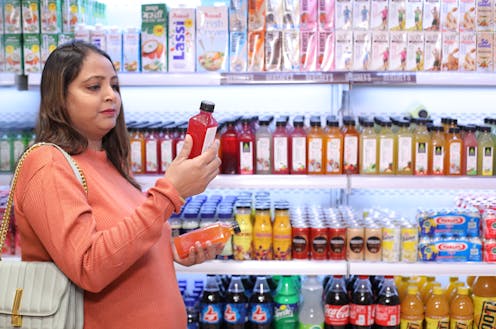
In many countries, buying food at supermarkets, convenience stores and online has become the norm. But what’s the convenience of modern food shopping doing to our health?
Our study, published today with colleagues from UNICEF, looked at how people in 97 countries shopped for groceries over 15 years.
Globally, we found a huge increase in the number of supermarkets and convenience stores (which we’ll shorten to chain grocery stores in this article). We also found people are spending more money in these stores and on their online platforms.
But this has come at a cost to our health. People in countries with the most chain grocery stores per person buy more unhealthy food and are more likely to be obese.
Here’s why we’re so concerned about this public health disaster.
The rise of chain grocery stores
Our study analysed food industry data from a business database to understand how the food retail sector has changed worldwide over time. We looked at the kinds of stores, how much people spend there, and how much unhealthy processed food is sold. We linked these trends with changes in obesity rates using data from a large global initiative.
We found the density of chain grocery stores (number of stores per 10,000 people) has increased globally by 23.6% over 15 years (from 2009 to 2023).
We found far more of these stores per person in high-income countries, as you may expect. However, it’s in low- and middle-income countries where numbers are increasing the fastest.
Rapid urbanisation, rising incomes and customer demand mean large retail companies see these countries as new potential markets.
For example, the density of chain grocery stores increased by about 21% a year in Myanmar, about 18% a year in Vietnam and about 12% a year in Cambodia.

We’re shopping online too
The data in our study also covers the rise of online food shopping. For instance, the worldwide spend on online grocery shopping was 325% more in 2023 compared with 2014.
Out of the 27 countries we looked at for online food shopping, people in the United Arab Emirates and the United States were the top spenders. In 2023, the average person in the United Arab Emirates spent about US$617 that year, 570% more than in 2014. In the US, the average person spent US$387 in 2023. That’s about 125% more than in 2014.
It seems many of us took to online shopping during the early days of the COVID pandemic, a habit that appears to have stuck.
More chain stores, more junk food, more obesity
The rise of chain grocery stores, including their online platforms, is also changing what we eat.
Over the 15 years of our study, there has been a 10.9% increase in the sales of unhealthy processed food from those chain grocery stores.
In South Asia, the increase has been particularly rapid. People in Pakistan have been buying 5% more unhealthy processed foods from chain grocery stores every year for the past 15 years. In India, it’s 4% more and in Bangladesh 3% more.
Over 15 years, our study also showed the percentage of people with obesity across all countries rose from 18.2% to 23.7%. It was the countries with the biggest increases in chain grocery stores where we saw the sharpest increases in obesity.
Laos is a good example. The number of chain grocery stores per person in the country has been increasing by 15% each year since 2009, while the percentage of people with obesity has doubled from 2009 to 2023.
In almost all countries, obesity is on the rise. In Australia, overweight and obesity have recently officially overtaken tobacco as the biggest burden on our health.

Why do we think supermarkets are to blame?
Supermarkets and hypermarkets sell healthy foods, such as fruit and vegetables. Yet, there are good reasons to think our retail environment might be to blame for the rise in obesity.
Highly processed foods
Chain grocery stores typically sell an enormous array of highly processed packaged foods high in sugar, fat and salt that can harm our health. One study of the food and drinks available in supermarkets from 12 countries showed the majority are classified as unhealthy. Given our findings of rapid increases in chain grocery in low- and middle-income countries, it was alarming in this study that the least healthy products were typically seen in supermarkets from countries like India, China and Chile.
Heavy promotion
Chain grocery stores often aggressively promote unhealthy foods. This includes through price discounting; advertising in circulars, on TV and social media; and by being placed in prominent displays at checkouts and the ends of aisles. Studies have shown this to be true in Belgium, Ireland and another 12 countries.
Online, we see unhealthy foods promoted more often (with discounts and displayed more prominently) than healthy options. For instance, on average at least one-third of products prominently displayed on Australian supermarket websites are unhealthy.
More buying power
Compared to small independent grocers, large chain grocery stores globally have a far larger influence on decisions around product assortment and price. Because of this, they can control supply chains, often in partnership with national and multi-national food manufacturers of ultra processed, unhealthy packaged foods.
What can we do about it?
There are many social, political, cultural and economic factors that contribute to the rise in obesity globally. Many of these relate to the price, availability and promotion of food in retail settings and the way the retail industry is structured.
Because of this, we think it’s time for governments and retailers to step up and start making changes to where and how we shop for food.
Some countries are already beginning to act. In the United Kingdom for example, government legislation now prevents placing unhealthy foods in prominent places such as the checkout counter and at the ends of aisles close to checkouts. From October this year, further restrictions on the price promotion of unhealthy foods (such as “buy one, get one free”) will also come into force in the UK.
There is also plenty that retailers can do. In Norway, for example, one major grocery chain launched a comprehensive healthy eating campaign several years ago, including by increasing the size and prominence of healthy food displays and offering discounts on fruits and vegetables. This led to a 42% increase in vegetable sales and a 25% rise in fruit sales from 2012 until 2020.
But most grocery chains are still not doing enough to prioritise their customers’ health and nutrition. In the US, we see this in particular for supermarkets catering to people on low-incomes. And in the UK, although there has been some promising progress by some supermarket retailers, all those assessed have considerable scope for improvement.
Now more than ever, it is time to create healthier retail food environments that support nutritious diets and help reverse the rising rates of obesity.
Authors: Tailane Scapin, Postdoctoral Research Fellow, Deakin University


















