

Why you should revisit the classics, even if you were turned off them at school
- Written by: Johanna Harris, Associate Professor, Literature, Western Civilisation Program, Australian Catholic University
Throughout my school years I had an exuberant, elderly piano teacher, Miss Hazel. She was one of five daughters (like me) and, like many young women of her generation, had never married her sweetheart because he did not return from the war.
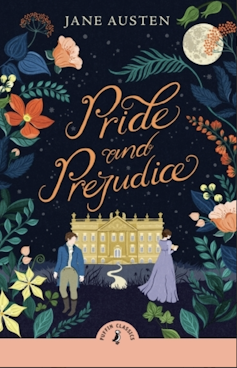
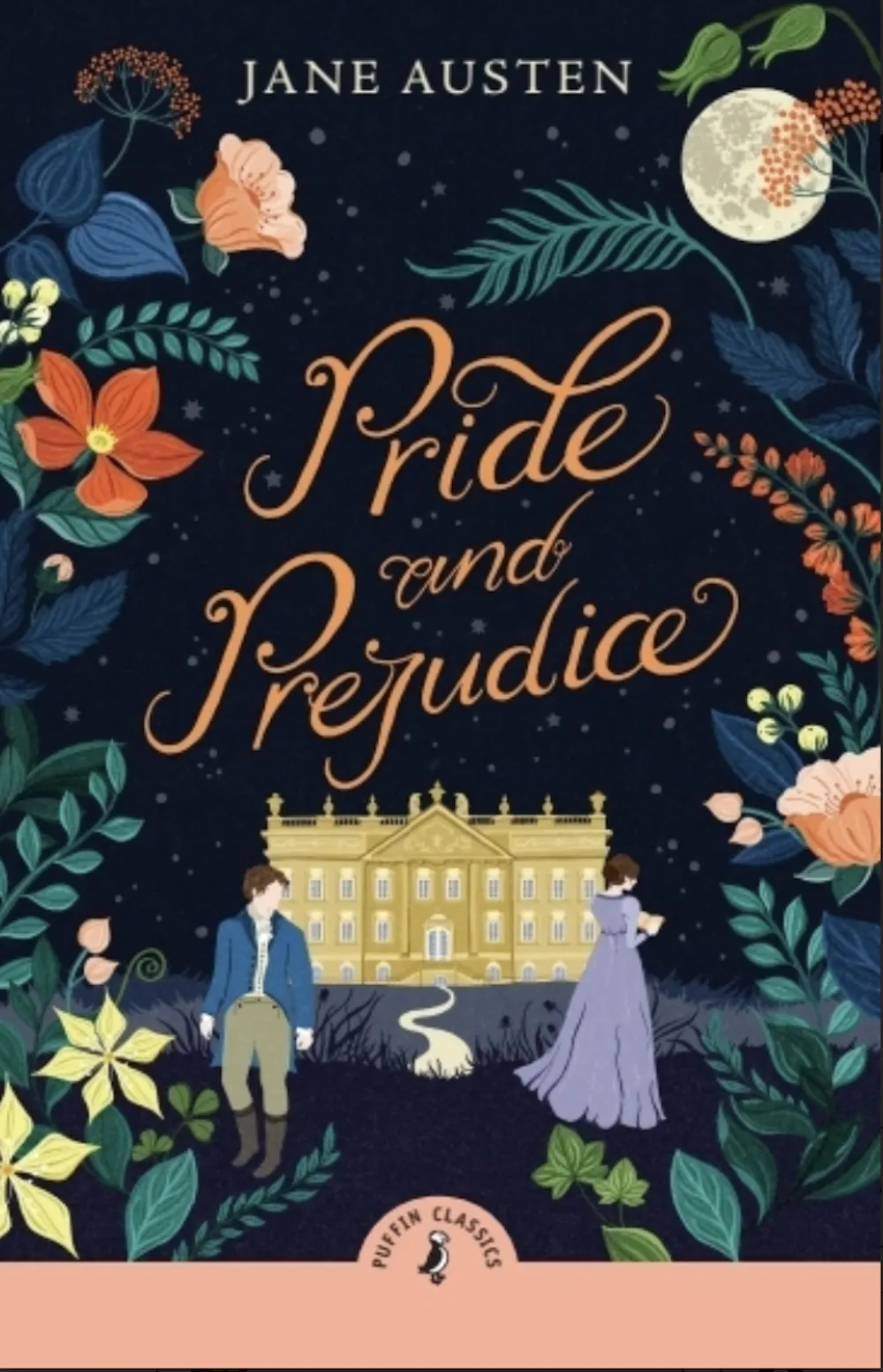
Her unabashed gusto for life and infectious, positive outlook left an indelible impression upon me. So too did the memorable fact that Miss Hazel read Jane Austen’s Pride and Prejudice from beginning to end once every year.
As a younger girl I wondered about the ways Pride and Prejudice could be so important to a woman in her eighties that she would want to read it annually. Was it to do with Austen’s depiction of a family with five daughters, or to relive an endearing love story?
Since those years I have seen, more through lived experience than through academic study, just how deeply meaningful the reading of classic books, like Pride and Prejudice, can be.

 Penguin
This idea of books “reading us” can sound like an odd animism. But books can prompt us to reflect on our own lives, too. Eliot makes Middlemarch almost compulsory to reread later in life: the idealism of youth captures the young reader, while the novel’s humour becomes more sympathetic as we age. To reread a novel like Middlemarch is to trace the ways we too have experienced idealism turn to illusion, or have seen the restless pursuit of change turn to a retrospective gratitude and a recognition of grace.
Our ability to acknowledge new depths of meaning in our own lives and to recognise within ourselves a subtler sympathy for the lives of others can be articulated almost as precisely as lived experience itself. As Mead says, “There are books that grow with the reader as the reader grows, like a graft to a tree.”
Feeling for Lear
The same can be said of Shakespeare. As young readers, we won’t necessarily capture the full vision King Lear offers us of the tragicomic paradoxes sometimes presented by old age. The play depicts the loss of power and control over one’s life and decision-making, the tender fragility of family relationships when the care of aged parents is suddenly an urgent question and the madness that can prevail when an inheritance is at stake.
Penguin
This idea of books “reading us” can sound like an odd animism. But books can prompt us to reflect on our own lives, too. Eliot makes Middlemarch almost compulsory to reread later in life: the idealism of youth captures the young reader, while the novel’s humour becomes more sympathetic as we age. To reread a novel like Middlemarch is to trace the ways we too have experienced idealism turn to illusion, or have seen the restless pursuit of change turn to a retrospective gratitude and a recognition of grace.
Our ability to acknowledge new depths of meaning in our own lives and to recognise within ourselves a subtler sympathy for the lives of others can be articulated almost as precisely as lived experience itself. As Mead says, “There are books that grow with the reader as the reader grows, like a graft to a tree.”
Feeling for Lear
The same can be said of Shakespeare. As young readers, we won’t necessarily capture the full vision King Lear offers us of the tragicomic paradoxes sometimes presented by old age. The play depicts the loss of power and control over one’s life and decision-making, the tender fragility of family relationships when the care of aged parents is suddenly an urgent question and the madness that can prevail when an inheritance is at stake.
 Penguin
Some of these things might abstractly be understood when taught to us in the classroom, but they are far more powerfully seen when revisited after we have lived a little more of that imaginably real life ourselves.
As students we might have squirmed with discomfort at the literal blinding of Lear’s loyal subject the Earl of Gloucester (the horror of witnessing a visceral, grotesque injury).
But as we age it is the tragedy of moral blindness that lingers, making the final scene so extraordinarily moving: “Do you see this? Look on her. Look, her lips. Look there, look there,” Lear pleads, as if to say that Cordelia, lifeless in his arms, still breathes.
Does he really see her lips quiver? Does he really believe she lives? Is this some consolation with which he dies or is it delusion? Lear’s heart is broken. So is mine.
Each time I revisit this final scene, the grief of Lear as a father is profoundly felt, but my heart is broken even more so by his continuing blindness; his vision (what he thinks he sees) is desperate, untrue, and ultimately meaningless.
Sites of discovery
When we read we inhabit imaginary worlds and each time the reading can be different. Philip Davis, a professor of literature and psychology has written,
Rereading is important in checking and refreshing that sense of meaning, as the reader goes back and re-enters the precise language once again.
Davis points to an idea advanced by the novelist and philosopher Iris Murdoch, of the reader’s collection of special, memorable fragments, which serve as metaphors for the reader’s self-utterances, developed over time. These are “nascent sites for thinking and re-centring”.
This is a similar idea to the novelist and journalist Italo Calvino’s description in Why Read the Classics? of the way classic books “imprint themselves on our imagination as unforgettable” and “hide in the layers of memory disguised as the individual’s or the collective unconscious.”
Works of imaginative literature are not manuals for life, though they might along the way gift us with some wisdom; they are sites of discovery and rediscovery.
The classic works we are introduced to at school may establish such sites for thinking about ourselves and others, but it is in rereading them as we grow older that we can better see the ways we have grown as imaginative, moral beings.
Authors: Johanna Harris, Associate Professor, Literature, Western Civilisation Program, Australian Catholic University
Penguin
Some of these things might abstractly be understood when taught to us in the classroom, but they are far more powerfully seen when revisited after we have lived a little more of that imaginably real life ourselves.
As students we might have squirmed with discomfort at the literal blinding of Lear’s loyal subject the Earl of Gloucester (the horror of witnessing a visceral, grotesque injury).
But as we age it is the tragedy of moral blindness that lingers, making the final scene so extraordinarily moving: “Do you see this? Look on her. Look, her lips. Look there, look there,” Lear pleads, as if to say that Cordelia, lifeless in his arms, still breathes.
Does he really see her lips quiver? Does he really believe she lives? Is this some consolation with which he dies or is it delusion? Lear’s heart is broken. So is mine.
Each time I revisit this final scene, the grief of Lear as a father is profoundly felt, but my heart is broken even more so by his continuing blindness; his vision (what he thinks he sees) is desperate, untrue, and ultimately meaningless.
Sites of discovery
When we read we inhabit imaginary worlds and each time the reading can be different. Philip Davis, a professor of literature and psychology has written,
Rereading is important in checking and refreshing that sense of meaning, as the reader goes back and re-enters the precise language once again.
Davis points to an idea advanced by the novelist and philosopher Iris Murdoch, of the reader’s collection of special, memorable fragments, which serve as metaphors for the reader’s self-utterances, developed over time. These are “nascent sites for thinking and re-centring”.
This is a similar idea to the novelist and journalist Italo Calvino’s description in Why Read the Classics? of the way classic books “imprint themselves on our imagination as unforgettable” and “hide in the layers of memory disguised as the individual’s or the collective unconscious.”
Works of imaginative literature are not manuals for life, though they might along the way gift us with some wisdom; they are sites of discovery and rediscovery.
The classic works we are introduced to at school may establish such sites for thinking about ourselves and others, but it is in rereading them as we grow older that we can better see the ways we have grown as imaginative, moral beings.
Authors: Johanna Harris, Associate Professor, Literature, Western Civilisation Program, Australian Catholic University 

















