

6 charts on the inner cities of Brisbane, Sydney and Melbourne
- Written by: Seetu Bajracharya, Graduate student of master of urban and regional planning, The University of Queensland
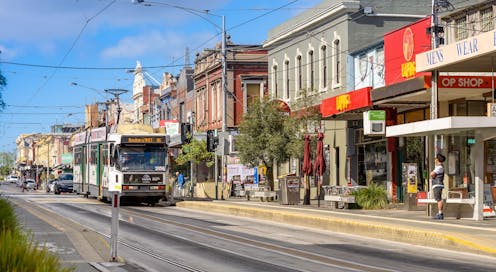
In just ten years, the inner city populations of Australia’s biggest state capitals have boomed.
We examined Australian Bureau of Statistics (ABS) census data comparing the population in 2006 and 2016 and found, in Brisbane, the inner-city population grew by 22% in that period. In Sydney, the increase was 33%. And in Melbourne, the population grew by a whopping 78%.
But where is this growth coming from? Like the United States and the United Kingdom, Australia’s major inner cities are “youthifying”.
Read more: Why outer suburbs lack inner city's 'third places': a partial defence of the hipster
Families with children are moving away to the suburbs, while young adults, singles and childless couples are moving in.
Despite their smaller housing sizes, the inner cities offer more convenience and accessibility to work, study and recreation. But they’re failing to meet the needs of families in terms of space, amenities and affordability.
In all three cities, especially in Sydney, the 25-34 age group dominates the population, a phenomenon that has become more pronounced since 2006.
Migrants also move to the inner city
Most new inner city residents are international migrants. Inner Sydney and Melbourne, in particular, which were already quite diverse, diversified even more between 2006 and 2016.
Primarily, people born in the Asia-Pacific region move to the inner city, many of them international students and skilled migrants. And for Sydney, Brisbane and Melbourne the numbers have increased since 2006.
Meanwhile, the traditional dominance of European migrants in Australia has weakened considerably.
Inner cities aren’t ‘familifying’
While Australian inner cities are “youthifying” and somewhat “studentifying”, they aren’t “familifying”. And while migrants may initially choose to live in the inner cities, there is some evidence they eventually move to the suburbs as they adjust to local patterns and lifestyles.
Read more: We need to make sure the international student boom is sustainable
In Sydney, the number of families living in the inner city has hardly budged for ten years, and the situation is quite similar in Melbourne. But Brisbane is an outlier, which may show how the ABS defines “inner city”, with the area being much larger and more suburban in character than that of Sydney and Melbourne.
So why don’t more families move to the inner city?
Families that choose the inner cities tend to have higher incomes, but also spend more on housing. This suggests inner city living is increasingly pushing out lower income families.
While households with children represent a minority of the inner city, they are increasingly living in apartments, as opposed to traditional (but costlier) child rearing options, such as single family or row houses.
Read more: Inner-city bias: the suburbs need a fair go
But apartments only make up a tiny fraction of housing options in Brisbane, Sydney and Melbourne.
These results are discouraging for Australia’s urban sustainability outlook since the Australian Dream of home-ownership in sprawling suburbs continues to be alive and well.
Bringing families into the inner city
Australian planners must find ways to facilitate a shift toward more compact living to create more diverse neighbourhoods, bring people closer to their jobs, and give families more flexibility.
Read more: With apartment living on the rise, how do families and their noisy children fit in?
A promising initiative that has been incorporated into a number of plans, including the Shaping SEQ Regional Plan, is the focus on “missing middle” housing which seeks to encourage more housing in the gap between single family houses and high rise apartments in South East Queensland.
Future policies should integrate people’s non-negotiable needs and wants, including a desire for ample space, privacy, quietness and livability. New urban housing design, including row houses and apartments, must provide sufficient space for families.
Read more: Rental housing policies trap children in poverty, so how low will we go?
Developers should be required to offer mid-rise buildings with affordable and sound-proofed three or four-bedroom units. Inner-city units should include multiple bathrooms, storage rooms and large porches where residents can keep plants and pets.
They should also include enclosed communal front yards to ensure the safety of children. And communal spaces for adults, such as community gardens and barbecues, are desirable to sustain the beloved aspects of Australian culture in the inner city.
Authors: Seetu Bajracharya, Graduate student of master of urban and regional planning, The University of Queensland


















