

‘Orgasms are a marvellous happiness’. Shere Hite gave voice to female sexuality in a landmark book – but the backlash was fierce
- Written by: Camilla Nelson, Associate Professor in Media and Journalism, University of Notre Dame Australia
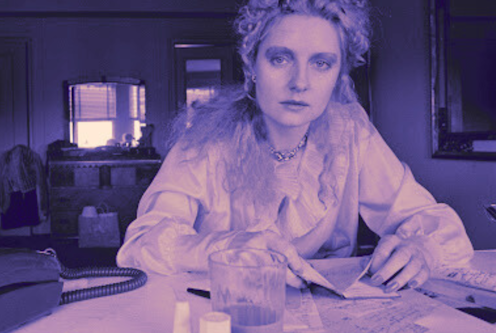
In our feminist classics series we revisit influential works.
Shere Hite’s The Hite Report was quickly dubbed a “sexual revolution in 600 pages”. It did something nobody had considered worth doing: investigating women’s sexuality by asking them to share their thoughts and feelings, then relaying those reflections to readers in women’s own words.
This might not sound unusual today. But in 1976, it was incendiary.
Based on a survey of 3,000 women distributed by the New York Chapter of the National Organisation for Women (the feminist group co-founded by Betty Friedan), more than 75% of the book comprises narrative responses to open ended survey questions.
It includes a plethora of startlingly frank – for its time – and explicitly detailed opinions, anecdotes, complaints and criticisms about sex, masturbation and orgasm. The book is an extraordinarily rich cultural artefact in the archive of human intimacy.
Unsurprisingly, the women who responded to Hite’s survey thoroughly enjoyed sex. “Orgasm is the ultimate pleasure – which women often deny themselves, but men never do,” claimed one. “Orgasms are a marvellous happiness”, added another. “Orgasm cancels out rage and longing for at least 48 hours,” said yet another.
But it was the manner in which Hite’s respondents got their orgasms that made the book a scandal. “I think masturbation is essential to one’s health,” said one respondent. “[A]s I learned in my marriage – a partner is not always good sexually, though he may be wonderful in other ways.”
Masturbation is better than “bad sex with an incompatible partner”, explained another respondent. “The only way I can have an orgasm is by masturbating,” said another.
‘A complex nature’
The Hite Report did not attempt to define a sexual norm, or produce a representative survey sample, or pretend its data could be generalised to an entire population. But it did contain some statistical findings.


Freud, for example, knew female orgasm could be reliably obtained through clitoral stimulation, but defined clitoral orgasm as an “immature orgasm” and orgasm arising from heterosexual intercourse as a “mature orgasm”. He then labelled women who could not achieve orgasm in the required way “frigid” and “hysterical”.
The Hite Report is organised into eight chapters or themes, starting with “Masturbation”, followed by “Orgasm”, “Intercourse”, “Clitoral Stimulation”, “Lesbianism”, “Sexual Slavery”, “The Sexual Revolution” and “Older Women”. In a concluding chapter, Hite reflects on the issues raised by survey participants.
In the chapter “Lesbianism”, a significant number of heterosexual-identified women confess same sex attraction, or else identify as bisexual. They also describe lesbian sexuality as “more variable”, and the “physical actions more mutual”.
“The basic difference with a woman is that there’s no end,” claimed one respondent, “[…] it’s like a circle, it goes on and on.”
“Lesbianism” sits in stark contrast to the chapter on “Sexual Slavery”, where Hite seeks to investigate why women pursue unequal sexual relationships, especially where respondents claim to receive little or no sexual pleasure.
“Having a man love me and want to have sex with me is necessary to my happiness,” claimed one respondent. “Sex makes me feel I am a woman to my husband instead of just a live-in maid,” added another.
“I’ve never heard a word of praise from my husband in 21 years except while having intercourse,” claimed yet another. “While I resent this, I still love him […] ”
Wildly successful
Many women applauded the book. Author Erica Jong, writing in The New York Times, called it a “revelation”. Others warned of a possible male backlash. “It seems that women are finally reporting the facts of their own sex,” wrote journalist Ellen Willis in the Washington Post, “and men are putting on the earmuffs of fear and retreating to deeper fantasies.”
This backlash was not long in coming. Playboy apocryphally dubbed it “The Hate Report”, a label regularly recycled in media outlets around the world, including by female journalists. One male journalist, writing in the Miami Herald, argued women could not be regarded as truthful or reliable witnesses to their own lives. “What annoys me about The Hite Report,” he wrote, “is its smug assumption that just because women made these comments, they’re true”.
Despite – or perhaps because of – this controversy, the book was wildly successful. It was translated into ten different languages – including French, Spanish, German, Italian, Hebrew and Japanese – and sold over 2 million copies within the first 12 months.
It remains the 30th bestselling book of all time, with 50 million copies sold in 45 countries, including two recently translated editions in China, where it sparked conversations among intellectuals interested in formerly taboo western culture.
Faking orgasms
Born in smalltown Missouri, Hite gained a masters degree in social history and in 1967 moved to New York to enrol in a PhD program at Columbia University. She left when conservative faculty members refused to allow her to complete her dissertation on female sexuality. Hite worked as a model to pay her tuition fees. She joined the National Organisation for Women when they protested the sexism of the Olivetti advertising campaigns, after Hite was cast as an “Olivetti girl” for the typewriter company.
Increasingly tagged as a “man-basher” after the publication of her book, Hite’s public persona was conventionally, almost theatrically feminine. She revelled in a contemporary Baroque aesthetic; a mirage of red lipstick, froufrou dresses, pancake-style makeup and tousled orange or platinum curls. And she spoke about sex in explicit detail, in a voice that was earnest, articulate and unembarrassed.
 Hite in 1997.
Photo by Galuschka/ullstein bild via Getty Images
Hite in 1997.
Photo by Galuschka/ullstein bild via Getty Images
Hite did not “discover” the clitoral orgasm. Instead, by centring women’s experiences, and taking their reflections seriously, her work threw into question centuries of sexological studies. These studies had either pathologised normal female sexual functioning or else insisted any pleasure women derived from sex had to be a by-product of conventional heterosexual intercourse.
Even Masters and Johnson, who, in their reports from 1966 onwards, clinically proved all female orgasms were the result of clitoral stimulation, had insisted on the centrality of coitus.
As Hite told television show host Geraldo in 1977,
Masters and Johnson made a tremendous step forward in that they studied, and showed clinically, for the first time, that all orgasms are caused by clitoral stimulation, and we really have them to thank for that. However, when they described how it’s done – the thrusting of the penis causes the vaginal lips to move, which causes the skin that’s connected to the clitoris to move, which causes the glands to move over the clitoris, which supposedly gives you orgasm. But that doesn’t work for most women.
And yet, although the participants in Hite’s study were overwhelmingly educated and politically progressive, many confessed they felt compelled to fake an orgasm during intercourse to please a man.
“I ‘perform’ and boost his ego and confidence,” claimed one. “I do not like to think of myself as a performer but I feel judged and also judge myself when I don’t have an orgasm.” “[M]en do expect it, so I often force myself […],” said another.
Participants also claimed how a woman was seen to orgasm mattered. “I don’t show the signs you’re supposed to,” worried one. “They think because I don’t pant, scream and claw I haven’t had one,” said another. “I used to go out of my way to offer all the mythical Hollywood signs,” revealed another.
One participant even suggested the whole issue of sex was so politically fraught that, “Maybe sex would be better if we’d never heard of orgasm”.
Respondents also told Hite the “sexual revolution” of the 1960s and 1970s had intensified, rather than reduced, gender prejudices and double standards.
Sexual violence
Another breathtaking aspect of the book is the way participants’ answers are shot through with sexual violence. On the issue of sexual coercion, for example, one participant replied, “I’m not supposed to say ‘no’ since I’m legally married”.
On a question about the use of force in sex, another replied, “Only with my husband.” (In 1976, marital rape was legal and “acceptable” in most western nations.)
Rape myths are also common. “I define as rape someone you don’t know who attacks you,” said one respondent. “I never defined it as […] someone you know. If you define rape that way, every woman has been raped over and over.”
Another suggested rape wasn’t rape if a victim gave up fighting. “He really raped me, but not in the legal way. I couldn’t prevent him, in other words.”
Hite identified toxic gender stereotypes as the major driver of sexual violence, especially the belief that “a man’s need for ‘sex’ is a strong and urgent ‘drive’” which women were obligated to satisfy. “Women aren’t always free to not have sex,” explained one respondent.
Archival insights
The Hite archive is housed in the Schlesinger Library of the Radcliffe Institute at Harvard University. It comprises over 250 filing boxes and folios, occupying more than 30 metres of shelf space. Most of the material relates to Hite’s public career as a sex researcher, with a small scattering of personal papers.
I was at Harvard doing research for a book on Hite’s contemporary Andrea Dworkin. Although the two feminists exist as polar opposites in the public imagination, they thoroughly agreed with one another, and enjoyed a supportive working relationship. And so I wanted to take a look.
Among the publishing agreements, speaking invitations, publicity material and the copies of the edited and revised questionnaires that formed the basis of the 1976 report – which are printed in vermillion – an occasional note flips out.
One, a seemingly unpublished open letter titled “Dear Women”, bears the traces of the intense, frequently misogynistic and overtly hostile media scrutiny that marked Hite’s wild catapult to fame.
“Sometimes I feel I am dying here in the midst of all this,” she writes, “without the support of anyone”.
Another, scrawled in a flamboyant purple felt tip pen in the midst of her 1977 book tour of France, reads, “I know that I have done something good – but somehow I feel evil […] When did that start?”
 Hite in 1977: ‘I know that I have done something good — but somehow I feel evil.’ .
Photo by Arthur Schatz/Getty Images
Hite in 1977: ‘I know that I have done something good — but somehow I feel evil.’ .
Photo by Arthur Schatz/Getty Images
There are also letters from readers. One, sent from Milan in the wake of the controversy that accompanied the Italian edition of the book, bears the typewritten subject line “Personal”. It reads:
Dear Ms Hite,I am 43 years old and have never written a fan letter in my life until today. But I feel a moral obligation to tell you that your ‘Report’ has rehabilitated me in my own eyes. After years of thinking there was something wrong with me, your book has shown me I’m normal.
Hite’s “Dear Women” letter describes the extraordinary challenges, including the financial challenges, she faced both before and after the book was published.
Macmillan, after purchasing the rights to the book, went cold on the project when the commissioning editor resigned or, as Hite phrases it, “quit/was fired depending on your point of view”. The publisher made no plan to promote the book and assigned a 22-year-old man to answer any media queries.
Hite decided to step in, when, working in the publisher’s offices late one evening, she found a letter from her male publicist declining an invitation to discuss The Hite Report on TV as “he thought my book/subject might be too ‘ticklish’ for television”.
Hite’s contract with Macmillan gave her little or no control over international editions of the book (and severely limited the income she could take from royalties, before it was ruled unconscionable by a court). In 1978, she “flew around the world twice” attempting to stop the book from being sensationalised.
In France, the publisher had promised Hite a plain print cover, but was overruled by an all-male advertising department who “printed a cover with a nude woman”. In the second printing, the publisher agreed to revert to plain text.
In Israel, entire sections of the first edition text were censored. Protests by local journalists led to the publisher engaging an Israeli feminist to re-translate the work.
In Japan, the male translator produced a translation that was “so embarrassed and vague that it made absolutely no sense”. But on this occasion, a sympathetic female editor stepped in to rewrite entire sections of the manuscript.
Hite’s Australian reception ranked among the most hostile. Her research assistant described the trip as “hideous”, alleging Hite had “never before encountered” such “vicious attitudes” as those exhibited by male journalists.
Hite’s research assistant revealed in a separate letter that Hite’s doctors had “absolutely forbid her to do anything but rest for the next few months” after the Australian trip.
Later life
In her preface, Hite writes that she hoped to start a conversation through which men and women might “begin to devise more kind, generous, and personal ways of relating”.
Sadly, this was not what happened. Hite went on to release four major reports on human sexuality, including a report on male sexuality, one on women and love, and one on the family. Then in 1996, she revoked her US citizenship and moved to Germany, saying the media’s hostility towards her made it impossible to continue working.
Living in Germany, and later in Paris and London, she published her autobiography, The Hite Report on Shere Hite, and The Hite Reader, containing a selection of her published work. She died in 2020, aged 77.
What marks the Hite Report as an artefact from another era is less the peculiar patois of the “Age of Aquarius”, than the way in which Hite’s respondents so often defined their identities through their husband’s, whether as a wife, former wife, or woman destined to be a wife. “Wifedom” is the default state.
Equally, what makes the book disturbing, is the reality of sexual violence and coercion that lurks in so many answers, even when respondents are not being questioned about violence or coercion directly.
With shocked recognition, the reader realises society has not changed nearly as much as some would like to think. The fact it has changed at all is partly due to the second sexual revolution ignited by Hite’s work.
Authors: Camilla Nelson, Associate Professor in Media and Journalism, University of Notre Dame Australia


















