

how disaster-stricken residents in northern NSW are preparing for Cyclone Alfred
- Written by: Rebecca McNaught, Research Fellow, University of Sydney
It’s been three years since floods pummelled the Northern Rivers region of New South Wales. Now, Cyclone Alfred is heading for the region, threatening devastation once more.
On Thursday night and Friday morning, the NSW State Emergency Service asked residents in parts of the Northern Rivers to evacuate. Rain associated with Cyclone Alfred was expected to cause rapid river rises and extensive flooding.
As you’d expect, many Northern Rivers residents feel very apprehensive right now. No-one wants to go through this again.
I know of a woman who, just last week, had painters doing final repairs to her home after it flooded in 2022. Other people can’t afford to repair their homes at all.
Damage from the last floods extends beyond the material. Many people in the Northern Rivers are still dealing with mental health problems such as anxiety, depression and PTSD after the last disaster.
Still, people are preparing for Cyclone Alfred’s arrival – and drawing lessons from the 2022 floods in the hope of a better outcome this time.
Memories of Lismore floods
I have 20 years’ experience working on climate change adaptation and disaster risk management. My research focus includes the Northern Rivers, where I live. Last year, a study I led examined community collaboration across the region in response to disasters.
The Northern Rivers is located in the NSW northeast and is drained by three major rivers: the Richmond, Tweed and Clarence. The city of Lismore is one of the most flood-prone urban centres in Australia.
As my colleagues and I have previously written, the 2022 flood in Lismore and surrounds surprised even the most prepared residents.
Floodwaters in Lismore reached more than two metres higher than the previous record. Shocked residents were left clinging to their roofs. Businesses moved their stock to higher ground, but it was still destroyed. Houses above the so-called “flood line” were inundated.
Warning systems proved inadequate, and emergency agencies were overwhelmed. More than 10,800 homes were damaged.
Landslides and boulders fell on homes and roads, leaving people trapped and isolated for up to six weeks. Others could not access cash, petrol, communications, food, schools, carer services and medical assistance for long periods.
The 2022 floods were by no means the first disaster to befall the Northern Rivers. The region also flooded in 2017. In 2019 the region, like much of Australia, was deep in drought. The Black Summer bushfires hit in 2019-20, and COVID struck in 2020. Parts of the region suffered bushfires in 2023.
Now, we are facing Cyclone Alfred.
The scale of the 2022 floods forced many residents to confront a harsh reality: in a disaster, emergency services cannot always help. Sometimes, people must fend for themselves.
That realisation prompted a growing community-led resilience movement. As Cyclone Alfred approaches, that network has swung into action.
A Bureau of Meteorology update on Cyclone Alfred dated Friday March 7.A community coming together
Since 2022, community-resilience groups have emerged in each local government area across the region. The groups comprise, and are led by, community volunteers.
In my local government area, Byron Shire, there are 13 community resilience groups. I co-lead my local group.
We work with local organisations, government agencies and emergency services to help the community before, during and after a disaster. The local council convenes regular meetings between all these organisations.
My research shows strong information flows are crucial in disaster preparedness and recovery.
Since the Cyclone Alfred threat began, my community group has received regular updates from the SES on matters such as locations of sandbags and sand, the latest weather information advice, and when evacuation centres will open.
We also have an established a network of contacts who live on streets vulnerable to flooding. We pass on relevant information to other residents via Facebook and a WhatsApp group. In the past day we have been exchanging information such as whether flood pumps are working and the extent of beach erosion.
The flow of information is two-way. Byron Shire’s community resilience network is chaired by the local council, and has links to emergency management – the “lights and sirens” people. In this way, community knowledge and contributions are recognised and valued by decision-makers and other officials.
In recent days our group has fed advice up the chain to emergency services, such as the location of elderly and vulnerable people who may need help to evacuate.

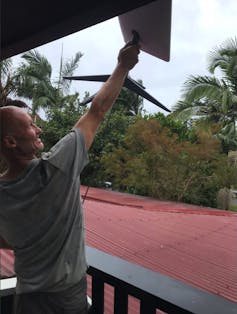
Byron Shire Council has also loaned portable Starlink satellite dishes to some community-resilience groups. These devices provide essential communication if phone and internet services fail in a disaster.
On a broader level, the Bureau of Meteorology is producing regular video updates about Cyclone Alfred in clear, plain language. This is helping to communicate the risks widely and give people the information they need.
Community resilience groups also seek to adopt a proactive, rather than reactive, approach to disasters – such as helping residents prepare for the next flood event.
This can be challenging. Many people and organisations in the region have understandably been focused on recovery after the 2022 floods. It can be hard to do this while also preparing for the next disaster.
And sometimes, people don’t want constant reminders of the potential for flooding. Some people just want to move on and think about something other than disaster.
If Cyclone Alfred brings destruction to the Northern Rivers, community resilience groups will play a big role in supporting health and wellbeing. Not everyone accesses formal mental health support after disasters. Communities and neighbours looking out for each other is crucial.
Read more: Lismore faced monster floods all but alone. We must get better at climate adaptation, and fast
Tough times ahead
As I write, the Northern Rivers is starting to lose power and internet access. Winds are wild and rain lashed the region all night.
As climate change worsens, all communities must consider how they will cope with more intense disasters. The model of community-led resilience in the Northern Rivers shows a way forward.
There is still much work to do in the region. However, our experience of compounding disasters means we are well along the path to finding new ways to support each other through extreme events.
If this article has raised issues for you, or if you’re concerned about someone you know, call Lifeline on 13 11 14.
Authors: Rebecca McNaught, Research Fellow, University of Sydney


















