

‘What voice do we have?’ Aboriginal and Torres Strait Islander people faced unique challenges during the COVID pandemic
- Written by: Samantha Carlson, Senior Research Officer, Infectious Diseases Epidemiology Team, The Kids Research Institute Australia
It’s now been five years since the World Health Organization declared COVID a pandemic.
In Australia, as in many other countries around this time, federal and state governments implemented a range of public health measures to slow the spread of disease. These included travel bans, quarantine and limits on social gatherings.
Western Australia was largely untouched by COVID during the early years of the pandemic due to strict border closures and snap lockdowns. Many WA residents said they were thankful for such measures as life seemed almost normal.
However, our recent research shows this was not the case for many Aboriginal and Torres Strait Islander people living in WA. The COVID pandemic hampered their ability to connect with their community and practise traditional culture.
A close collaboration
Between 2020 and 2024, we consulted with members of the Aboriginal and Torres Strait Islander community in Noongar Whadjuk Boodja (Perth metropolitan region, WA).
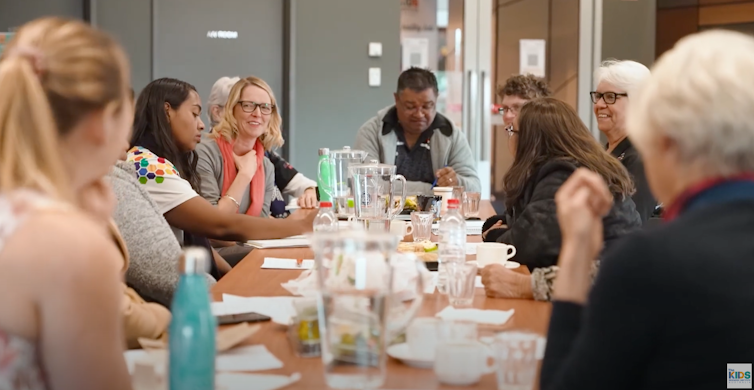
We held meetings with various committees and organisations to design the project, five yarning workshops with 38 participants, and a forum to interpret the data and support the publication of our findings.
We wanted to understand the impact of the COVID pandemic on this community, and their perceptions of COVID vaccination.
We collaborated closely because historically, Indigenous peoples across the globe have been disproportionately impacted by pandemics. What’s more, Aboriginal and Torres Strait Islander voices were omitted from previous pandemic responses, such as during the 2009 H1N1 influenza pandemic.
Negative effects on community and culture
Our results indicate the policies and programs implemented to slow the spread of disease (such as travel bans and capacity limits at funerals) ultimately had a negative impact among Aboriginal and Torres Strait Islander people.
These interventions impaired people’s ability to connect with community and practise traditional culture. As described by a yarning participant in March 2023:
Isolating, that caused a lot of damage towards communication between community. That caused a lot of mental health issues. And not just through domestic violence and all that stuff. It’s more like not understanding, confusion, and then all those other stuff came into it. Now we’re all trying to fix ourselves and the community, but it’s like hitting brick walls.
Most participants were very wary of government and medical institutions (including Aboriginal-led services that shared government messages). Participants told us this made it hard to trust any COVID policies and programs:
The government just expects Aboriginal people […] to believe them and trust them when there are so many issues to this day with the government and how Aboriginal people are treated.
Any government efforts to build trust were undermined once the WA government introduced COVID vaccine mandates for most workers in WA. This policy had unique impacts on peoples living in the shadow of colonisation. It deeply affected those who identified a lack of agency in their lives, as described to us in a yarn in October 2023:
I was really frustrated that it became compulsory to be vaccinated in order to keep your job […] I feel like the only thing we really do choose is where we work and what work we choose to go into, and then for the government to take control of that, what voice do we have?
Read more: Friday essay: voices from the bush – how lockdown affects remote Indigenous communities differently
Attitudes towards COVID vaccines
Aboriginal and Torres Strait Islander people were among the first to be offered COVID vaccines. Despite this, after 12 months of the vaccination program, there was a 30% gap in uptake between Aboriginal and Torres Strait Islander people and non-Indigenous people in WA. It’s important to understand why.
Some participants we spoke to had taken the vaccines voluntarily and enthusiastically. They trusted that the vaccine would protect them and their loved ones, and wanted to be role models in their communities.
However, many held deep concerns about the safety of the vaccine, and were only vaccinated due to the mandates.
This vaccine hesitancy among Aboriginal and Torres Strait Islander people is not uniform across all vaccines. Our preliminary research with parents and carers from the same community shows high acceptance of childhood vaccines and the respiratory syncytial virus (RSV) immunisation for infants. So this hesitancy appears to be specific to certain vaccines, notably COVID.
As described to us in a yarn about RSV infant immunisation, childhood vaccines and diseases such as RSV are well known, whereas everything about COVID was new.
What now?
Over the course of the pandemic, Aboriginal and Torres Strait Islander people have been more likely to get very sick with and die from COVID. Data released in 2023 showed the mortality rate from COVID was 1.6 times higher in Aboriginal and Torres Strait Islander people than non-Indigenous Australians.
Such disparities, which we’ve seen in previous pandemics too, cannot continue into the next pandemic.
Genuine collaboration is essential. We must ensure Aboriginal and Torres Strait Islander voices lead pandemic preparedness and response efforts for their communities.
We can learn from the incredible efforts made by Aboriginal and Torres Strait Islander people, and Aboriginal Community Controlled Health Organisations during COVID.
Some of the people we yarned with in our research were involved in the response, including setting up vaccine clinics where Aboriginal and Torres Strait Islander people had the opportunity to also yarn, create art (weaving and painting), learn, and enjoy a meal while at the clinic for the vaccine.
Aboriginal and Torres Strait Islander communities need disease prevention policies that support community and culture. Stronger efforts are required now to start building up the trust between the government, non-Indigenous health authorities, and Aboriginal and Torres Strait Islander people.
These efforts include collaborating with and equipping community leaders and Aboriginal health workers with evidence-based information about vaccination and disease prevention to share among their communities.
Global pandemics are becoming more frequent. This network must be ready when (not if) the next pandemic happens.
At our data interpretation workshop, we were encouraged by the local Elder who welcomed us to their Country to have “courageous conversations” about this topic. We similarly encourage all those working in this space to start now.
Authors: Samantha Carlson, Senior Research Officer, Infectious Diseases Epidemiology Team, The Kids Research Institute Australia


















