

I’m avoiding a hearing test because I don’t want chunky hearing aids. What are my options?
- Written by: Katie Ekberg, Senior Lecturer, College of Nursing and Health Sciences, Flinders University

One in six Australians have hearing loss and, for most adults, hearing starts to decline from middle age onwards.
Many of us, however, hesitate to seek help or testing for our hearing. Perhaps you’re afraid you’ll be told to wear hearing aids, and envision the large and bulky hearing aids you might have seen on your grandparents decades ago.
In fact, hearing aids have changed a lot since then. They’re often now very small; some are barely noticeable. And hearing aids aren’t the only option available for people experiencing hearing loss.

Why you shouldn’t ignore hearing loss
Acquired hearing loss can have a serious impact on our life. It is associated with or can contribute to:
- social isolation
- loneliness
- not being able to work as much, or at all
- memory problems
- trouble thinking clearly
- conditions such as dementia.
Hearing loss has also been associated with depression, anxiety and stress. A systematic review and meta-analysis found adults with hearing loss are 1.5 times more likely to experience depression than those without hearing loss.
A large population study in the US found self-reported hearing loss was associated with:
- higher levels of psychological distress
- increased use of antidepressant and anti-anxiety medications, and
- greater utilisation of mental health services.
The good news is that doing something about your hearing loss can help you live a happier and longer life.
So why don’t people get their hearing checked?
Research has found adults with hearing loss typically wait ten years to seek help for their hearing.
Less than a quarter of those who need hearing aids actually go ahead with them.
Hearing declines slowly, so people may perceive their hearing difficulties aren’t concerning. They may feel they’re now used to not being able to hear properly, without fully appreciating the impact it’s having on their life.
Some people harbour negative attitudes to hearing aids or don’t think they’ll actually help.
Others may have overheard their partner, family or friends say negative things or make jokes about hearing aids, which can put people off getting their hearing checked.
Stigma can play a big part.
People often associate hearing loss with negative stereotypes such as ageing, weakness and “being different”.
Our recent research found that around one in four people never tell anyone about their hearing loss because of experiences of stigma.
Adults with hearing loss who experience stigma and choose not to disclose their hearing loss were also likely not to go ahead with hearing aids, we found.
What are my options for helping my hearing?
The first step in helping your hearing is to have a hearing check with a hearing care professional such as an an audiologist. You can also speak to your GP.
If you’ve got hearing loss, hearing aids aren’t the only option.
Others include:
- other assistive listening devices (such as amplified phones, personal amplifiers and TV headphones)
- doing a short course or program (such as the Active Communication Education program developed via University of Queensland researchers) aimed at giving you strategies to manage your hearing, for instance, in noisy environments
- monitoring your hearing with regular checkups
- strategies for protecting your hearing in future (such as wearing earplugs or earmuffs in loud environments, and not having headphone speakers too loud)
- a cochlear implant (if hearing loss is severe)
Hearing care professionals should take a holistic approach to hearing rehabilitation.
That means coming up with individualised solutions based on your preferences and circumstances.
What are modern hearing aids like?
If you do need hearing aids, it’s worth knowing there are several different types. All modern hearing aids are extremely small and discrete.
Some sit behind your ear, while others sit within your ear. Some look the same as air pods.
Some are even completely invisible. These hearing aids are custom fitted to sit deep within your ear canal and contain no external tubes and wires.
Some types of hearing aids are more expensive than others, but even the basic styles are discrete.
In Australia, children and many adults are eligible for free or subsidised hearing services and many health funds offer hearing aid rebates as part of their extras cover.
Despite being small, modern hearing aids have advanced technology including the ability to:
- reduce background noise
- direct microphones to where sound is coming from (directional microphones)
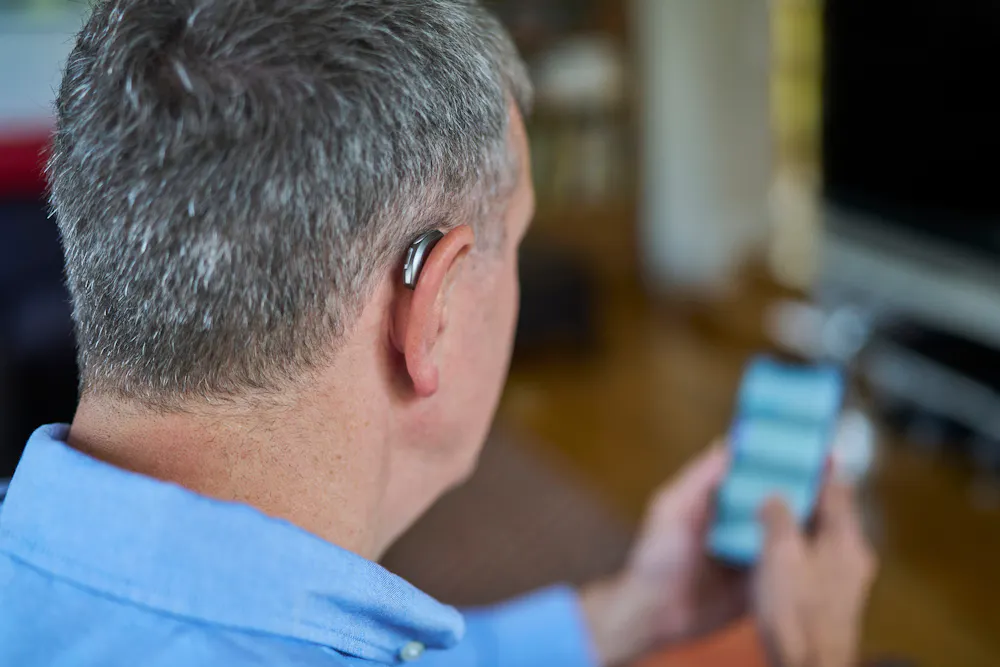
- use Bluetooth so you can hear audio from your phone, TV and other devices directly in your hearing aids.
When used with a smartphone, some hearing aids can even track your health, detect if you have fallen, and translate languages in real time.
 Modern hearing aids use Bluetooth so you can hear audio from your phone.
Daisy Daisy/Shutterstock
Modern hearing aids use Bluetooth so you can hear audio from your phone.
Daisy Daisy/Shutterstock
What should I do next?
If you think you might be having hearing difficulties or are curious about the status of your hearing, then it’s a good idea to get a hearing check.
The earlier you do something about your hearing, the greater the likelihood that you can prevent further hearing decline and reduce other health risks.
And rest assured, there’s a suitable option for everyone.
Authors: Katie Ekberg, Senior Lecturer, College of Nursing and Health Sciences, Flinders University


















