
If your tween or teen doesn’t know how to swim, it’s not too late for lessons
- Written by: Amy Peden, NHMRC Research Fellow, School of Population Health & co-founder UNSW Beach Safety Research Group, UNSW Sydney
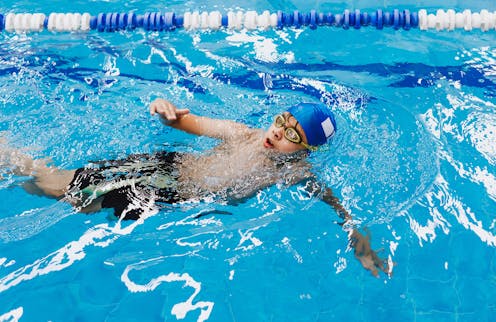
New figures show shocking numbers of Australian kids are not achieving basic swimming skills.
Royal Life Saving Australia data estimates 48% of Year 6 students cannot swim 50 metres and tread water for two minutes. For those in high school, the results are even more worrying. Teachers estimate 39% of Year 10 students still cannot meet the same benchmark.
These skills are based on minimum swimming and water safety standards children should achieve to have fun and stay safe in the water. They are a key strategy to reduce the risk of drowning.
While this research indicates we may no longer be a nation of swimmers, there’s still plenty parents, schools and governments can do. And if your child’s lessons have fallen behind, it is not too late to catch up.
Read more: Thinking of quitting your child's swimming lessons over winter? Read this first
Why are we seeing this?
This latest research builds on previous worries about Australian children’s swimming skills. During COVID, there were concerns children would not come back to lessons after lockdowns.
While participation in lessons post-lockdowns has been promising, some pools have had difficulty finding qualified staff.
In 2023, Royal Life Saving Australia also cautioned about 100,000 children in late primary school were unlikely to return to swimming lessons before they started high school.
It’s not too late
If you have stopped lessons with your children – or if you never started – it is not too late to go to the pool.
Research comparing children between the ages of three and eight indicates the optimum age to begin formal swimming lessons is around five to seven years.
But children can still learn to become safe and competent swimmers in later primary years and into high school. We know this because adults can, and do learn to swim later in life.
Research also suggests older children may learn to swim more quickly than younger children, so they may need fewer lessons to attain skills than their younger counterparts.
Make sure lessons are regular
If you have an older child starting swimming lessons it’s important to maintain regular classes.
For example, a 2018 study on a group of 149 Latino children in the United States aged three to 14 showed those who had learned the most skills had the highest attendance – attending at least ten lessons over an eight-week period.
If weekly lessons are too difficult, you could consider holiday intensive programs and supplement this with informal practice in the water. Research shows informal swimming – such as playing – can help children build their swimming skills if they are also having lessons.
There are barriers to regular lessons
We know some families find it difficult to commit to swimming lessons. On top of the cost, there may not be a local pool available or enough instructors.
These barriers disproportionately impact people from low-socioeconomic backgrounds and those living in rural and remote areas. Royal Life Saving survey respondents from these groups were more likely to report their school-aged children had never attended swimming lessons.
Schools also find it hard
Schools can help by offering swimming lessons at key points. For example, two weeks of daily lessons when children are in Year 2 is a common model in New South Wales public schools.
In Tasmania, children in Years 3, 4 and 5 have a mandatory requirement to attend swimming lessons. There is optional attendance for those in Year 6 if they are identified as being at high risk.
But schools also report challenges in teaching kids how to swim.
Swimming lessons are expensive, schools are short-staffed and dealing with a crowded curriculum. This is why 31% of surveyed schools don’t offer swimming education.
For some children, who are behind in their swimming skills – or who cannot swim at all – a short burst of school lessons may not be enough to catch them up.
We need to do more
Schools still have a vital role to play in ensuring children are not missing out on developing these minimum, lifesaving skills. So Australian governments need to prioritise swimming as one of the few sports you can learn that will help to save your life.
Royal Life Saving Australia says the following four measures would help prevent drownings:
increased funding for existing school and vacation swimming programs
increased grants targeting people with vulnerabilities to drowning, including those from refugee, migrant, and regional communities, as well as for Aboriginal and Torres Strait Islander peoples
increased access to lifesaving programs in high schools
building and refurbishing public swimming pools and swim schools.
Rates of fatal drowning in Australia are increasing. They were up 16% on the ten-year average in 2024. We have just had a particularly horrific summer where 104 people drowned, a number that is higher than both last summer and the five-year average. Swimming skills are more important than ever.
Authors: Amy Peden, NHMRC Research Fellow, School of Population Health & co-founder UNSW Beach Safety Research Group, UNSW Sydney


















