

A budget splash to conserve 30% of Australia’s lands will save species – if we choose the right 30%
- Written by: James Watson, Professor in Conservation Science, School of the Environment, The University of Queensland
In 2022, Australia and many other nations agreed to protect 30% of their lands and waters by 2030 to arrest the rapid decline in biodiversity.
Since then, the Albanese government has protected large new areas of ocean, taking the total up to 52% of territorial waters. In tonight’s federal budget, the government is expected to announce A$250 million in funding to protect an additional 30 million hectares of land over the next five years. At present, Australia protects 22% of its lands through its National Reserve System. This would take the total to 30%.
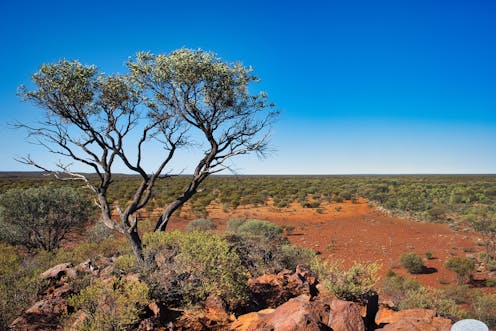
You might expect conservationists to be ecstatic. But we’re not. Large new areas of desert and arid areas are likely to be protected under this scheme, because these areas have minimal population and are not sought after by farming. But these ecosystems are already well protected.
We have to come back to the point of the 30 by 30 agreement: protect biodiversity. That means the government has to protect representative samples of all ecosystems – including in areas sought for farming or other human uses.

Buying land is only a fraction of the task
For years, Australia’s National Reserve System of national parks, state parks and Indigenous Protected Areas has languished. The last big infusion of funding and political interest came between 2007 and 2010 under a previous Labor government, when Peter Garrett was environment minister. Then, the government expanded the reserve system, grew Indigenous Protected Areas and ensured new reserves would preserve a representative sample of Australia’s ecosystems.
Since then, conservation efforts have largely not been up to scratch. Funding has stagnated. National parks are riddled with invasive species and other environmental problems.
On funding grounds alone, the $250m announced by Environment Minister Tanya Plibersek is welcome. It is, however, just a fraction of what’s needed to properly protect the right areas.
In 2023, environmental organisations called for a $5 billion fund to buy and protect important habitat – and to pay for maintenance.
The purchase of land represents perhaps 10% of the overall cost of conservation. If you buy land and do nothing, it can be overrun by invasive species. Australia’s ever-larger number of threatened species are often threatened because of these species, as well as the growing threat of land clearing in Queensland and the Northern Territory. Fire management is another cost.

Which lands actually need protection?
As successive governments have backed away from conservation, non-government organisations such as the Australian Land Conservation Alliance, Bush Heritage Australia and Australian Wildlife Conservancy have stepped up. These organisations are doing fine work in protecting land and doing the necessary on-ground land management to safeguard threatened species and ecosystems, but they do not have access to resources at a government scale.
So how will this government funding be used? It’s likely we will see further growth in Indigenous Protected Areas – areas managed by Traditional Owners alongside authorities to protect biodiversity.
These areas are often located where low rainfall often means they are not viable for farming. This means there’s less conflict over what to do with the land. If our government is determined to meet the 30% target as quickly and cheaply as possible, we may well see more arid lands and desert protected.
When you set a target of 30% protected land by 2030, governments often see the top-line figure and aim for that alone. But the text of the international agreement stresses the need to prioritise “areas of particular importance for biodiversity”.
Governments have a choice: the easy, less effective way or the hard but effective way. The recent growth in marine protected areas suggests the government is taking the easy path. Even though the science is clear that marine parks bolster fish stocks in and outside the park, they are still controversial among fishers who believe they are being locked out.
As a result, Australia’s marine park system has made greatest gains where there are very few humans who might protest, such as quadrupling the protected areas around the very remote Heard and McDonald Islands in the sub-Antarctic region. (The government has expanded marine parks at a smaller scale closer to population centres too.)
This same story may well play out on land.
What would it look like if our government was willing to do what was necessary? It would involve actively seeking out the ecological communities in clear decline, such as native grasslands, brigalow woodlands and swamps, and buying up remaining habitat.
 The oceans off Heard and McDonald Islands are now better protected – but was this the easy option? Pictured: Heard Island from satellite.
zelvan/Shutterstock
The oceans off Heard and McDonald Islands are now better protected – but was this the easy option? Pictured: Heard Island from satellite.
zelvan/Shutterstock
Saving here, clearing there
On the one hand, 22% of Australia’s land and 52% of seas come under some form of protection. But on the other, over the last two decades an area the size of Tasmania has been cleared – largely for livestock farming and mining. Satellite analyses show land clearing is actually increasing in many parts of the country.
Land clearing places further pressure on threatened species. In fact, most species considered threatened with extinction are largely in this situation because the land they live on has attributes prized by farmers or graziers, such as grass and water.
Australia’s environment faces real challenges in the next few years. Intensified land clearing, worsening climate change and whiplash drought-flood cycles, to say nothing of ballooning feral populations.
If we protect the right 30% of Australia, we have a chance to ensure most of our ecosystems have areas protected. But if we protect the wrong 30% and leave the rest open to bulldozers, we will only lock in more extinctions.
Authors: James Watson, Professor in Conservation Science, School of the Environment, The University of Queensland


















