

Lights out! Clownfish can only hatch in the dark – which light pollution is taking away
- Written by Emily Fobert, Research Associate, Flinders University
Clownfish achieved worldwide fame following Finding Nemo, but it turns out these fish don’t do so well in the spotlight.
Our research, published in Biology Letters, found when clownfish eggs were exposed to low levels of light at night – as they would be if laid near a coastal town – not a single egg hatched.
This finding adds to the growing body of research on the health affects of light pollution, a rapidly spreading ecological problem.
Read more: Light pollution: the dark side of keeping the lights on
What is light pollution?
Light pollution occurs when artificial light interferes with ecological systems or processes, usually at night.
Natural light at night, produced by the moon, stars, and other celestial bodies, is minimal. A full moon creates only 0.05-0.1 lux, which pales in comparison to the artificial light produced by humans, which can range from around 10 lux from an LED or low-pressure sodium streetlight, up to 2,000 lux from something like stadium lighting.
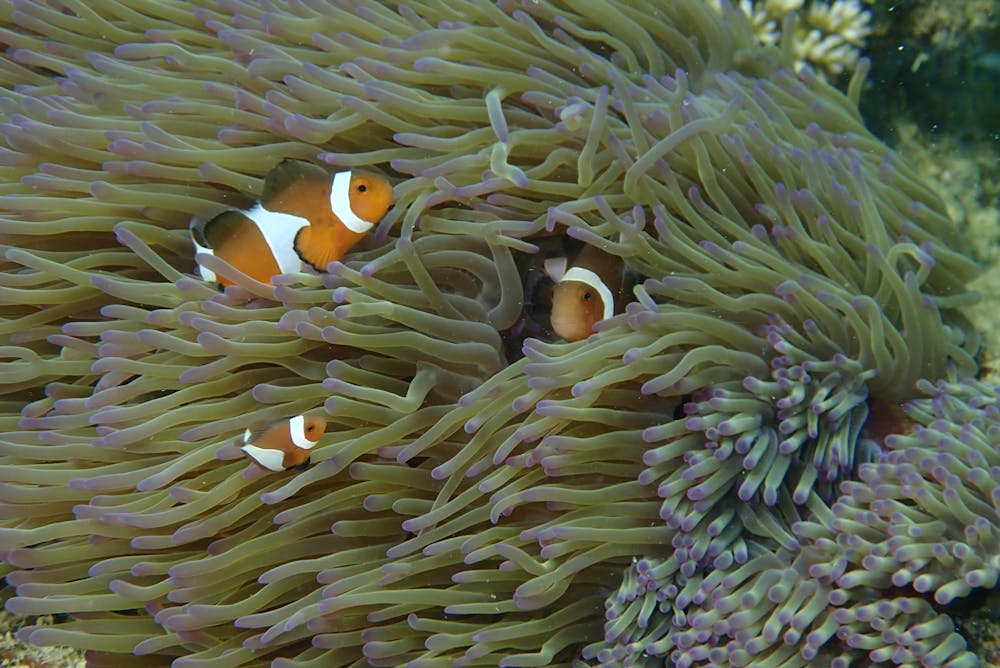 Clownfish were exposed to artificial light to see what effect it would have on their reproduction.
Emily Fobert, Author provided
Clownfish were exposed to artificial light to see what effect it would have on their reproduction.
Emily Fobert, Author provided
Because nearly all organisms on Earth have evolved with a stable day-night, light and dark cycle, many biological events are now highly attuned to the daily, lunar, and seasonal changes in light produced by the reliable movements of the Earth and Moon around the Sun.
But artificial light can mask these natural light rhythms and interfere with the behaviour and physiology of individual creatures, and ecosystems as a whole.
The ocean is not exempt from these problems. Light pollution is spreading to marine habitats through urbanised coastlines and increasing marine infrastructure such as piers, harbours, cruise ships, and tropical island resorts where bungalows extend out into the lagoon, directly above coral reefs.
Why are clownfish at risk?
Clownfish, like many reef fish, are particularly vulnerable to light pollution because they don’t move around much in their adult stage. Clownfish can travel long distances in the first 2 weeks after hatching, but at the end of this period the young fish will settle in a suitable sea anemone that becomes their forever-home.
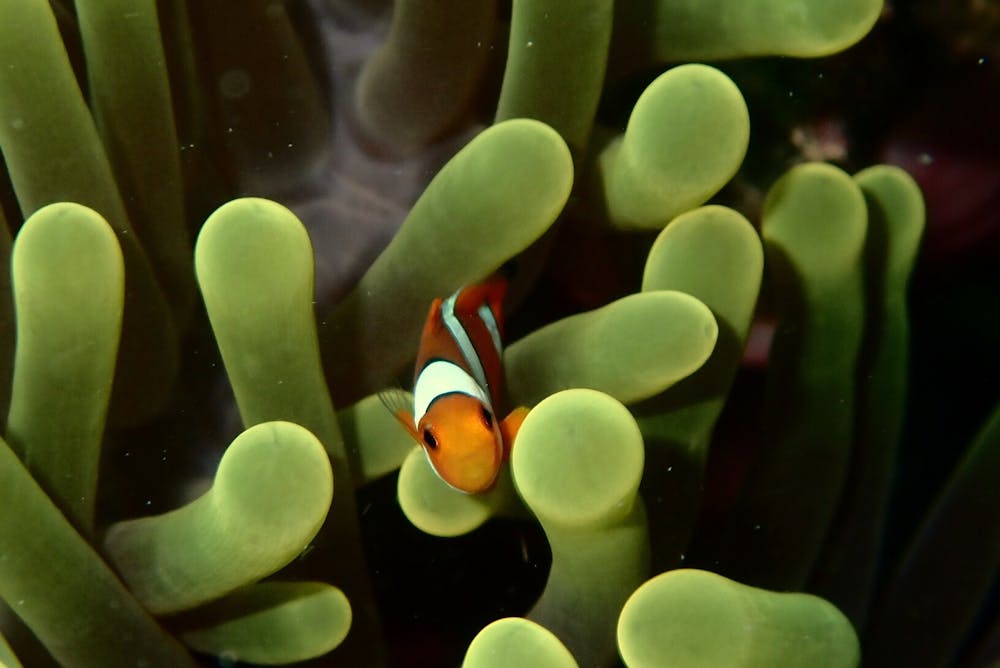 Once clownfish find a suitable anemone they stay put forever.
Emily Fobert, Author provided
Once clownfish find a suitable anemone they stay put forever.
Emily Fobert, Author provided
This means that if a fish chooses an anemone on a shallow reef in an area that is heavily lit at night, they will experience chronic exposure to light pollution throughout their life; they won’t just move away.
Clownfish also lay their eggs attached to rock or other hard surfaces, so in areas exposed to light pollution the eggs will experience continuous artificial light (as opposed to many fish that lay and fertilise eggs in open water, so they are immediately carried away by ocean currents).
What we found
To test how artificial light affects clownfish reproduction, we examined the common clownfish (Amphiprion ocellaris) in a lab experiment.
Five breeding pairs of fish experienced a normal 12-hour daylight, 12-hour dark cycle, while another five pairs of fish had their “night” period replaced with 12 hours of light at 26.5 lux, mimicking light pollution from an average coastal town.
For 60 days, we monitored how often the fish spawned, how many eggs were fertilised, and how many eggs hatched. While we saw no difference in spawning frequency or fertilisation rates between the two groups of fish, the impact of the artificial light treatment on hatch rate was staggering. None of the eggs hatched, compared with an average of 86% in the control group.
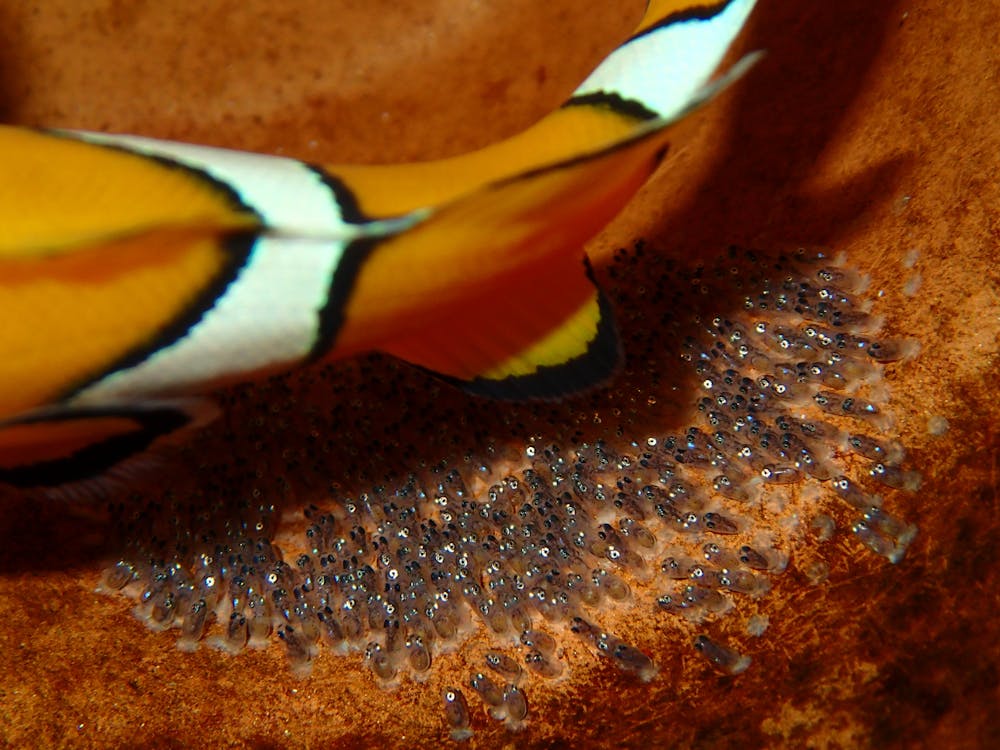 Clownfish attach their eggs to rocks or other hard surfaces, leaving them at the mercy of their immediate environmental conditions.
Emily Frobert, Author provided
Clownfish attach their eggs to rocks or other hard surfaces, leaving them at the mercy of their immediate environmental conditions.
Emily Frobert, Author provided
Read more: Why does Nemo the clownfish have three white stripes? The riddle solved at last
At the end of the experiment we removed the artificial light and monitored the fish for another 60 days to see how they would recover. As soon as the light at night was removed, eggs resumed hatching at normal rates.
Clownfish, like many reef fish, have evolved to hatch after dusk to avoid the threat of being eaten. Newly hatched baby clownfish, like most coral reef fish, are small (about 5mm long) and transparent. Hatching in darkness likely means they are less visible to predators as they emerge from their eggs.
Our findings show that the presence of artificial light, even at relatively low levels, can disrupt this crucial process, by masking the environmental cue – darkness – that triggers hatching. As many reef fish share similar reproductive behaviours to clownfish, it is likely artificial light will similarly interfere with the ability of other fish species to produce viable offspring.
 Healthy, fertilised clownfish eggs did not hatch in the presence of artificial light.
Emily Frobert, Author provided
Healthy, fertilised clownfish eggs did not hatch in the presence of artificial light.
Emily Frobert, Author provided
The larger problem
Light pollution is one of the most pervasive forms of environmental change. An estimated 23% of land surface (excluding the poles) and 22% of coastal regions are exposed to light pollution.
And the problem is only growing. The reach of light pollution across all land and sea is expanding at an estimated rate of 2.2% per year, and this will only increase with the rising global human population.
Read more: Saving Nemo: how climate change threatens anemonefish and their homes
Although research on the ecological impacts of light pollution is arguably only in its infancy, the evidence for negative consequences for a range of insects, birds, amphibians, reptiles, and mammals, including humans, is stacking up.
Our new research adds another species to the list, and highlights the importance of finding ways to manage or reduce artificial light, on land and below the waves.
Authors: Emily Fobert, Research Associate, Flinders University

















