

our student survey reveals mixed feelings about its success
- Written by: Cara Swit, Associate professor, School of Health Sciences, University of Canterbury
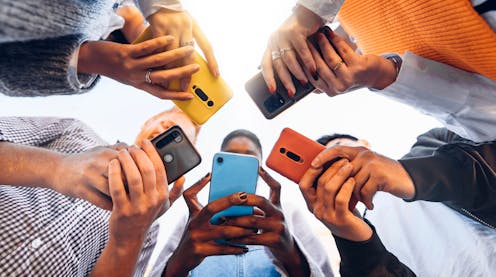
One year after the government banned cellphones from schools to help students focus and reduce distractions in class, we’re beginning to see how it has been implemented and how successful it’s been.
As part of that process, our new research asked young people about the ban. Unsurprisingly, they had a lot to say.
Schools around the world, including in Australia, France, the United Kingdom, Italy, China and parts of the United States, have implemented similar bans. The guiding principle everywhere has been to help students do better in school.
When New Zealand’s ban came into effect in April 2024, Prime Minister Christopher Luxon said it was time to cut the distractions so kids could learn and achieve.
But studies have shown these bans often don’t work as planned. For example, recent research from the UK involving over 1,200 students found no significant difference in academic grades or wellbeing between schools with strict phone bans and those with more relaxed policies.
With so many questions at the time of the ban about how it would be enforced, we wanted to hear what was going on in schools and what young people really thought. We spoke to 77 young people aged 12 to 18 from 25 schools around the country. Some liked the bans, some didn’t and some weren’t sure.
Mixed feelings
Many students had mixed feelings about the bans. Some admitted the bans helped reduce distractions and gave them a break from using their phones. As one explained,
otherwise, we’ll be on our phone all day, all afternoon, all night, and it won’t be healthy for our minds.
But other students said the ban had created new problems.
First, some students felt stressed and anxious when they couldn’t contact their parents or caregivers during the day. Second, they said the rules weren’t always clear or fair. Some teachers were strict, others weren’t. And sometimes, teachers used their phones in class, but students couldn’t.
That perceived double standard – where teachers can use phones but students can’t – left many of our respondents feeling frustrated and unfairly treated. In some cases, it even made them more secretive about their phone use. One student said,
Even though we’re not allowed to use our phones, everyone is sneaky and uses it anyway.
A lack of consultation
A lot of students said they weren’t asked what they thought before the bans were introduced. They felt as if adults made the rules without asking them or listening to them. One of our interviewees said,
It feels like they just ban everything, thinking it will fix the problem.
Many didn’t understand the purpose of the ban, especially since they still have to use laptops and other technology in class.
Recent research found more than 80% of students in Aotearoa New Zealand say technology in class is distracting – not just phones.
Already, some students have found clever ways around the phone ban. At one Auckland school, students started using walkie-talkies instead of phones to stay connected with their peers.
Examples like this show bans don’t always change behaviour the way they’re intended to. It can simply make students feel as though adults underestimate how tech-savvy they really are.
Young people as active problem solvers
The young people in our research offered some alternatives to the ban.
Many suggested allowing phones at break and lunch times. That way, they could stay connected without interrupting class. They also said adults needed to model healthy digital habits, not just set the rules.
Based on student responses, it does appear that learning and teaching how to use phones in healthy ways would be more helpful than banning them altogether.
Research from the Digital Wellness Lab supports this balanced approach, emphasising skill building over restriction. But for this to work, adults need support too. Teachers and parents need training and resources to help guide young people – and should also be surveyed on how they feel about the ban.
Banning phones doesn’t fix the bigger issue of helping young people to use technology safely and responsibly. If schools really want to support students, they need to move beyond one-size-fits-all rules.
Our research shows young people aren’t just passive users of technology. They’re active problem solvers. They want to be part of the conversation – and part of the solution.
This would involve replacing top-down bans with meaningful conversations involving young people and adults to build fair and practical digital guidelines, where everyone benefits.
Authors: Cara Swit, Associate professor, School of Health Sciences, University of Canterbury


















