If Australia switched to EVs, we’d be more reliant on China’s car factories – but wean ourselves off foreign oil
- Written by Hussein Dia, Professor of Future Urban Mobility, Swinburne University of Technology
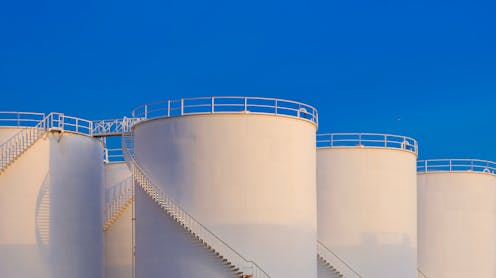
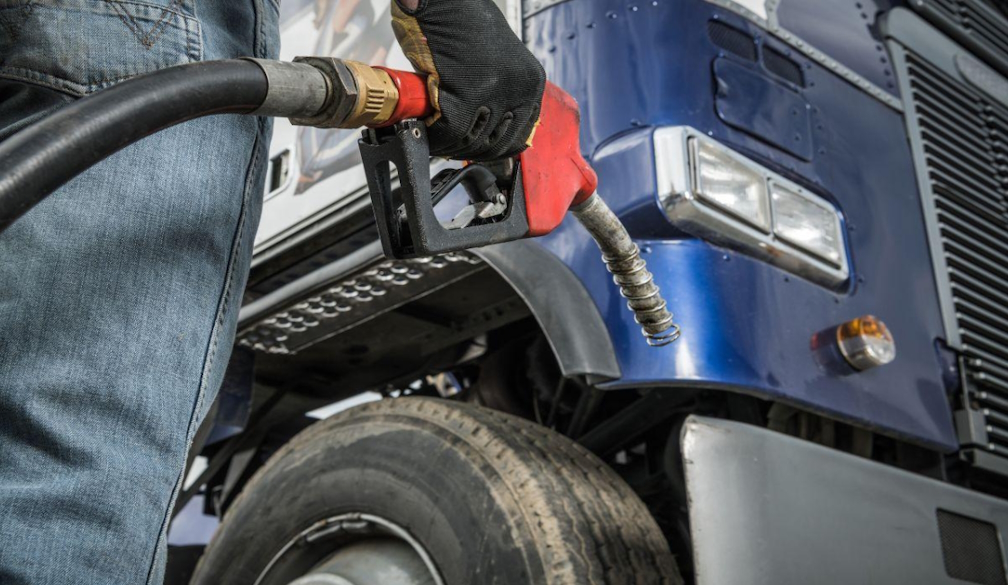
Australia has huge reserves of coal and gas – but very little oil. Before the 20th century, this didn’t matter – trains ran on local coal. But as cars and trucks have come to dominate, Australia has become more and more reliant on imported oil.
Imports now account for around 80% of total refined fuel consumption, the highest level on record.
If the flow of oil stopped due to war or economic instability, Australia would have about 54 days worth in storage before we ran out. That would be a huge problem.
But as more drivers switch from petrol and diesel to electric cars, this equation will change. We can already see this in China, where a rapid uptake of electric vehicles has seen oil demand begin to fall.
On one level, ending Australia’s dependence on foreign oil makes sense at a time of great geopolitical uncertainty. But on the other, going electric would lead to more reliance on China, now the world’s largest manufacturer of EVs.
Reducing reliance on oil makes clear sense for climate and national security reasons. But going electric has to be done carefully, to ensure Australia isn’t reliant on just one country.

Importing oil makes us vulnerable
In recent years, almost all of Australia’s refineries have closed. The government spent billions keeping the Geelong and Brisbane refineries open, as well as other fuel security measures, such as boosting domestic fuel reserves and building more storage.
The last two refineries rely on imported crude oil, as Australian oil from the North-West Shelf largely isn’t suitable for local refining.
As a result, Australia is more reliant than ever on importing fuels from large refineries in Asia such as South Korea, Singapore and Malaysia. In 2023, around 45,000 megalitres of fuel were imported from these nations.
Almost three-quarters (74%) of these liquid fuels are used in transport, across road, rail, shipping and air transport. But road transport is the big one – our cars, trucks and other road vehicles use more than half (54%) of all liquid fuels.
This reliance presents clear energy security risks. If war, geopolitical tension, economic turmoil or price volatility slows or stops the flow of oil, Australia’s cities and towns would grind to a halt.
In January, Australia had 30 days worth of petrol. Our stores of all types of oil are a bit higher, at 54 days worth. But that’s still well short of the 90 days the International Energy Agency (IEA) requires of member nations.
Electricity made locally
Shifting to electric vehicles promises cleaner air and far lower ongoing costs for drivers, as electricity is much cheaper than petrol or diesel and maintenance is far less.
But there’s another factor – the energy source. Australia’s electricity is all produced and consumed inside its borders, using local resources (sun, wind, water, coal and gas).
In this respect, electric vehicles offer much greater energy security. A war in the Middle East or a trade war over tariffs would not bring Australia to a halt. This is one reason why China has so aggressively gone electric – to end its soaring dependence on foreign oil.
Mainstreaming EVs in Australia will mean accelerating production of renewable electricity further so we can power not just homes and industry but charge cars, trucks and buses, too.
Doing this would boost our energy security, break our dependency on imported oil and drive down emissions.
EV manufacturing is expanding rapidly with more models, lower purchase prices, improved battery charging times and increasing consumer adoption.
Globally, over 17 million EVs (battery and plug-in hybrids) were sold in 2024, including 91,000 battery and 23,000 plug-in hybrids in Australia.
IEA data shows electric vehicles are already reducing oil demand globally, as are electric bikes and mopeds.
Ending our dependence on oil will be slow. Australia Institute research estimates 8% of imported fuels could be replaced by local electricity once EVs make up 25% of the passenger car fleet. At 100% EVs, we would reduce oil demand by 33%.
The other two-thirds of demand is largely from trucks, planes and ships. Electric trucks are coming, but the sector isn’t as mature as electric cars. It’s a similar story for planes and cargo ships.

Energy security and EVs
Australia doesn’t manufacture EVs at scale. As a result, we import EVs from the top manufacturing nations. China is far and away the leader, building 80% of Australia’s new EVs.
Australia is a major producer of critical minerals essential to the manufacture of EVs, as well as other green technologies such as lithium, cobalt and nickel. But China dominates much of the global supply chain for refining these minerals and manufacturing batteries.
There’s a risk in relying largely on one country for EVs, especially given the present geopolitical instability.
 Australia’s EVs are imported from the top EV nation China and other suppliers.
Rangsarit Chaiyakun/Shutterstock
Australia’s EVs are imported from the top EV nation China and other suppliers.
Rangsarit Chaiyakun/Shutterstock
Balancing security and sustainability
EVs unquestionably offer large benefits for Australia’s energy security by steadily reducing our reliance on imports from volatile global oil markets.
But this has to be balanced with other security concerns, such as a heightened reliance on China, as well as the privacy and security risks linked to data collection from digitally connected EVs.
A balanced approach would see authorities emphasise energy independence through renewables and strong support for vehicle electrification through legislative and regulatory frameworks.
Under this approach, policymakers would work to diversify supply chains, strengthen cybersecurity and encourage local manufacturing of EV components.
This approach would reduce new security risks while unlocking the environmental and economic benefits of widespread EV adoption.
Authors: Hussein Dia, Professor of Future Urban Mobility, Swinburne University of Technology