

Allowing forests to regrow and regenerate is a great way to restore habitat
- Written by: Hannah Thomas, PhD candidate in Environmental Policy, The University of Queensland
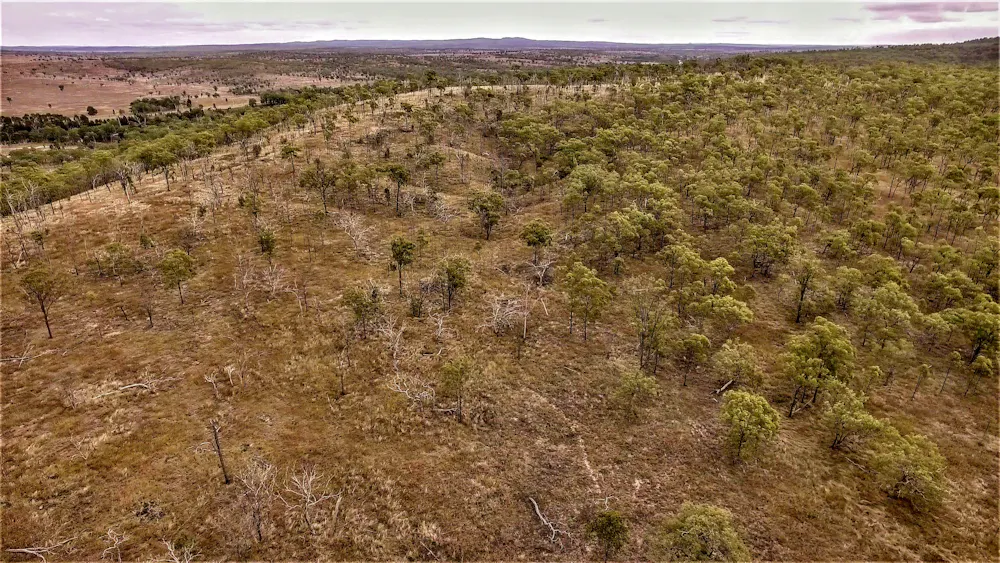
Queensland is widely known as the land clearing capital of Australia. But what’s not so well known is many of the cleared trees can grow back naturally.
The latest state government figures show regrowth across more than 7.6 million hectares in Queensland in 2020-21. These trees, though young, still provide valuable habitat for many threatened species – as long as they’re not bulldozed again.
Our new research explored the benefits of regrowth for 30 threatened animal species in Queensland. We found regrown forests and woodlands provided valuable habitat and food for species after an average of 15 years. Some species were likely to benefit from trees as young as three years.
This presents an opportunity for governments to support landowners and encourage them to retain more regrowing forest and woodland, especially where it can provide much-needed habitat for wildlife. But it’s a challenge because there is strong pressure to clear regrowth, largely to maintain pasture.
When do young forests and woodlands become valuable habitat?
We focused on threatened animal species that depend on forests and woodlands, and occur in regions with substantial regrowth.
We wanted to find out which species use regrowth, and how old the trees need to be. But there’s not much survey data available on threatened species living in naturally regenerated forest and woodlands.
To elicit this information we asked almost 50 experts to complete a detailed questionnaire and attend a workshop.
We found 15 years was the average minimum age at which regrowth became useful to threatened species. But the full range was 3-68 years, depending on factors such as what a species eats, how it moves through the landscape and whether it needs tree hollows for shelter or breeding.
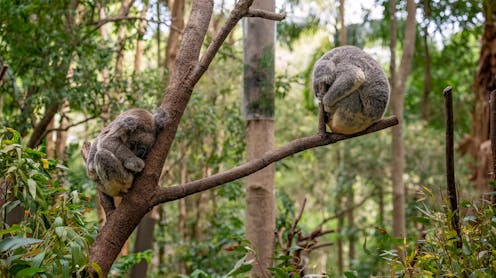
For example, one threatened bird (the squatter pigeon) could use woodlands as young as three years old. Koalas benefited from regrowth as young as nine years old.
Some species, such as the greater glider, need much older forests. This is because they require large tree hollows to shelter in during the day, and large trees to feed on and move between at night.
So young forests shouldn’t be seen as an alternative to protecting old forests. We need both.

Understanding the extent of habitat loss
We also estimated the proportion of each species’ current habitat that comprises regrowth, using satellite data and publicly available data.
For some species, we found regrowth made up almost a third of their potential habitat in Queensland. On average, it was 18%.
However, nearly three-quarters of the habitat lost in Queensland since 2018 was regrowth forests and woodlands. So while the loss of older, “remnant” vegetation is more damaging per unit area, the regrowth habitat is being lost on a bigger scale.
Our research suggests retaining more regrowth could be an easy and cost-effective way to help save threatened species.
In contrast, tree planting is time-consuming and expensive. What’s more, only 10% of our native plants are readily available as seeds for sale. This, combined with more extreme weather such as prolonged droughts, often causes restoration projects to fail.
Encouraging landholders to retain regrowth
The fact that habitat can regrow naturally in parts of Queensland is a huge bonus. But farmers also need to maintain productivity, which can decrease if there’s too much regrowth.
So, how do we help these landowners retain more regrowth?
One way is to provide incentives. For example, government-funded biodiversity stewardship schemes provide payments to cover the costs of managing the vegetation – such as fencing off habitat and managing weeds – as well as compensation for loss of agricultural production. Targeting areas of regrowth with high habitat values could be a way for such schemes to benefit wildlife.
Alternatively, market-based schemes allow landowners to generate biodiversity or carbon “credits” by keeping more trees on their property. Then, businesses (or governments) buy these credits. For example, some big emitters in Australia have to purchase carbon credits to “offset” their own emissions.
However, Australia’s carbon market has been accused of issuing “low integrity” carbon credits. This means the carbon credits were paid for projects that may not have captured and stored the amount of carbon they were supposed to. To make sure these markets work, robust methods are needed – and until now, there hasn’t been one that worked to retain regrowth.
 Planting trees is one way to restore land, allowing natural regrowth after land clearing is another.
AAP Image/Lukas Coch
Planting trees is one way to restore land, allowing natural regrowth after land clearing is another.
AAP Image/Lukas Coch
Trees are good for the land, air and sea
In February, the Queensland government released a method by which landholders could generate carbon credits by agreeing not to clear their regrowing woodlands and forests.
The new carbon method provides a promising opportunity to allow landowners to diversify their farm income.
In addition, tree cover brings direct, on-farm benefits such as more shade and shelter for livestock, natural pest control and better soil health.
At a landscape level, greater tree cover can improve local climate regulation, reduce sediment run-off to the Great Barrier Reef and reduce Australia’s carbon emissions.
Ideally, Australia’s carbon and biodiversity markets would work alongside sufficient government funding for nature recovery, which needs to increase to at least 1% (currently it’s around 0.1%).
Meanwhile, our research has shown embracing natural regeneration potential in Queensland will have benefits for a range of threatened species too.
We acknowledge our research coauthors, Jeremy Simmonds (2rog Consulting), Michelle Ward (Griffith University) and Teresa Eyre (Queensland Department of Environment, Tourism, Science and Innovation).
Authors: Hannah Thomas, PhD candidate in Environmental Policy, The University of Queensland


















