

Google AI


Modern Australian

NZ’s over-reliance on roads for freight means natural disasters hit even harder. But there is a fix

  • Written by: Cécile L'Hermitte, Senior Lecturer in Logistics and Supply Chain Management, University of Waikato
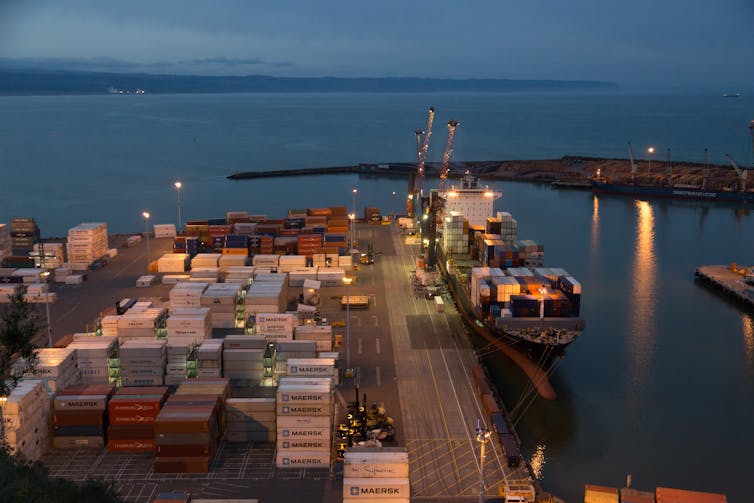
Napier port at night

In the aftermath of Cyclone Gabrielle, the driving time between Napier and Wairoa stretched from 90 minutes to over six hours, causing major supply chain delays. Retail prices rose and shoppers faced empty shelves.

Natural hazards such as earthquakes and flooding can wreak havoc on Aotearoa New Zealand’s freight system. These crises can cause extensive road damage, isolating communities and creating disruptions in supply chain operations.

Cyclone Gabrielle was by no means a one-off. The 2021 flooding in Canterbury, for example, forced trucks to travel nearly 900 extra kilometres between Christchurch and Timaru, extending the travel time from two to 13 hours.

Severe weather events, the pandemic and the ongoing dispute about replacing the Cook Strait ferries have made the fragility of the freight system more apparent than ever.

To be fair, natural hazards are beyond our control. But resilience can be increased. Our new research identified the main vulnerabilities in the country’s freight system and analysed the factors leading to post-disaster disruptions and shortages on shelves.

The key to reducing freight disruptions, we found, is embracing and investing in the different ways goods can be moved around the country. In particular, using the thousands of kilometres of coastline offers another way to get items from one region to another.

Napier port at night
Rather than relying almost exclusively on the road network to move products, the government should invest in shipping infrastructure. Rachel Moon/Shutterstock

Over-reliance on roads

New Zealand’s freight system is heavily reliant on roads, with trucks carrying close to 93% of the domestic freight tonnage.

But as they are currently organised, other potentially useful forms of transport such as rail and coastal shipping are not great alternatives. Non-road options run on timetables, for example, resulting in longer transit times.

And unlike road transport, which can move products directly between two points, rail and coastal shipping require multiple points of contact from where the goods are produced through to where they are sold.

As a result, when a disaster hits, alternative road routes are typically used to maintain freight deliveries. The limited alternatives in the road network and the lack of roads that can withstand heavy freight can cause problems for trucking companies. Both travel distances and transit times can increase.

When this happens, more trucks and drivers are needed, but these are already in short supply. The transport industry has been struggling to fill positions, with an estimated shortfall of thousands of drivers across the country.

This is compounded by the shortage of trucks, particularly specialised vehicles such as refrigerated units, which are essential for transporting perishable goods.

NZ’s long coastlines offer options

Government policy has a key role to play in addressing these problems and the lack of resilience in the national infrastructure system. In a country with long coastlines, reducing reliance on road transport and developing coastal shipping should be considered.

By shifting a portion of freight to coastal shipping, the demand for trucks and drivers can be reduced. This would also ensure reliable freight movements between the North and the South Islands when the ferry services are disrupted.

Finally, investing in coastal shipping would create a more flexible and resilient transport system where goods can shift rapidly from road to sea after a disaster.

Achieving this would require infrastructure improvements at our domestic seaports and additional vessels to increase the frequency of service. There would also need to be operational integration between road, rail and sea, with synchronised timetables for shorter transit times.

There will inevitably be another natural disaster that disrupts the freight system, causing delays, empty shelves and increased prices. Diversifying the transport options would increase resilience and keep those goods moving.

Authors: Cécile L'Hermitte, Senior Lecturer in Logistics and Supply Chain Management, University of Waikato


Read more https://theconversation.com/nzs-over-reliance-on-roads-for-freight-means-natural-disasters-hit-even-harder-but-there-is-a-fix-253008

What to Do When an Older Car Is No Longer Worth Keeping in Melbourne

Ever looked at another repair quote and wondered whether your old car is still worth the trouble? It is a common turning point for Melbourne motoris...

Your Baby's First Year: A Local Guide to Feeding, Sleep, and When to Get Extra Support

Ask ten parents in a Brisbane mothers' group how their baby is feeding or sleeping, and expect ten different answers.  Someone's baby sleeps throug...

Kitchen and Laundry Makeover Ideas That Don't Require a Full Renovation

Full kitchen renos are expensive — and most people don't actually need one.  They need the kitchen to stop looking like it's stuck in 2009, or they...

How Technology Is Reshaping the Modern Australian Commercial Kitchen

The commercial kitchen has always been shaped by technology. Refrigeration changed how ingredients could be stored, modern ventilation transformed k...

The Number on a Roller Blind Fabric That Nobody Explains

Somewhere in the fabric book, next to the colour name, there is a percentage. Three per cent. Five per cent. Ten per cent. Nobody explains it, most c...

What’s Trending in Men’s Jewellery This Father’s Day!

Finding a Father’s Day gift that feels personal, stylish and genuinely wearable is not always easy. While socks and novelty mugs have traditionally ...

Road Signs: Understanding Their Role in Clear and Effective Signage

Effective signage and display hardware can help businesses communicate information, promote products and organise customer or visitor movement. Road...

Bottle Label Printing: Key Factors to Consider Before Your Next Packaging Run

Effective packaging begins with understanding the product, bottle material, artwork and production requirements when planning bottle label printing. H...

Planning a Long-Distance Move With Interstate Movers Melbourne

Moving between states involves more planning than a typical local relocation. Along with packing and transporting household belongings, you need to...

Understanding the Role of an I/O Controller in Industrial Automation

Modern industrial systems depend on accurate communication between sensors, machines and control systems. An I/O controller can help manage this commu...

How the Right Mining Hose Supports Demanding Operations

Mining environments place considerable demands on equipment used for material transfer, water management and processing. Hoses operating in these co...

Simple Ideas for Making Social Gatherings More Memorable

We have all been to those parties where everyone just stands around the kitchen island, staring at their phones, waiting for someone else to make a mo...

Outdoor Wall Lights: Improving Exterior Lighting Around Your Home

Lighting can influence how a room looks, feels and functions, so the right fitting should be selected according to both appearance and practical req...

Commercial Office Cleaning: Combining Routine Office Cleaning With Melbourne Service

Keeping a workplace clean requires a service that can accommodate everyday tasks as well as the particular needs of the business. Professional comme...

Caravan Sales in Queensland: How to Find the Right Caravan for Sale QLD

Caravan ownership is about more than having somewhere to sleep while travelling. For many Queenslanders, it is one of the best ways to explore regio...

What Sir Walter Buffalo Turf Actually Costs in 2026 (And Why Quotes Vary So Much)

Two quotes landed on a Hills District homeowner's kitchen table last spring for the exact same 80-square-metre backyard. One said $12 a metre. The o...

Nearly 1,300 NSW Hospital Beds Are Occupied By People Who Are Ready To Go Home

1,276 people in NSW hospitals have been medically cleared for discharge but remain in hospital because they're still waiting for NDIS or aged care sup...

National Survey Launched to Measure Operational Impacts of Federal NDIS Policy Reforms

The effects of recent NDIS reforms are beginning to move beyond policy papers and into day to day service delivery. A new national survey is asking ...















