

Graydon Carter hired Christopher Hitchens, pissed off Trump and revealed Deep Throat. He calls himself a ‘beta male’
- Written by: Julian Novitz, Senior Lecturer, Writing, Department of Media and Communication, Swinburne University of Technology
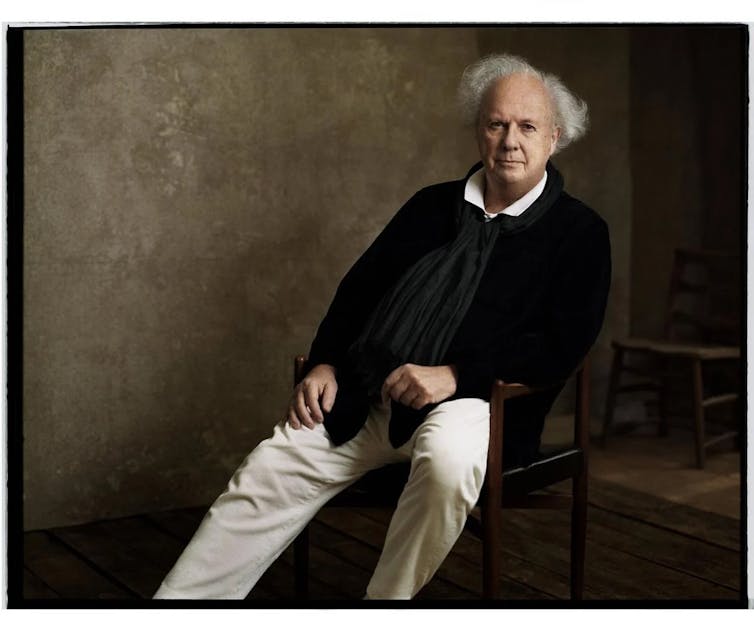
The editor of Vanity Fair, Radhika Jones, is stepping down after seven years. Amid the media buzz about who might take her role – long considered a plum one – is a surprising question. “Is it still a good job?” asked the New York Times last week.
Some magazine editors have said no, one even saying “I wouldn’t touch that job”. But Jones’ immediate predecessor, Graydon Carter, says it’s “still a great job for an enterprising editor”, though the golden age of magazines – including Vanity Fair – is clearly over.
Carter’s new memoir recounts his time as editor from 1992 to 2017, during the magazine’s glory days. It’s full of stories about editors and writers who comfortably stalked the halls of power. They rubbed shoulders with tycoons and celebrities, attracted both reverence and apoplectic rage, and were handsomely paid for it.
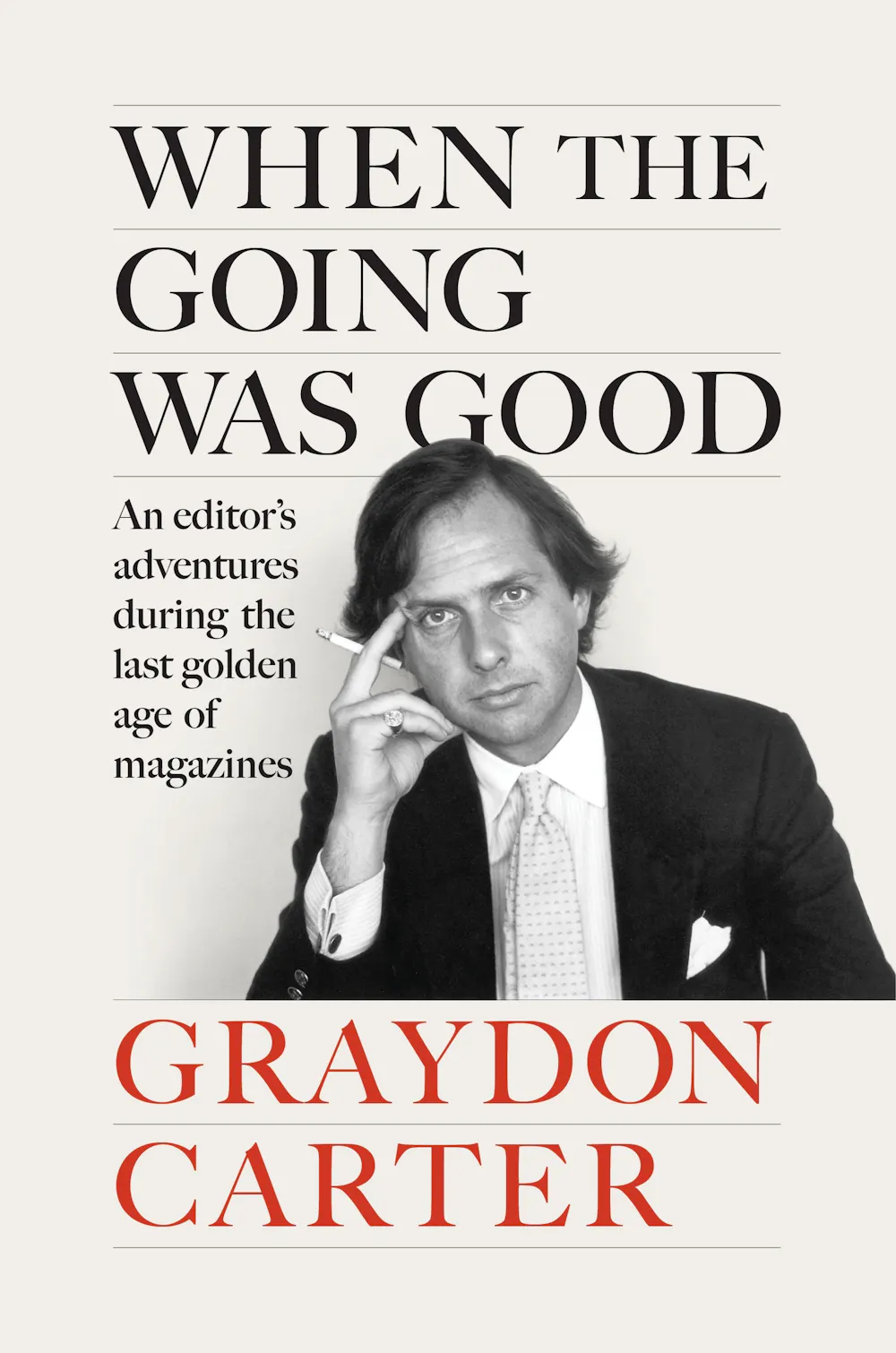
Review: When the Going Was Good: An Editor’s Adventures During the Last Golden Age of Magazines – Graydon Carter (Grove Press)
When the Going Was Good is an apt title for a book about the “golden age of magazines”. Carter’s memoir focuses on his time at Vanity Fair, but also includes stints at Time magazine, where he got his first taste of “expense account life”, and as co-founder of iconic satirical magazine Spy, where he first described rising tycoon Donald Trump as a “short-fingered vulgarian”.

As Carter notes in his memoir, the glory days of the print magazines have passed. What can he tell us about their heyday, and the future of long-form journalism?
Golden days
For an editor with a few horror stories about writers who exceed their word count – one would apparently turn in 70,000-word “vomit drafts” – Carter doesn’t exactly make a virtue of concision. The opening chapters linger on his upbringing in Ottawa, and it takes roughly 50 pages to arrive at the subject of magazine work.
At university, he joined a literary magazine (the Canadian Review) on a whim, and swiftly became its editor. Over six years, he grew its circulation to an impressive 50,000 copies. When the Canadian Review folded in 1978, Carter moved to New York.
This is where When the Going Was Good picks up. Carter succeeds in conveying the excitement and possibility of this period. He got a job at Time when it was still the “magazine of yore, the weekly that could move the market and influence presidential elections”, and not the “digital husk” he now considers it.
 A Spy magazine cover.
Ebay
It was certainly loathed by one of its frequent targets: Trump. Carter’s “short-fingered” jibe continues to rile Trump to this day. It is a good line, and Carter can’t resist returning to the subject of Trump’s hand size at least five or six times in his memoir.
Following a brief stint as editor of the New York Observer, Carter caught the eye of Si Newhouse, the proprietor of Conde Nast. Initially recruited to be the editor of the New Yorker (Carter’s favourite magazine since childhood), this assignment was changed at the last minute to Vanity Fair.
Parties, influence and Deep Throat
As editor, Carter shifted the magazine’s then somewhat arch, ornate language to a more sober and reserved house style. But he retained the keen eye for celebrity and corporate gossip he had developed at Spy. His editorial instincts were an excellent fit for Vanity Fair’s unique blend of high reportage, entertainment features and sensationalist expose.
One of Carter’s signature accomplishments as editor was deepening the magazine’s connections with Hollywood. Carter devotes two chapters to discussing how he established a regular Vanity Fair Oscar party, and the social world that surrounded it.
A Spy magazine cover.
Ebay
It was certainly loathed by one of its frequent targets: Trump. Carter’s “short-fingered” jibe continues to rile Trump to this day. It is a good line, and Carter can’t resist returning to the subject of Trump’s hand size at least five or six times in his memoir.
Following a brief stint as editor of the New York Observer, Carter caught the eye of Si Newhouse, the proprietor of Conde Nast. Initially recruited to be the editor of the New Yorker (Carter’s favourite magazine since childhood), this assignment was changed at the last minute to Vanity Fair.
Parties, influence and Deep Throat
As editor, Carter shifted the magazine’s then somewhat arch, ornate language to a more sober and reserved house style. But he retained the keen eye for celebrity and corporate gossip he had developed at Spy. His editorial instincts were an excellent fit for Vanity Fair’s unique blend of high reportage, entertainment features and sensationalist expose.
One of Carter’s signature accomplishments as editor was deepening the magazine’s connections with Hollywood. Carter devotes two chapters to discussing how he established a regular Vanity Fair Oscar party, and the social world that surrounded it.
 Actors Tom Cruise and Katie Holmes arrive at the Vanity Fair Oscar party, 2013.
Evan Agostini/AAP
This provides some entertaining stories, such as an attempt to host a party where every actor who had played James Bond would be present, but was attended only by a belligerent George Lazenby. Carter’s outreach, however, helped to secure the candid celebrity interviews and profiles that made Vanity Fair so attractive to advertisers.
This supported an approach to investigative journalism that could be expensive and time consuming. The monthly format of Vanity Fair meant Carter and his editorial team had to exercise farsighted judgement as to whether a story would have ongoing relevance for readers. Carter presents this work as a long game, where a writer would be matched with an idea or a lead, and supported until they delivered the copy.
As editor, Carter oversaw some of the magazine’s most iconic reportage: such as Dominick Dunne’s coverage of the O.J. Simpson trial, Marie Brenner’s expose on the tobacco industry (later adapted as the Insider starring Al Pacino and Russell Crowe), and the revelation of the Watergate informer “Deep Throat” as former deputy director of the FBI Mark Felt.
Actors Tom Cruise and Katie Holmes arrive at the Vanity Fair Oscar party, 2013.
Evan Agostini/AAP
This provides some entertaining stories, such as an attempt to host a party where every actor who had played James Bond would be present, but was attended only by a belligerent George Lazenby. Carter’s outreach, however, helped to secure the candid celebrity interviews and profiles that made Vanity Fair so attractive to advertisers.
This supported an approach to investigative journalism that could be expensive and time consuming. The monthly format of Vanity Fair meant Carter and his editorial team had to exercise farsighted judgement as to whether a story would have ongoing relevance for readers. Carter presents this work as a long game, where a writer would be matched with an idea or a lead, and supported until they delivered the copy.
As editor, Carter oversaw some of the magazine’s most iconic reportage: such as Dominick Dunne’s coverage of the O.J. Simpson trial, Marie Brenner’s expose on the tobacco industry (later adapted as the Insider starring Al Pacino and Russell Crowe), and the revelation of the Watergate informer “Deep Throat” as former deputy director of the FBI Mark Felt.
 Dominick Dunne’s coverage of the O.J. Simpson trial was among the iconic reportage Carter oversaw as Vanity Fair editor.
Vince Bucci/AAP
When the Going was Good presents Carter’s time at Vanity Fair as a long list of accomplishments (though he is always judicious about giving credit to assistants, sub-editors and writers) and a succession of amusing anecdotes.
A gruellingly awkward high society dinner with Princess Margaret is one standout. Carter recalls a crowd of prominent New Yorkers being uncomfortably trapped in his apartment due to royal protocol that forbade them to leave before the princess, who continued to smoke and drink until midnight.
Another is an account of a long running, one-sided feud with Joan Didion’s husband (and Dominick Dunne’s brother), John Gregory Dunne, who took umbrage, inexplicably, at his and Joan’s exclusion from the cover of Vanity Fair’s first Hollywood issue.
No malice – except for Tina Brown
Carter also devotes space to his generally pleasant, but carefully managed relationship with Si Newhouse. Over what seems like a constant succession of dinners and lunches, he ensured the expense accounts remained “bottomless”, and that Si’s occasional attempts at editorial interference were adroitly deflected.
Dominick Dunne’s coverage of the O.J. Simpson trial was among the iconic reportage Carter oversaw as Vanity Fair editor.
Vince Bucci/AAP
When the Going was Good presents Carter’s time at Vanity Fair as a long list of accomplishments (though he is always judicious about giving credit to assistants, sub-editors and writers) and a succession of amusing anecdotes.
A gruellingly awkward high society dinner with Princess Margaret is one standout. Carter recalls a crowd of prominent New Yorkers being uncomfortably trapped in his apartment due to royal protocol that forbade them to leave before the princess, who continued to smoke and drink until midnight.
Another is an account of a long running, one-sided feud with Joan Didion’s husband (and Dominick Dunne’s brother), John Gregory Dunne, who took umbrage, inexplicably, at his and Joan’s exclusion from the cover of Vanity Fair’s first Hollywood issue.
No malice – except for Tina Brown
Carter also devotes space to his generally pleasant, but carefully managed relationship with Si Newhouse. Over what seems like a constant succession of dinners and lunches, he ensured the expense accounts remained “bottomless”, and that Si’s occasional attempts at editorial interference were adroitly deflected.
 Christopher Hitchens.
Peter Foley/AAP
His long friendship with Christopher Hitchens – one of most distinctive voices Carter brought to the magazine – is described with great warmth. Dominick Dunne, the other key writer from Carter’s period (inherited from his predecessor as editor, Tina Brown), is treated less generously. While Carter acknowledges Dunne’s talent, he is also forthcoming about the difficulties of working with him later in his career, due to his “imperious, overbearing manner”.
Carter was clearly not fond of Brown, who snatched his dream job at the New Yorker and apparently left a poisonous office culture in her wake. Her considerable role in establishing the iconic look and feel of Vanity Fair, and her early recruitment of vital writing talent (Marie Brenner was another Brown hire, for instance), goes largely unacknowledged.
But for the most part, When the Going Was Good lacks malice. With a few exceptions, Carter has a kind word (or what sometimes feels like an amicable page and a half) for just about every writer and editor in New York.
While there is a lot of detail about daily work and specific articles, Carter does not share too many insights about the print magazine world in general. Nor does he extensively consider what has been lost with its decline. The period following the 2008 financial crisis, where funds significantly tightened, is skimmed over. It would have been interesting to hear more about how Vanity Fair adapted to these leaner times, which preceded his departure in 2017.
Justified victory for a ‘beta male’
When the Going Was Good has the breezy, amiable tone of a justified victory lap at the end of a storied career. Throughout it, Carter cuts a surprisingly modest figure. He describes himself as perpetually anxious, a “beta male” who was terrible at negotiating and had to battle his own “inherent laziness”. He is happy to attribute much of his success to simple good fortune.
Christopher Hitchens.
Peter Foley/AAP
His long friendship with Christopher Hitchens – one of most distinctive voices Carter brought to the magazine – is described with great warmth. Dominick Dunne, the other key writer from Carter’s period (inherited from his predecessor as editor, Tina Brown), is treated less generously. While Carter acknowledges Dunne’s talent, he is also forthcoming about the difficulties of working with him later in his career, due to his “imperious, overbearing manner”.
Carter was clearly not fond of Brown, who snatched his dream job at the New Yorker and apparently left a poisonous office culture in her wake. Her considerable role in establishing the iconic look and feel of Vanity Fair, and her early recruitment of vital writing talent (Marie Brenner was another Brown hire, for instance), goes largely unacknowledged.
But for the most part, When the Going Was Good lacks malice. With a few exceptions, Carter has a kind word (or what sometimes feels like an amicable page and a half) for just about every writer and editor in New York.
While there is a lot of detail about daily work and specific articles, Carter does not share too many insights about the print magazine world in general. Nor does he extensively consider what has been lost with its decline. The period following the 2008 financial crisis, where funds significantly tightened, is skimmed over. It would have been interesting to hear more about how Vanity Fair adapted to these leaner times, which preceded his departure in 2017.
Justified victory for a ‘beta male’
When the Going Was Good has the breezy, amiable tone of a justified victory lap at the end of a storied career. Throughout it, Carter cuts a surprisingly modest figure. He describes himself as perpetually anxious, a “beta male” who was terrible at negotiating and had to battle his own “inherent laziness”. He is happy to attribute much of his success to simple good fortune.
 A 1997 Vanity Fair cover, during Carter’s reign.
Herb Ritts/AAP
This tone possibly undersells Carter’s accomplishments. And articles from some of his former writers suggest a more mercurial personality than he reveals here. Toby Young, who wrote a biting memoir (adapted for a 2008 film) about his unsuccessful time at Vanity Fair under Carter, reviewed this memoir for The Spectator. In it, he describes Carter in his prime as “full of malicious gossip” and constantly “bigging himself up” against his rivals.
But Carter’s humility (whether taken as false or genuine) also reflects his characterisation of himself as an editor. He places great value on being supportive and non-confrontational with his writers, enabling them to deliver their best work, rather than being directing or demanding. The joy and gusto he brought to this background work, at every stage of his career, comes across clearly.
While When the Going Was Good will likely be of interest to magazine aficionados, as a memoir it is too good-natured to be scintillating. The venom and savagery one might have expected from a founding editor of Spy is largely absent. But it does present Carter as someone who has emerged, remarkably, from the notoriously cutthroat world of New York magazines with little interest in settling scores or making enemies. Or at least any new ones.
Indeed, from this book, Carter doesn’t exactly seem the type to dash a cup from perjured lip (that sort of thing is probably best left to the writers). But it is easy to imagine him sweeping in a little later in the evening to make sure everyone is still having a good time. And possibly charge the next round of drinks to his expense account.
Authors: Julian Novitz, Senior Lecturer, Writing, Department of Media and Communication, Swinburne University of Technology
A 1997 Vanity Fair cover, during Carter’s reign.
Herb Ritts/AAP
This tone possibly undersells Carter’s accomplishments. And articles from some of his former writers suggest a more mercurial personality than he reveals here. Toby Young, who wrote a biting memoir (adapted for a 2008 film) about his unsuccessful time at Vanity Fair under Carter, reviewed this memoir for The Spectator. In it, he describes Carter in his prime as “full of malicious gossip” and constantly “bigging himself up” against his rivals.
But Carter’s humility (whether taken as false or genuine) also reflects his characterisation of himself as an editor. He places great value on being supportive and non-confrontational with his writers, enabling them to deliver their best work, rather than being directing or demanding. The joy and gusto he brought to this background work, at every stage of his career, comes across clearly.
While When the Going Was Good will likely be of interest to magazine aficionados, as a memoir it is too good-natured to be scintillating. The venom and savagery one might have expected from a founding editor of Spy is largely absent. But it does present Carter as someone who has emerged, remarkably, from the notoriously cutthroat world of New York magazines with little interest in settling scores or making enemies. Or at least any new ones.
Indeed, from this book, Carter doesn’t exactly seem the type to dash a cup from perjured lip (that sort of thing is probably best left to the writers). But it is easy to imagine him sweeping in a little later in the evening to make sure everyone is still having a good time. And possibly charge the next round of drinks to his expense account.
Authors: Julian Novitz, Senior Lecturer, Writing, Department of Media and Communication, Swinburne University of Technology 

















