

Rather than short-term fixes, communities need flexible plans to prepare for a range of likely climate impacts
- Written by: Tom Logan, Senior Lecturer Above the Bar of Civil Systems Engineering, University of Canterbury
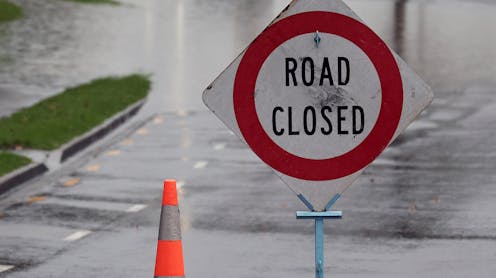
As New Zealanders clean up after ex-Cyclone Tam which left thousands without power and communities once again facing flooding, it’s tempting to seek immediate solutions.
However, after the cleanup and initial recovery, careful planning is essential.
Research shows that following disasters, communities often demand visible action that appears decisive. Yet, these reactions can create more problems than they solve.
When high-impact weather events drive long-term policy decisions, we risk implementing changes that seem protective but actually increase the risk of future disasters or misallocate limited resources.
What New Zealand needs isn’t knee-jerk actions but thoughtful planning that prepares communities before the next storms strike. Risk assessments paired with adaptive planning offer a path forward to build resilience step by step.
Planning ahead with multiple options
The good news is that many councils in New Zealand have begun this process and communities across the country are due to receive climate change risk assessments. These aren’t just technical documents showing hazard areas – they are tools that put power in the hands of communities.
When communities have access to good information about which neighbourhoods, roads and infrastructure face potential risks, they can prioritise investments in protection, modify building practices where needed and, in some cases, plan for different futures. This knowledge creates options rather than fear.
A risk assessment is merely the first step. Adaptation plans that translate knowledge into action are the next, but the Climate Change Commission recently confirmed there is a gap, concluding that:
New Zealand is not adapting to climate change fast enough.
For many New Zealanders already experiencing “rain anxiety” with each approaching storm, simply naming the danger without offering a path forward isn’t enough. This is where adaptive planning becomes essential.
Adaptive planning isn’t about abandoning coastal towns tomorrow or spending billions on sea walls today. It is about having a plan A, B and C ready if or when nature forces our hand. Rather than demanding immediate, potentially costly actions, adaptive planning provides a roadmap with multiple pathways that adjust as climate conditions evolve. This is how we best manage complex risk.
Think of it as setting up trip wires: when water reaches certain levels or storms hit certain frequencies, we already know our next move. This approach acknowledges the deep uncertainty of climate change while still providing communities with clarity about what happens next.
Importantly, it builds in community consultation at each decision point, ensuring solutions reflect local values and priorities.
Success stories
Several New Zealand communities are already demonstrating how this approach works. Christchurch recently approved an adaptation strategy for Whakaraupō Lyttelton Harbour with clear pathways based on trigger points rather than fixed timelines.
In South Dunedin, where half of the city’s buildings currently face flood risks which are expected to worsen in coming decades, the city council has paired its risk assessment with seven potential adaptation futures, ranging from status quo to large-scale retreat. Rather than imposing solutions, they’re consulting residents about what they want for their neighbourhoods.
Similarly forward-thinking, Buller District Council has developed a master plan that includes potentially relocating parts of Westport in the future. It’s a bold strategy that acknowledges reality rather than clinging to false security.
Status quo feels safer than adaptation
These approaches aren’t without controversy. At recent public meetings in Buller, some residents voiced understandable concerns about property values and community disruption. These reactions reflect the very real emotional and financial stakes for people whose homes are affected.
Yet the alternative – continuing with the status quo – means flood victims are offered only the option to invest their insurance money wherever they like. This assumes insurance remains available, which is a misguided assumption as insurance retreat from climate-vulnerable properties accelerates.
However, while local councils are on the front lines of adaptation planning, they’re being asked to make transformational decisions without adequate central government support. A recent Parliamentary select committee report failed to clarify who should pay for adaptation measures, despite acknowledging significant risks.
Parliament continues to avoid the difficult questions, kicking the can further down the road while communities such as South Dunedin and Westport face immediate threats.
Local councils need more than vague guidelines. They need clear direction on funding responsibilities, legislative powers and technical support. Without this support, even the most detailed risk assessments become exercises in documenting vulnerability rather than building resilience.
Instead of demanding short-term fixes, residents should expect their councils to engage with these complex challenges. The best climate preparation isn’t about predicting exactly what will happen in 2100 or avoiding disaster. It is about building more resilient, cohesive communities that are prepared for whatever our changing climate brings.
Authors: Tom Logan, Senior Lecturer Above the Bar of Civil Systems Engineering, University of Canterbury


















