

Tempted to turn on the aircon? Science says use fans until it’s 27°C
- Written by Federico Tartarini, Senior Lecturer, School of Architecture Design and Planning, University of Sydney

Many Australians struggle to keep themselves cool affordably and effectively, particularly with rising electricity prices. This is becoming a major health concern, especially for our most vulnerable people such as the elderly, pregnant women and people with cardiovascular diseases.
Air conditioning is often seen as the only solution to this problem. But relying too heavily on aircon has major downsides. These include hefty electricity bills, increased greenhouse gas emissions, strain on an already weak electricity grid, and dumping heat from buildings to the outside – further heating the outdoor air.
Our latest research, published in the Medical Journal of Australia, highlights a simple yet effective solution: a “fan-first” cooling approach.
The approach is simple: use electric fans as your first cooling strategy, and only turn on air conditioning when the indoor temperature exceeds 27°C.
Fan-First Cooling: The Smart Way to Beat Australia’s Heat Crisis (Federico Tartarini)The solution: ‘fan-first’ cooling
Electric fans can make you feel more comfortable on a hot day simply by moving the air around you. This helps our body release heat in two ways: improving the transfer heat from your body into the air, and increasing the evaporation of sweat from your skin.
A gentle breeze can make you feel up to 4°C cooler, even when the weather is very hot and humid.
This allows you to increase the aircon set-point (the temperature at which cooling turns on) from 23-24°C to 27-28°C. This simple change can significantly reduce the amount of time your aircon is running, leading to substantial energy savings.
For example, in our previous research we showed raising the office air conditioning set-point from 24 to 26.5°C, with supplementary air movement from desk and ceiling fans, reduced energy consumption by 32%, without compromising thermal comfort.
Don’t fans still use electricity to run?
Yes fans still use electricity, but it’s as little as 3% of the electricity used to run air conditioning. That means you can run more than 30 fans with the same amount of energy it takes to run a single aircon unit.
A basic pedestal fan is cheap to buy (A$20 to $150), requires no installation and minimal maintenance, and can be easily moved around to keep you cool in any part of your house. Simply turn on the fan as soon as you start feeling slightly warm.
Fans cool you, whereas aircon cools the whole space, which is less efficient.
We also previously showed that using fans rather than airconditioning is a more effective emissions reduction strategy than switching from old-fashioned incandescent light bulbs to LED lighting.
The problem with over-reliance on aircon
Globally, the use of air conditioning is rapidly increasing. Aircon units sales have tripled since 1990 and are projected to triple again in 2050. It is becoming the go-to solution to heat management.
Aircon is effective but is expensive to buy, run and maintain.
A recent survey showed while most people have aircon, two thirds did not use it due to cost concerns.
Beyond the financial burden, the environmental impact of aircon is substantial. In Australia, electricity mainly comes from burning fossil fuels, creating greenhouse gas emissions. Even with the growth of renewable energy, the sheer demand for aircon cooling could strain the transition and the grid.
Furthermore, the refrigerants used in most aircon units are potent greenhouse gases. It will also take time to replace older and less efficient aircon units.
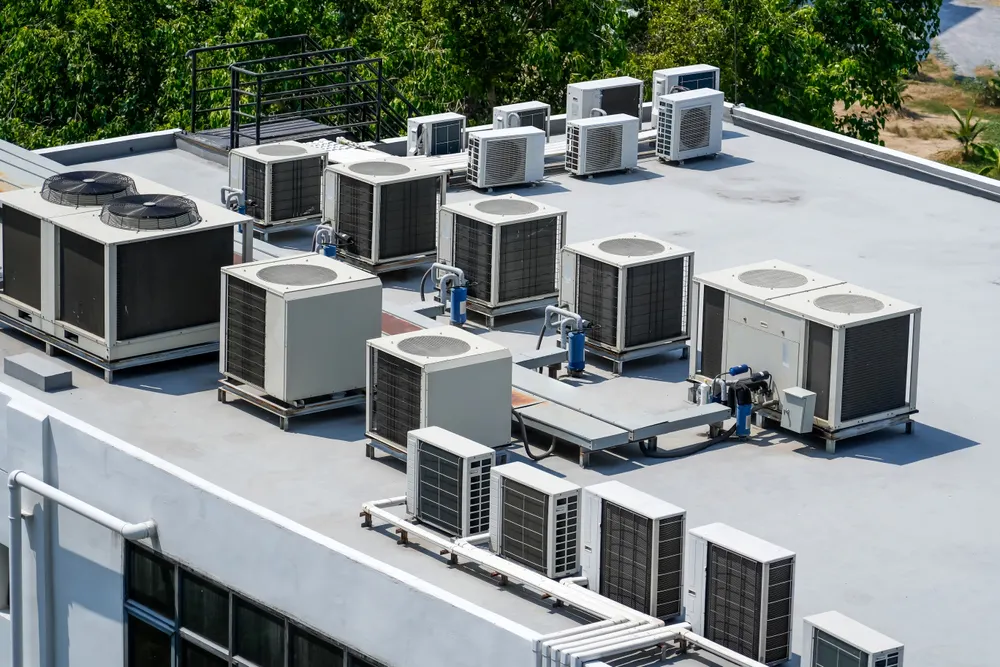
Aircon units also release heat into the outdoor environment, worsening the urban heat island effect – the phenomenon where cities are significantly warmer than surrounding rural areas.
Finally, over-reliance on aircon might reduce our ability to cope with heat. If we constantly keep our indoor temperatures very low, our bodies may not acclimatise to warmer summer conditions, making us more vulnerable during power outages.
If your aircon isn’t working like it used to, it might be time to book an AC repair in Brisbane North—a quick fix could save you money and help keep things cool without overworking the system.
Using fans safely and effectively
While fans offer numerous benefits, it’s important to use them correctly, especially in very hot indoor conditions.
There’s a common misconception that fans should be turned off above 35°C because they might blow hot air onto the skin. This ignores the crucial role fans play in evaporating sweat.
We have established safer and more accurate temperature thresholds for fan use by conducting laboratory studies. Just remember to check the temperature indoors, not outdoors.
Electric fans can be safely used in indoor temperatures up to:
- 39°C for young, healthy adults.
- 38°C for older adults.
- 37°C for older adults taking anticholinergic medications (which can impair sweating).
Above these indoor temperatures, fans could worsen heat strain by increasing cardiovascular strain and core body temperature. In such situations, alternative cooling strategies such as wetting the skin, moving to a cooler place, or turning the aircon on are essential.
Below these thresholds, we have proven, in laboratory studies, that there’s no reason to switch fans off, because they provide further thermal comfort and reduce heat stress.

Take action now
Based on our field and lab research, we suggest five simple steps to using fans for managing heat at home:
-
consider buying pedestal or ceiling fans
-
point the fan at your body and adjust the speed to your liking
-
wear light clothing and stay hydrated
-
if you have aircon, increase the set-point to 27-28°C
-
enjoy a reduced energy bill and increased comfort.
You may also want to ask your employer to install fans at your workplace and share this “fan-first” cooling strategy with family and friends.
Let’s work together towards a more sustainable future by reducing our reliance on energy-intensive air conditioning. This will lead to lower electricity costs, reduced greenhouse gas emissions, and increased resilience to heat.
Authors: Federico Tartarini, Senior Lecturer, School of Architecture Design and Planning, University of Sydney

















