

Logging devastated Victoria’s native forests – and new research shows 20% has failed to grow back
- Written by: Maldwyn John Evans, Senior Research Fellow, Fenner School of Environment and Society, Australian National University
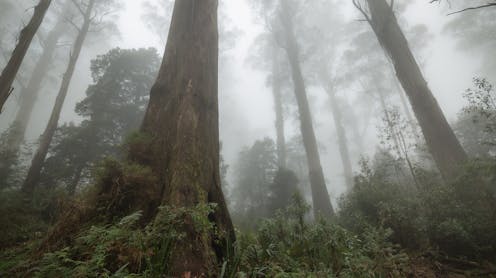
Following the end of native logging in Victoria on January 1 2024, the state’s majestic forests might be expected to regenerate and recover naturally. But our new research shows that’s not always the case.
We quantified the extent of regeneration following logging in the eucalypt forests of southeastern Australia between 1980 and 2019. This included nearly 42,000 hectares of logged mountain ash forest in Victoria’s Central Highlands.
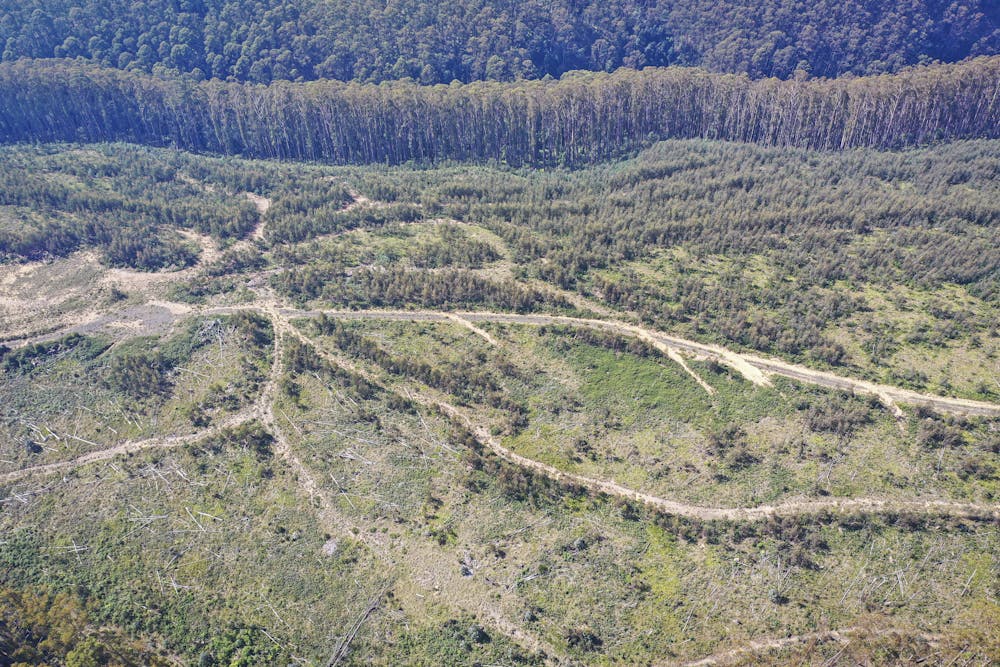
We analysed satellite data, logging records, on-ground surveys and drone photography, and discovered that nearly 20% of logged areas failed to regenerate. This represents more than 8,000 hectares of forest lost. All that remains in these areas are grassy clearings, dense shrublands or bare soils.
We also found the rate of regeneration failure has increased over the past decade. While failure was rare in the 1980s, it became much more common over time – affecting more than 80% of logged sites by 2019.
These regeneration failures weren’t random. They were found mostly in close proximity to each other, on areas with steep slopes, relatively low elevation, and where the area of clear-felled forest was long and narrow.
Our research shows more needs to be done to restore Victoria’s forest after logging.
Restoring majestic forests and their vital services
Victoria is home to some of the most spectacular forests on the planet. They include extensive stands of mountain ash, the tallest flowering plant on Earth, which can grow to almost 100 metres in height. Alpine ash, another giant, can grow up to 60m tall.
These forests have great cultural significance to Indigenous people and support many recreational and tourism activities.
Healthy forest ecosystems also deliver clean water and carbon storage services. In fact, mountain ash forests contain more carbon per hectare than most other forests around the world.
But Victoria’s forests have long been logged for timber and pulp. The main method of logging – clearfelling – scars the landscape, leaving large areas devoid of trees if natural tree regeneration fails.
Mountain ash is especially vulnerable
Our research revealed 19.2% of areas logged between 1980 and 2019 in our study area (8,030ha out of 41,819ha cut) failed to regenerate naturally.
We also found strong evidence of a significant increase in the extent of failed regeneration over 40 years, increasing from less than two hectares per cutblock in 1980 (about 7.5%) to more than nine hectares per cutblock in 2019 (about 85%), on average.
We found regeneration failure was more likely in mountain ash forests compared with other forest types.
This adds to the case for listing the mountain ash forests of the Central Highlands of Victoria as a threatened ecological community.

A responsibility to restore
Under Victoria’s Code of Forest Practice for Timber Production, logged native forests must be properly regenerated within two to three years of harvest.
That’s because it is nearly impossible for the native forest to regenerate after three years without human intervention. The young trees face too much competition from grass and shrubs.
These degraded areas no longer hold the value they once did and they cannot provide the same level of ecosystem services such as carbon storage, water purification, or habitat for wildlife.
With no current government restoration plan, these landscapes will remain degraded indefinitely. The Victorian government retains legal responsibility to restore these degraded forests, but currently lacks any large-scale restoration strategy, making action urgently required.
 Photographs of vegetation categories on logged sites: Eucalyptus regeneration near Toolangi (A), grass-dominated area near Mt Matlock (B), shrubby vegetation at Ballantynes Saddle (C), Daviesia vegetation near Mt Matlock (D), Acacia near Mt Baw Baw (E), and bare earth near Mt Matlock (F).
Chris Taylor
Photographs of vegetation categories on logged sites: Eucalyptus regeneration near Toolangi (A), grass-dominated area near Mt Matlock (B), shrubby vegetation at Ballantynes Saddle (C), Daviesia vegetation near Mt Matlock (D), Acacia near Mt Baw Baw (E), and bare earth near Mt Matlock (F).
Chris Taylor
A way forward: using green bonds to fund regeneration
Our research shows the regeneration of forests after logging is not guaranteed. Nature often needs a helping hand. But we need to find ways to fund these projects.
Globally, governments have used “green bonds” to lower the cost of borrowing tied explicitly to measurable environmental results.
Victoria already has green bonds “to finance new and existing projects that offer climate change and environmental benefits”. But funds are typically used to finance investments in transport, renewable energy, water and low carbon buildings.
As part of a coalition of researchers, environmental organisations, and finance sector partners we proposed a A$224 million green bond for forest regeneration. This proposal was put to the Victorian government via the Treasury Corporation of Victoria.
Green bond funding would help leverage co-investment from the Commonwealth government and philanthropic partners to improve monitoring and biodiversity outcomes in native forests.
As part of the proposed green bond, areas of logged forest where natural regeneration has failed would be restored.
Other investments under the green bond could include creating tourism ventures (and associated jobs), controlling feral animals such as deer, and biodiversity recovery – creating habitat for endangered species such as the southern greater glider and Leadbeater’s possum, for example.
The $224 million required for the ten years of the green bond — or around $22.4 million per year — is less than the substantial losses Victoria incurred on its investment in VicForests over the past decade.
Our research suggests leaving nature to its own devices would mean losing a fifth of the forests logged over the past 40 years. Bringing the trees back has multiple benefits and would be well worth the investment.
Authors: Maldwyn John Evans, Senior Research Fellow, Fenner School of Environment and Society, Australian National University


















