

What are the key risk factors for developing knee osteoarthritis? We reviewed the evidence
- Written by: Christina Abdel Shaheed, Associate Professor, School of Public Health, University of Sydney
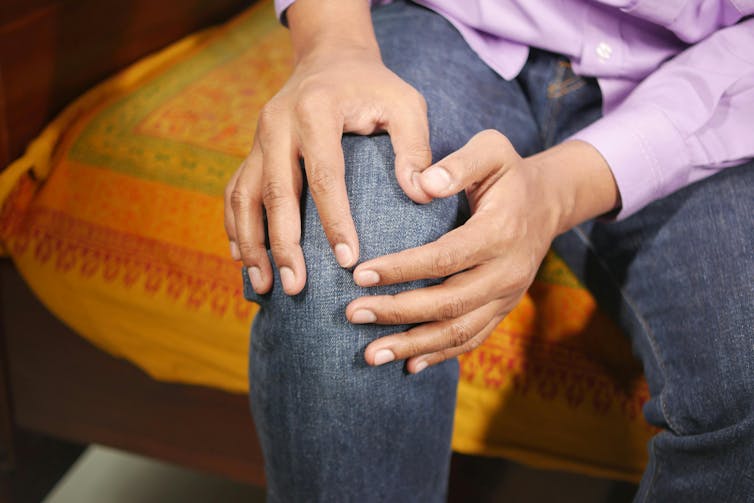
Osteoarthritis is the most common joint disease, affecting more than 3 million Australians and over 500 million people worldwide.
The knee is the most commonly affected joint, but osteoarthritis can also affect other joints including the hips and hands. The condition causes painful and stiff joints.
For someone with knee osteoarthritis, simple activities that many people take for granted such as walking, going up and down stairs or squatting can be very challenging.
There’s currently no cure for osteoarthritis. Most available treatments, such as exercise, walking aids and medicines (including paracetamol and non-steroidal anti-inflammatory drugs), focus on managing symptoms. But it’s important to consider how we can prevent knee osteoarthritis in the first place.
With this in mind, we undertook a systematic review to summarise the risk factors for developing knee osteoarthritis. Our findings, published today in the journal Osteoarthritis and Cartilage, can help us better understand how to lower the risk of this condition.
What we found
We gathered data from studies which followed people over time, to see which risk factors were associated with developing knee osteoarthritis. We included a total of 131 studies, involving more than 5 million people.
We identified more than 150 factors that influenced the risk of developing knee osteoarthritis.
Some key factors which increased the risk of developing knee osteoarthritis included being overweight or obese, past knee injury and occupational physical activity such as lifting heavy objects and shift work.
We also found several other possible risk factors, including:
eating large amounts of ultra-processed foods (which include “junk foods”, sugary drinks and processed meats)
poor sleep quality (for example, sleeping less than six hours a day or having 1–2 restless nights per week)
feeling depressed.
Being overweight or obese and past knee injury together accounted for 14% of the overall risk of developing knee osteoarthritis.
In other words, if we were able to completely remove these two risk factors, we could potentially reduce the incidence of knee osteoarthritis in the population by 14%.
Females had almost double the risk of developing knee osteoarthritis, and older age was slightly related to developing knee osteoarthritis.
Protective factors
On the other hand, we found some factors may lower the risk of developing knee osteoarthritis. These included following a Mediterranean diet (which includes plenty of vegetables, olive oil, nuts, fruit and healthy fats found in fish), and following a diet higher in fibre.
Avoiding the things which increase the risk of developing knee osteoarthritis such as a diet high in ultra-processed foods, knee injury, weight gain and heavy lifting can also help a person reduce their risk of developing the condition.
Exercise is an effective treatment for knee osteoarthritis. It can reduce pain and improve function.
There was not enough information in our study to determine what types of physical activity (for example, walking, running, swimming) and how much time spent doing these activities could lower the risk of developing knee osteoarthritis, so this is an important area for future research.
How can we explain these links?
The studies we included did not generally explore the possible mechanisms linking key risk factors with the development of knee osteoarthritis.
However other research may provide some helpful insights. Knee injury can lead to instability of the knee joint and additional wear on the knee which can lead to knee osteoarthritis. Similarly, occupational physical activity such as kneeling, squatting, climbing or heavy lifting can increase the risk of wear and tear on the knee.
Poor sleep has been linked to weight gain and depression.
The duration and quality of sleep has been found to affect how much we eat and the hormones responsible for regulating metabolism. Depression has been linked to reduced physical activity which can lead to weight gain. Carrying extra weight can increase the load on the knee and contribute to knee osteoarthritis.
Shift work can lead to bad food choices and lack of sleep, which in turn can increase the risk of knee osteoarthritis.
So it seems that while the risk factors we found may be contributing individually to the development of knee osteoarthritis, they may also be interacting together to increase the risk.
It’s not clear why women are at greater risk of developing knee osteoarthritis. However this is likely to be due to a combination of factors, including lifestyle, biological and hormonal factors.
A Mediterranean diet is high in polyphenols, which can reduce inflammation in the body and destruction of cartilage. It may lower the risk of developing knee osteoarthritis in this way.
Most risk factors are modifiable
There were some limitations with the available evidence. Most studies were based on populations from the United States, or did not report on ethnicity. We know little about the risk of developing knee osteoarthritis in certain groups such as people from Hispanic, African and Southeast Asian backgrounds. We need more studies exploring risk factors in other countries and populations.
Nonetheless, a review like this allows us to better understand what can be done to lower the risk of developing knee osteoarthritis.
We found most risk factors associated with developing knee osteoarthritis are modifiable, which means they can be changed or better managed with healthy diet and lifestyle choices. Eating healthy, maintaining a healthy weight and taking proactive steps to prevent injuries in the workplace and sporting communities can potentially lower a person’s risk of developing the condition.
Public health strategies aimed at encouraging healthy eating and weight loss (for example, subsidised nutrition programs and education programs starting from a young age to promote optimal diet and physical activity) could reduce the burden of knee osteoarthritis and have broader health benefits as well.
Programs like these, as well as reducing heavy lifting in the workplace where possible, should be the focus of government strategies to address the burden of this painful condition globally.
Authors: Christina Abdel Shaheed, Associate Professor, School of Public Health, University of Sydney

















