
here’s how to make double-glazed windows the norm
- Written by: Trivess Moore, Associate Professor in Property, Construction and Project Management, RMIT University
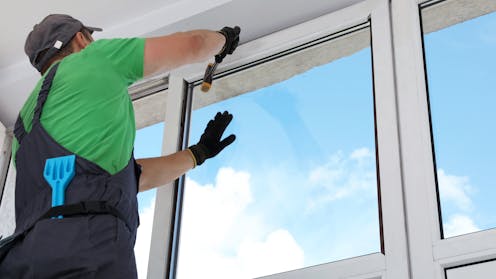
In Europe, double-glazed windows are standard. But in Australia, these energy-saving windows are remarkably uncommon.
Correctly installed, the effect of double-glazing is remarkable. Instead of a house losing or gaining huge amounts of heat through its windows, double-glazed windows help keep the indoor temperature at a consistent temperature – reducing the need to crank up the air-con or heater.
In hot parts of Australia, these windows would keep out heat. In cold, they would keep heat in. They also slash outside noise. Houses with double-glazing can add resale value and even improve occupant health.
Why are they not standard? There are several reasons. But our research in Victoria found the main one is cost – double-glazing costs much more than a standard single-glazed window.
Heat loss and gain through windows is responsible for about 1.5% of Australia’s total energy use. As climate change intensifies, making double-glazing standard in Australia would cut household energy bills and make life indoors more pleasant. Other countries are moving to even higher performance triple-glazed windows. But Australia is stuck.
Why does double glazing work so well?
Windows let light and often air into a home. But they can also be the main way heat enters or leaves. Double-glazing works by adding a gap between two panes, often filled with dense argon gas, which doesn’t transfer heat well. The window frame material is important, too, to reduce heat transfer.
We measure the insulating quality of a window with a U-value – essentially, how much heat can be transferred through the glass. The lower this value, the more insulating the window.
A basic single-glazed window has a U-value of about 6. On a typical Australian home, these windows mean significant air conditioning is often required to maintain a comfortable temperature indoors during summer and winter.
Double-glazed windows with advanced design features common in North America and Europe typically have a U-value of 2.4 or less. When combined with wall and roof insulation, they can significantly reduce the need for heating or cooling. Triple-glazed are better still, with a U-value of 0.8 or less.

Standard overseas, rare in Australia
In the United States, Canada, the United Kingdom and much of Europe, double-glazed windows have been the norm for several decades. Commonly, these windows use argon gas between the two sheets and improve insulation further with low emittance coatings, thin transparent layers of metal which block solar rays.
In many of these countries, single-glazed windows have largely disappeared and retrofitting older houses with double-glazing is routine.
Anyone embarking on a renovation in Australia will soon discover double-glazing tends to be seen as a specialist eco-retrofit measure rather than something done as standard.
In 2016, only 6% of windows installed in new houses in Australia had U-values below 4. In 2024, that figure was 19%, indicating high performance windows are slowly becoming more common. But there’s still much to do to make them the norm.
Why is progress slow? We spoke to stakeholders in window manufacturing and building in Australia.
These industry experts explained why Australia is lagging:
historically low-cost energy means the typical response to heat or cold is to install air conditioning
single-glazed windows have long been the norm
Australians often haven’t heard of high-performance windows or understand why they matter
only a few companies make these windows in Australia, meaning competition is limited and costs remain high
at present, there’s no requirement to include double-glazed windows in new builds or renovations
housing affordability issues mean owners want to keep upfront construction costs as low as possible.

What should be done?
In our research, many windows industry insiders told us they were ready to scale up production of higher performance windows. The skills and technologies needed are here. What’s missing was the demand.
When we interviewed builders, they told us the choice of windows wasn’t simple. They had to weigh up material costs, existing supplier relationships and industry practices. Some told us it was cheaper at times to import from Europe or Asia than to buy Australian-made.
In part, this is a chicken and egg problem. Prices are high because there’s little demand and demand is limited because prices are high.
So what should be done?
Overseas experience has shown boosting demand is the key. If double-glazed windows become more common, more manufacturers will enter the Australian market and prices will drop.
The quickest way to do this would be to require their use in new construction and renovation.
At first, the industry might struggle to meet this demand. But that would create clear incentives for new players here or overseas to meet the demand.
Government support could help window manufacturers upgrade machinery and processes to be able to meet new demand.
Subsidies could help offset the costs to households, if designed to sunset after a set period. Any subsidies should target groups such as vulnerable older Australians affected by energy poverty as well as renters on low incomes.
Making this a reality is doable. After all, New Zealand did exactly this. In 2007, policymakers introduced new minimum performance requirements for windows. It took about four years to shift the market from single-glazed to predominantly double-glazed. Australia could do the same.
Authors: Trivess Moore, Associate Professor in Property, Construction and Project Management, RMIT University


















