

my brush with Susan Sontag and other tales from the gay 'golden age'
- Written by: Dennis Altman, Professorial Fellow in Human Security, La Trobe University
The years between the gay liberation movement at the beginning of the 1970s and the onset of AIDS a decade later are viewed in a certain strand of gay nostalgia as “the golden age”.
It’s hardly surprising that those who lived through the period might see it this way; in retrospect all youth is golden. What is surprising is the extent to which men not then adult — perhaps not yet born — have accepted the idea and are slightly disappointed when I try to disillusion them.
For me the entry to New York’s so-called golden age came one day in November 1977 when I had brunch with Michael Denneny, Edmund White, Doug Ireland and Chuck Ortleb.
Between them the four men represented an extraordinary agglomeration of gay cultural power: Denneny, the slightly acerbic editor who turned St Martin’s Press into a crucible for queer writing; Ireland, the cherubic faced, smart leftist journalist who knew everyone and would die of diabetes and stroke in 2013; White, then a fresh faced and largely unknown novelist; Ortleb, editor of Christopher Street Magazine, the most prominent queer literary magazine to date.
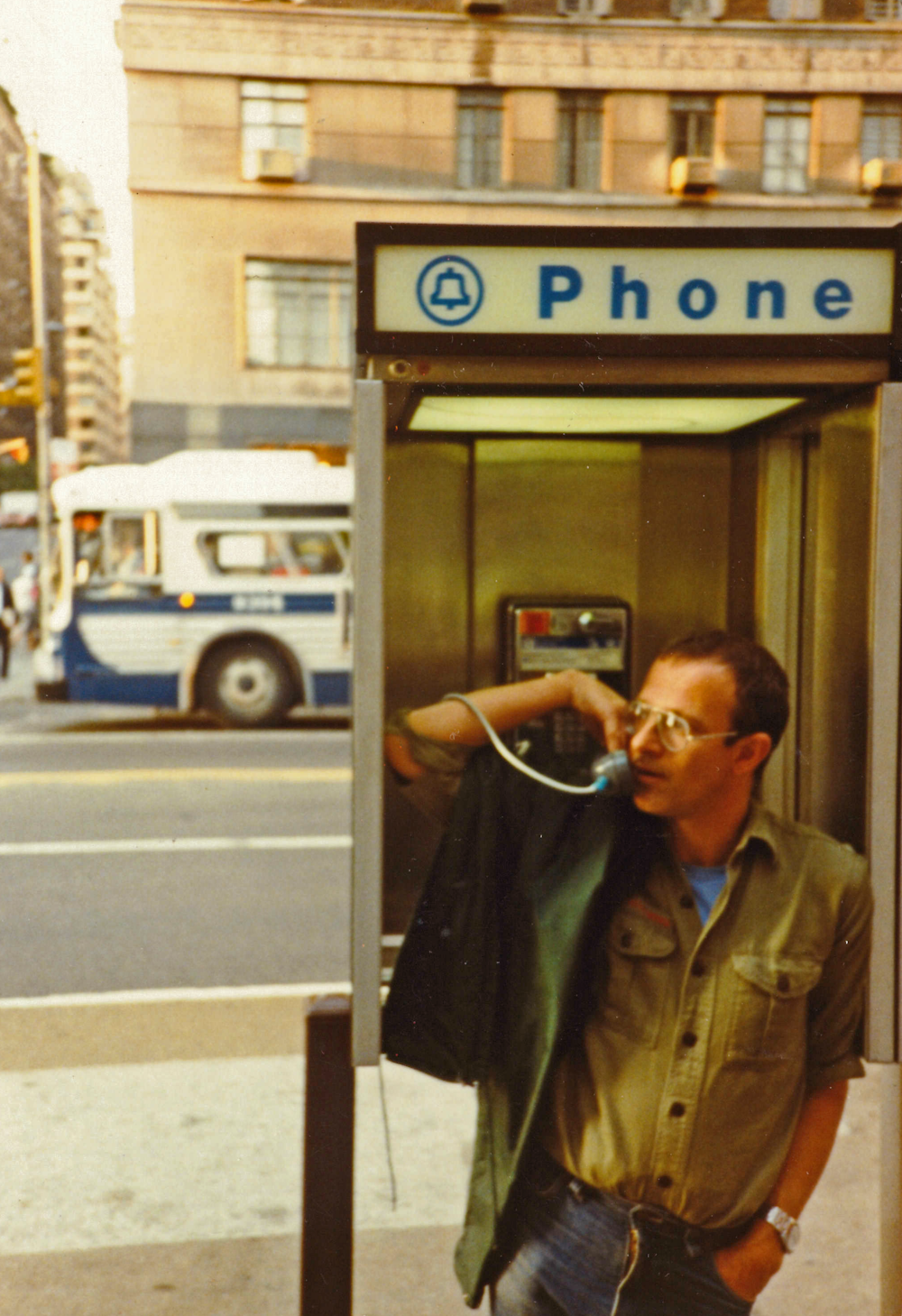 The author in Manhattan circa 1983/4.
Author provided
The author in Manhattan circa 1983/4.
Author provided
Three years later Ortleb and Denneny would found The New York Native, the cutting edge of gay journalism until it collapsed in a frenzy of denialism that HIV was the cause of AIDS.
Looking back what strikes me is the immediate intimacy of gay literary and political New York. The radicals of the early 1970s were gradually winning respect in a broader world, but there were still few enough people who were open about their sexuality for it to establish a common bond. It seemed possible, then, to know everyone; my diary mentions meeting the German film director, Rosa von Praunheim and the Argentinian writer Manuel Puig.
I have no memory of Praunheim, whose film It Is Not the Homosexual Who Is Perverse, But the Society in Which He Lives was an important influence on the German gay movement. I desperately wanted to meet Puig, because he had footnoted me several times in his novel Kiss of the Spider Woman, an unusual device for a novel.
I met a small, depressed man in a downtown apartment, described by Suzanne Levine in her excellent book about Puig as “replicating the monkish austerity of his room in Buenos Aires”.
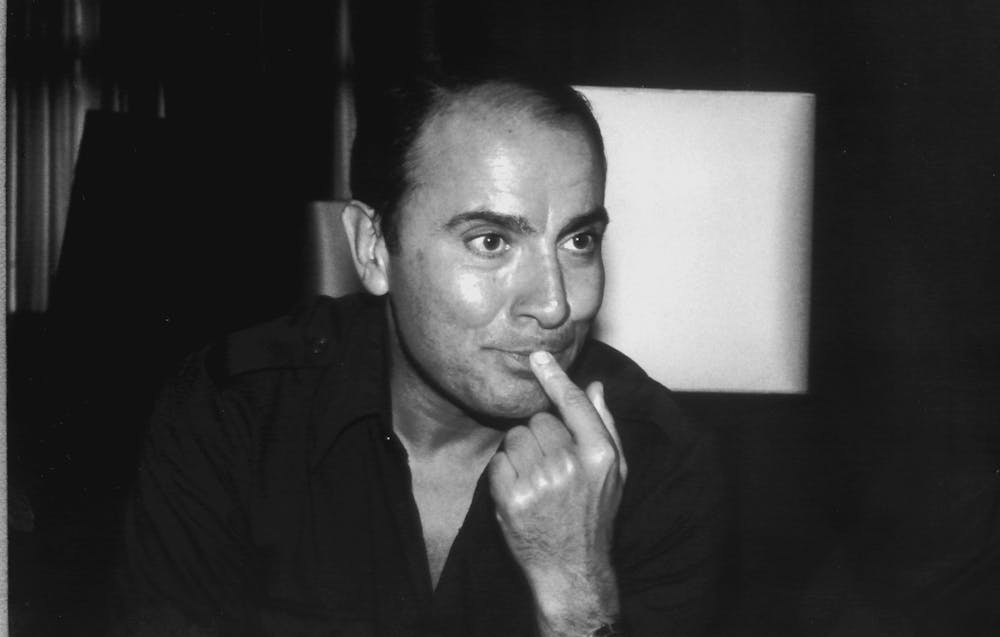 Manuel Puig in 1979.
Wikimedia Commons
Manuel Puig in 1979.
Wikimedia Commons
The overwhelming attraction of the New York gay literati world was sufficient for me to resign my lectureship at Sydney University and move to New York in 1981. The ten years at Sydney had been exciting, marked by bitter disputes within Philosophy and Economics, which led to a student strike and both departments splitting between traditionalists and radicals.
But the prospect of 30 more years in the same institution was stultifying: I wanted to live out the fantasy of becoming a real writer.
My New York in the first term of Reagan’s Presidency was defined by two extraordinary groups, the gay literati clustered around Christopher Street and the New York Native, and the hothouse intellectual world of New York University’s Institute for the Humanities, presided over by the sociologist Richard Sennett.
The Violet Quill
The link between the two was Edmund White, a man of southern charm and northern ambition, ruthless in his pursuit of celebrity and celebrities, and capable of both great generosity and sudden barbs of wickedness. Edmund was one of group of gay writers who made up what became known as the Violet Quill.
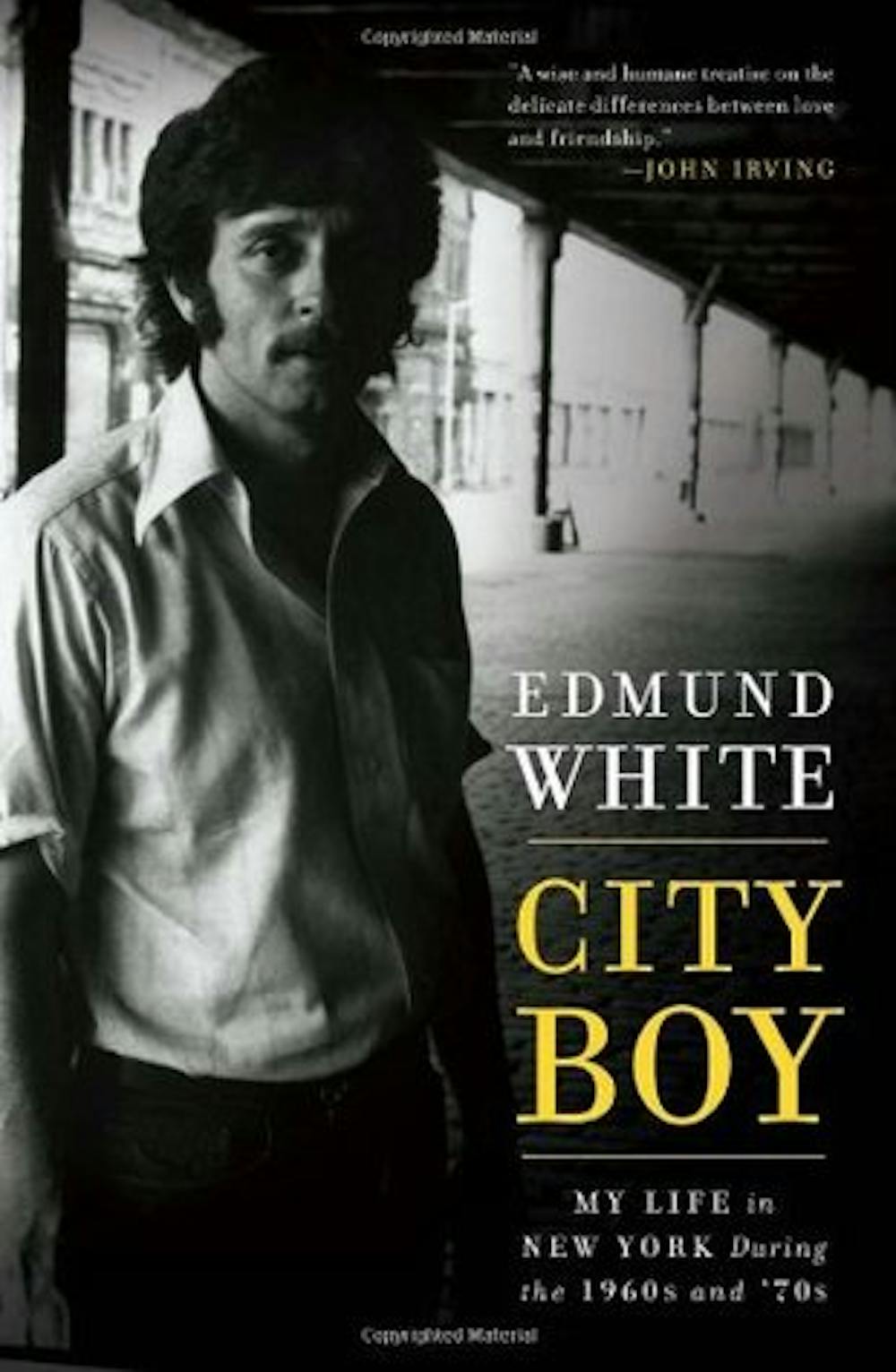 White’s memoir of his time in 60s and 70s New York.
goodreads
White’s memoir of his time in 60s and 70s New York.
goodreads
Urged on by Doug Ireland who was then an editor at the Soho News, a spunkier version of the Village Voice, I wrote a piece called “a movable brunch — the fag lit mafia”, of which Christopher Bram later wrote: “This bitchery was the first bit of fame for the group.”
But gay writing was beginning to encroach on high culture. There was excitement when the New Yorker published what was thought to be its first overtly gay short story (David Leavitt’s Territory) in 1981 — and some chagrin amongst other New York writers. Now the New Yorker publishes gay cartoons and stories without comment.
Edmund was a central figure at the Institute for the Humanities, which I once described as the New York Review of Books at lunch, perhaps because of memories of seminars dominated by the presence of Susan Sontag, her legs sprawled across the table as she munched sandwiches and repartee with equal ferocity.
I barely knew Sontag when in a moment of rashness I agreed to speak about “dandyism” in a small seminar. Naively I had forgotten that Sontag wrote of dandyism in her iconic Notes on Camp, and I suspect she was angered by my too easy equation of dandies with homosexuality. Susan turned her well-rehearsed wrath on me for what was self-evident fatuousness; I retired hurt; and Edmund took me to dinner, having seen others who had experienced Susan’s barbs.
 Susan Sontag in 1979.
Lynn Gilbert/Wikimedia Commons
Susan Sontag in 1979.
Lynn Gilbert/Wikimedia Commons
Looking back, I realise this was a rite of passage; some months later Susan and I went to dinner together, my main memory of which is a Lower East Side Chinese restaurant which specialised in offal, and a discussion which touched for a time on opera.
Ferocious determination
What I glimpsed that evening was something of the ferocious determination with which she was constructing herself as a cultural icon, a ferocity that seemed shared by so many of the people I came across in New York, where every transaction, even at the bank or post office, demanded concentrated ambition.
Occasionally I went to evenings at Sennett’s house, where men gathered around the piano, in an arch approximation of a Proustian salon, and Sennett spoke of his developing friendship with Michel Foucault.
There are echoes of those moments in both Sennett’s novel The Frog Who Dared to Croak (1982) and White’s Caracole (1985), the latter of which caused a celebrated split between him and Sontag, who recognised herself and her son, David Rieff, in the novel.
Many famous people passed through the Institute. I met Nadine Gordimer while I was trying to decide whether to return to Australia, and leave New York, self-evidently the centre of the gay literary world. “But there are no centres anymore,” said Gordimer, a great comfort to me when a year later I decided to return to Australia.
My first year in New York was taken up with the final edits and publication of the book that would become The Homosexualization of America; “Better” Vito Russo, whose book The Celluloid Closet remains a staple of queer film criticism, had said to me one day “To call it The Americanization of the Homosexual”, and in retrospect he was right. I worked on the book with Michael Denneny, the toughest and most demanding editor I’ve encountered. Of all the books I’ve written this one involved the most intense collaboration with an editor, Michael being even more determined than I that homosexuals were changing the shape of American culture.
The path to breaking down the massive silences around homosexuality, which viewed it as a crime or a pathology, was already far advanced before the hiatus of the AIDS epidemic.
That this was happening as mainstream politics moved to the right, symbolised by Reagan’s election in 1980, and the rise of the Moral Majority, reminds us that politics rarely move in a straight line. The references in Homosexualization to marriage seem to assume it is a dying institution, indeed claimed we were better off without it:
The absence of gay marriage means that it is easier for homosexuals to develop other ways of living than in conventional coupledom; there has been considerable discussion, in the new gay writings, of the advantages and disadvantages of a whole range of possible living and social arrangements.
That discussion has now largely disappeared as same sex marriage has become a barometer of acceptance of sexual diversity. Even those of us who are sceptical of winning the blessings of the state and the church for our relationships felt the need to campaign for marriage equality when it became the subject of an unnecessary and expensive postal ballot two years ago.
It is easy to lament the apparent shift to conservatism of the queer movement, but this is an inevitable result of it now embracing far more people than it did 40 years ago. Nostalgia for a radical past too easily overlooks the range of ideas and identities that now exist, in a very different world to that of the early 1980s.
The marriage vote was significant, marking as it did a further step in acceptance of sexual diversity. On November 15 2017 thousands of us gathered outside the State Library to hear the results of the postal vote. The live feed from Canberra almost collapsed, but the figures came across clearly: over 60% of the 12 million people who responded had voted yes. There were cheers, speeches, rainbow flags, jubilation; a group of us went for coffee and prosecco to the Library café, where the staff were flirting their relief. Did I think, someone asked, that this was a moment when the zeitgeist shifted?
There have been many moments in my life when social attitudes towards homosexuality have shifted, and times when people have mobilised to create change: this was true of moves for decriminalisation in NSW and Tasmania, painfully real during the early years of the AIDS epidemic. The marriage vote felt like a major milestone, but I don’t think that the zeitgeist shifted, rather that several decades of slow shifts towards greater acceptance came together, and most Australians recognised this. Let’s hope the current government remembers this.
This is an edited extract from Unrequited Love: Diary of an Accidental Activist (Monash University Press)
Authors: Dennis Altman, Professorial Fellow in Human Security, La Trobe University


















