

Half the remaining habitat of Australia’s most at-risk species is outside protected areas
- Written by: Michelle Ward, Lecturer, School of Environment and Science, Griffith University
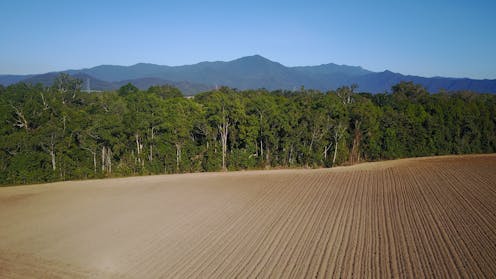
More and more Australian species are being listed as critically endangered – the final stage before extinction in the wild. Hundreds of species of plants and animals are now at this point.
For a species to be critically endangered, it is on death’s door. Its numbers must have shrunk alarmingly and its outlook is bleak. Why? One common reason is habitat loss. If we convert bushland or swamps into farmland or suburbs, we reduce how much space species have to survive.
Our new research examines how much habitat is left for 305 of Australia’s critically endangered species – more than 70% of the total. Alarmingly, we found almost half the remaining habitat is outside the protected area estate. That means the last remaining areas where these species are clinging on could very easily be cleared.
The good news? We now know exactly which areas most need to be safeguarded. If we protected an extra 0.5% of Australia’s land mass, we could slash the risk to hundreds of species approaching the point of no return. This is a relatively small amount compared to the 22.5% of Australia that already has some form of protection. The Australian government has committed to increasing this to 30% by 2030.

What did we do?
Australia now has 426 critically endangered species, including plants, fish, frogs, reptiles, mammals, birds and other animals. We focused on 305 of these species – those clinging to life in six or fewer isolated patches of habitat across Australia.
We then worked with 18 scientists whose expertise covers these 305 species to refine the maps of habitat for species to ensure we used the most accurate and current data available.
Once we had these maps, we compared them to maps of Australia’s network of protected areas. When we found unprotected habitat, we assessed whether it might be appealing for clearing and conversion into farmland.
When we put this data together, we found something startling – and encouraging. Our work found approximately 85,000 square kilometres of habitat (about 1% of Australia’s land area) urgently needs protection and management to halt extinction for these 305 species.

Alarmingly, half of this vital habitat currently lies outside existing protected areas, with 39 species having none of their remaining habitat in the protected area estate. Habitat in protected areas is safer, but not completely safe. Fuel reduction burns, invasive species and even harvesting can affect species inside protected areas.
Consider the Margaret River burrowing crayfish (Engaewa pseudoreducta), Lyon’s grassland striped skink (Austroablepharus barrylyoni) and the Rosewood keeled snail (Ordtrachia septentrionalis). Each of these critically endangered species survives in one or two tiny patches of habitat outside the protected area estate. They could be wiped out by something as simple as a highway expansion or a new suburban development.
Some remaining habitat is especially precious, as it could support several critically endangered species at once. These include areas west of Atherton in Queensland as well as areas around Tumbarumba in New South Wales and Campbell Town in Tasmania.
Other hotspots include Lord Howe Island, Macquarie Island, Christmas Island, Norfolk Island and its neighbour Phillip Island. Many critically endangered species with small ranges survive here, including Suter’s striped glass-snail, Christmas Island spleenwort and the Lord Howe Island phasmid (giant stick insect). While most of these islands are well protected, their conservation programs need to be well funded to deal with ongoing threats.
 The critically endangered Lyon’s grassland striped skink is now found only on small fragments of habitat southwest of Cairns.
Conrad Hoskin, CC BY-NC-ND
The critically endangered Lyon’s grassland striped skink is now found only on small fragments of habitat southwest of Cairns.
Conrad Hoskin, CC BY-NC-ND
The last of them
When a species goes extinct, we lose an entire set of genes, traits, behaviours and history. Despite recent headlines, extinction is forever.
In 2022, the Australian government pledged to bring an end to extinction of the continent’s unique species.
This is easier said than done – extinctions are continuing, especially among invertebrates.
Our maps show the last known areas where these 305 species are holding on. If nothing is done, some of these areas of habitat will likely be converted to farming or grazing land. The most logical thing to do is to preserve and manage this habitat as quickly as possible.
The challenge is ownership. At present, much of this habitat occurs on private land (about 17,000 km²) or in state forests (about 7,000 km²) which often does not stop activities that cause habitat destruction, such as native forest logging. Other areas are under different forms of tenure which often lack stringent conservation measures.
Protecting species on private lands requires careful negotiation and incentives for landholders. The government doesn’t have to buy the land – it just has to find ways to conserve it. Australia now has many good examples of conservation on private land.
Agricultural potential poses another challenge. More than half (55%) of the habitat we identified has a clear overlap with lands suitable for farming or grazing. These preferred areas are usually flat and on fertile soils.
Conversion of habitat to farms or paddocks is a major reason why Australia is still one of the top land-clearing nations. In just one year, 6,800 km² of woody vegetation was cleared in Queensland – largely to make way for agriculture.
What can we do?
Our research gives policymakers detailed, geographically specific and actionable information on vital areas of habitat remaining for more than 70% of Australia’s critically endangered species.
These maps can help shape decisions on land management, expansion of protected areas and where biodiversity stewardship programs should be prioritised.
Policymakers must find effective incentives for landowners to preserve species on their land and rigorously enforce regulations to prevent illegal clearing.
Australia stands at a crossroads. The action (or inaction) of decision makers will change the fate of hundreds of critically endangered species. We know where these species are just holding on. The question is whether we can get to them in time.
Authors: Michelle Ward, Lecturer, School of Environment and Science, Griffith University


















