

Florence Nightingale, heroic founder of modern nursing, is humanised in a new novel
- Written by: Caitlin Macdonald, PhD candidate, Faculty of Arts and Social Sciences, University of Sydney
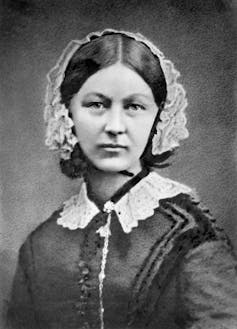
Florence Nightingale is often described as the founder of modern nursing. She was immortalised in Henry Wadsworth Longfellow’s 1857 poem, Santa Filomena: “A noble type of good / Heroic Womanhood.” For over a century, she has been remembered as “the lady with the lamp”, moving through the wards of war hospitals.
In Laura Elvery’s debut novel, Nightingale, she is something else entirely. She is not the symbol, but the woman – not solely the caregiver, but a patient, child and sister. It opens with an epigraph from T.S. Eliot’s Little Gidding:
We shall not cease from explorationAnd the end of all our exploringWill be to arrive where we startedAnd know the place for the first time.
This idea of seeing the familiar in a new light mirrors the novel’s structure and spirit. Nightingale is not a linear biography, nor a detailed account of Nightingale’s public accomplishments. It is a quiet meditation on memory, and on care and the ways it marks a life.
Review: Nightingale – Laura Elvery (UQP)
Death from poor hygiene and neglect
The novel is told in three parts across two timelines. It opens in Mayfair, London, in 1910. Florence is 90, frail and close to death. Her housekeeper, Mabel, watches over her as she drifts between moments of lucidity and memories of her past. The figure who once helped to transform military hospitals reflects on her frailty, and on Mabel’s care for her. She recalls her old instructions:
Use a clear, firm voice so the patient hears you the first time. Do not ask a patient to turn their head towards you. Let the light in. Ventilate the room. Clean the utensils. Change the sheets yourself and do it quickly, without comment.
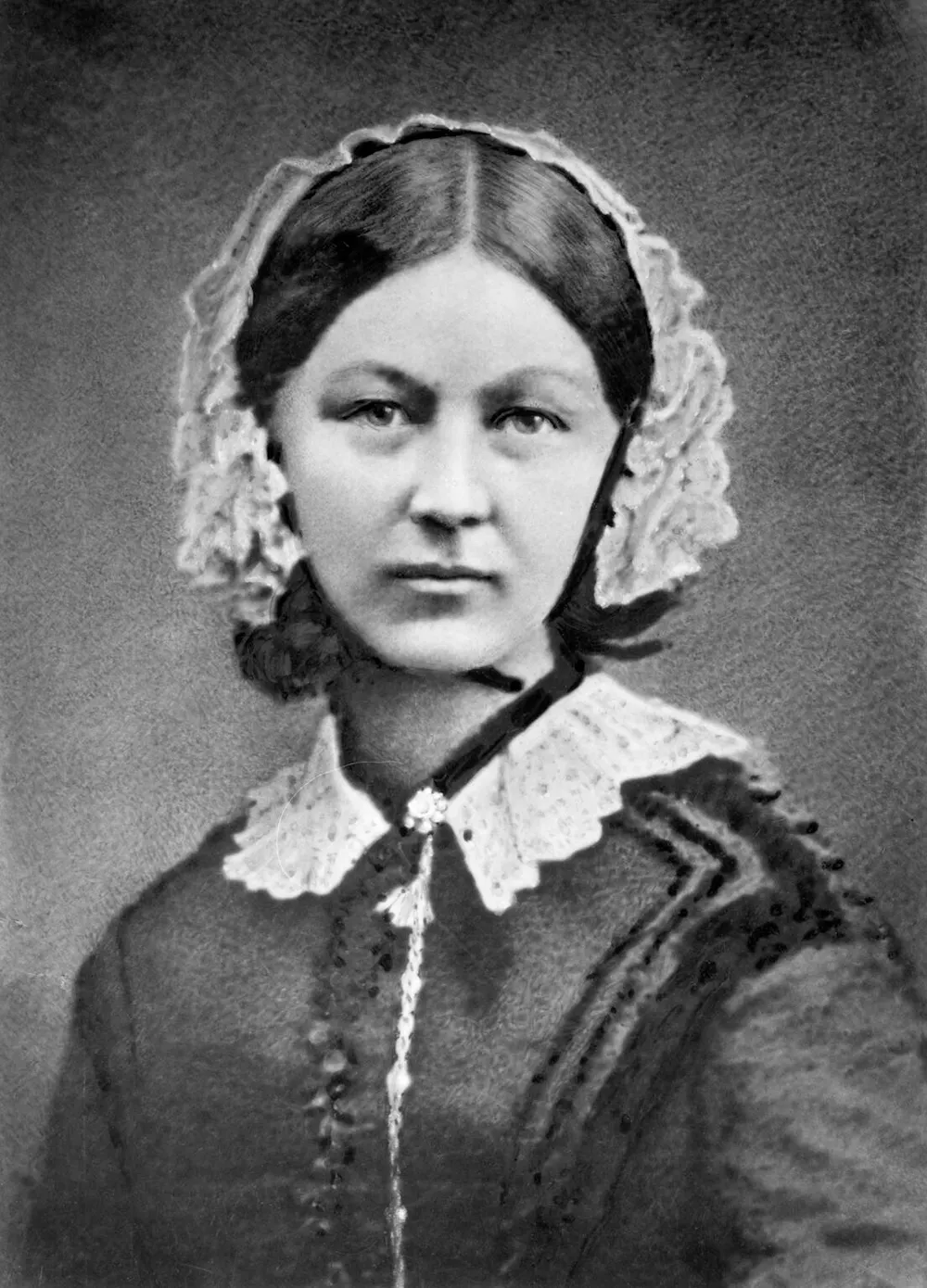
These directions reflect Nightingale’s ethos: that death came not only from bullets, but from poor hygiene, infection and administrative neglect. Elvery hints at Nightingale’s broader impact – her work on sanitation, hospital reform and data collection – not through exposition, but through the quiet authority of her voice and the awe she commands among doctors, nurses and soldiers alike.
On her final day, Nightingale receives a visit from Silas Bradley, a former soldier whose presence unsettles both her and the reader. As Part One ends, Silas asks, “What did Jean do to me?” The question will continue to haunt the novel.
Jean Frawley, a young nurse serving under Nightingale (or “Miss N”) during the Crimean War (1853–56), is introduced in the novel’s second part. In Marseilles, on her way to Scutari, Jean meets Silas. Their brief encounter sets up a romantic subplot that runs throughout.
But this thread is also one of the novel’s weakest. Jean is introduced as capable and competent, but her story becomes dominated by her feelings for Silas. Her longing for him seems out of proportion and out of step with the more grounded scenes surrounding it. The emotional arc feels less earned, compared to the stark realism of the hospital scenes.

Vivid hospital scenes
The focus soon shifts to Scutari (part of what is now Istanbul) in 1854, and an overcrowded, filthy and overwhelmed hospital. This is the novel’s strongest section: vivid, harrowing and sharply observed.
Jean’s voice brings urgency to the everyday horrors she witnesses: “Whimpering men lay on stuffed sacks on every side of every corridor, keeping company with the rats, the roaches, the maggots.” Supplies are short, medical tools are rudimentary, nurses are exhausted. The men are dying. In this world, care is emotional work.
Elvery, known for her short-story collections Ordinary Matter and Trick of the Light, brings a lyrical, sensory style to these scenes. Her descriptions are rich with visceral, sensory detail of rats, maggots, blood and chloroform.
 Nightingale’s strongest section is set in ‘an overcrowded, filthy and overwhelmed hospital’.
Wikimedia Commons
Nightingale’s strongest section is set in ‘an overcrowded, filthy and overwhelmed hospital’.
Wikimedia Commons
But the focus isn’t on historical accuracy for its own sake. Elvery is more interested in the interiority of her characters, in the psychic and bodily toll of caregiving. She doesn’t dwell on dates or battles. Instead, she focuses on what caregiving feels like: its cost, its mess and its strange intimacy.
They asked the girls to kiss them, to write for them, to tell them jokes […] One soldier asked Jean to breathe in time with him.
One of the most moving scenes comes after the war, in 1861, when Jean visits a Crimean War memorial in London. She sees “on a plinth, the figure of a cloaked woman […] arms outstretched”.
Jean expects to feel pride or recognition. Instead, she finds the statue unfamiliar. “Perhaps it was a goddess,” she thinks, noticing the “haloes of leaves that circled her wrists.” She recalls the words of the tailor who sold her her uniform: “Women can’t imagine that sort of suffering.”
The scene captures a key question in the book: who is remembered, and in what form?
Resisting mythmaking
 Elvery resists mythmaking. Her Nightingale is not a saint, but a woman forged in complexity: brilliant, stubborn, sometimes difficult. The novel invites us to see her not as a symbol, but as a person shaped by illness, desire, pain and time. Nightingale is not just a novel about Florence Nightingale, or about nursing. It’s about the physical and emotional labour of care, and the people whose work often goes unnoticed.
Part Three returns to 1910 and Nightingale’s final moments. But Nightingale is not the centre of her own story. Jean’s narrative forms the novel’s emotional core, and her connection to Silas drives more of the plot than Nightingale’s recollections. In this way, Elvery shifts focus, both structurally and thematically, away from a single figure – and toward the quieter, often invisible work of caregiving itself.
In a time when the cost of care – whether in hospitals, homes, or war zones – is so visible, Nightingale feels timely. Elvery asks what it means to nurse, and to be nursed. Her novel honours the messy, human particulars of caregiving, even as it gestures toward the legacy of a woman who reshaped its very foundations.
Authors: Caitlin Macdonald, PhD candidate, Faculty of Arts and Social Sciences, University of Sydney
Elvery resists mythmaking. Her Nightingale is not a saint, but a woman forged in complexity: brilliant, stubborn, sometimes difficult. The novel invites us to see her not as a symbol, but as a person shaped by illness, desire, pain and time. Nightingale is not just a novel about Florence Nightingale, or about nursing. It’s about the physical and emotional labour of care, and the people whose work often goes unnoticed.
Part Three returns to 1910 and Nightingale’s final moments. But Nightingale is not the centre of her own story. Jean’s narrative forms the novel’s emotional core, and her connection to Silas drives more of the plot than Nightingale’s recollections. In this way, Elvery shifts focus, both structurally and thematically, away from a single figure – and toward the quieter, often invisible work of caregiving itself.
In a time when the cost of care – whether in hospitals, homes, or war zones – is so visible, Nightingale feels timely. Elvery asks what it means to nurse, and to be nursed. Her novel honours the messy, human particulars of caregiving, even as it gestures toward the legacy of a woman who reshaped its very foundations.
Authors: Caitlin Macdonald, PhD candidate, Faculty of Arts and Social Sciences, University of Sydney 


















.jpg)
_(14779827502).jpg)