

This rare alpine frog is fighting against a lethal fungus – by breeding faster and faster
- Written by: Laura Brannelly, Senior Lecturer in One Health and Biostatistics, The University of Melbourne
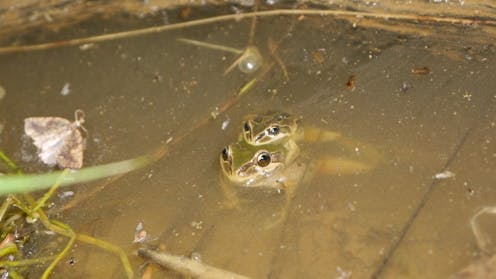
For a small frog, the alpine tree frog (Litoria verreauxii alpina) packs a lot of surprises.
For one, this tree frog lives in snowy gullies and high mountain crags across the Australian Alps, far from the tropical areas we normally associate with tree frogs.
But these frogs have another surprise. Their numbers have been decimated by a deadly fungal disease, chytridiomycosis, which spreads in water, enters the frog’s skin, and kills by causing cardiac arrest. The chytrid fungus has wiped out almost all alpine tree frogs, whose numbers have fallen more than 80% since the 1980s. The species now occurs in only a few fragmented and highly isolated sites. Even here, the fungus kills almost all alpine tree frogs in their first breeding season.
Given these odds, it begs the question – how is the species not extinct? To find out, we used lab and field studies to investigate whether the threat of chytrid infection was forcing these frogs to change.
To our surprise, we found clear signs of change. When infected with the fungus, male frogs set about fathering more offspring.

The fungal threat
Before the emergence of the fungus, brisk spring nights across the Australian Alps would have been filled with the songs of male alpine tree frogs.
These choruses are long gone across most of the species’ range. The alpine tree frog is now critically endangered.
In the 1970s, frog species around the world began to die off en masse. But it wasn’t until 1998 that an Australian team figured out the cause wasn’t natural – it was an introduced fungus.
Wherever chytrid fungus has gone, it has laid waste to amphibians – especially frogs, where death rates can reach 100%. Worldwide, more than 500 amphibian species have been driven to decline and at least 90 species have been lost to extinction.
The fungus doesn’t like heat and needs water to spread. As a result, frogs in colder, wetter areas have been hardest hit. Seven Australian frog species have gone extinct due largely to the fungus, including remarkable gastric brooding frogs.
Some frogs have tried to fight this deadly disease by producing skin secretions called antimicrobial peptides, which reduce fungal growth. But not every frog’s skin secretions work against this disease.
Unfortunately, the invasive cane toad is strongly resistant to the fungus. More positively, one native species, Fleay’s barred frog, appears to have developed natural resistance to the fungus.
But for the alpine tree frog, chytrid fungus poses an existential threat.
Breeding at double speed
To find out how the species was still clinging on, we examined these frogs in the field and in laboratories. We tested sperm quality, analysed breeding patterns and looked at breeding success.
What we found suggests the species is adapting in real time, pushed by the huge selective pressure of the fungus.
When a male tree frog was infected, it set about breeding with new fervour. Infected males took part in almost a third (31%) more breeding events than uninfected frogs.
There were more changes, too. Infected males produced higher quality sperm and in greater volumes than healthy males. This meant their fertility was actually greater than those not carrying the fungus.
Not only that, but infected males produced more colourful mating displays in their throat patches. The more colourful the patch, the more attractive it could be to female frogs. Infection was making individual males more attractive as breeding partners.
These changes resulted in better breeding success for infected males – they fathered more tadpoles than uninfected frogs. The fungus doesn’t affect the eggs, and leaves tadpoles largely unharmed.
For the species, this had real benefits – it meant more and more tadpoles were being produced. While the fungus would kill most of them as adult frogs, their increased numbers bolstered the species.

Spawning before succumbing
These findings can seem counterintuitive. We might expect a sick animal would save its energy and try to fight the infection rather than try to reproduce. But these frogs are taking the opposite approach, spawning frantically before they succumb.
This strategy isn’t common in the animal kingdom, but it’s not unheard of. Tasmanian devils face a similar threat from a lethal cancer which spreads from animal to animal by biting. In areas where devil facial tumour disease is present, females reproduce earlier and have more babies with each pregnancy than in disease-free areas.
Like the devils, alpine tree frogs were choosing reproduction over their personal survival.
These adaptations had real use. In fact, we believe the changes have made it possible for the frog species to avoid extinction in the wild alongside the disease.
That’s not to say all is well. The species is only just holding on. If other threats emerge, it could be enough to tip it over the edge into extinction.
This is where human intervention can help. Now we know their accelerated breeding patterns are important, we can focus on protecting breeding habitat. Creating new breeding ponds and corridors between breeding sites could give these frogs a helping hand.
The deadly fungus isn’t going away. But the frogs aren’t either. If we lend our help alongside their ingenious survival strategies, perhaps the beautiful whistling songs of the alpine tree frog will ring out across the Australian Alps once again.
Authors: Laura Brannelly, Senior Lecturer in One Health and Biostatistics, The University of Melbourne


















