

Spit or swallow? What’s the best way to deal with phlegm?
- Written by: Niall Johnston, Conjoint Associate Lecturer, Faculty of Medicine, UNSW Sydney
A spitting pot I consider as an essential part of the bed-room apparatus.
That’s what French physician René Laennec wrote in 1821. Laennec, who invented the stethoscope, spent his days gazing at his patients’ phlegm. In the days before x-rays and blood tests, phlegm was considered a valuable diagnostic tool.
Today, most of us don’t carry around a spitting pot. But a persistent question remains, especially during winter, when noses are dripping and chests are rattling.
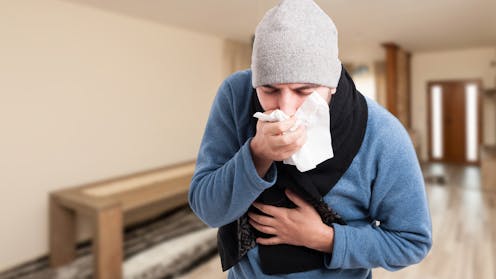
When you have a cough, should you spit out phlegm or is it better to swallow it?
It might feel like an odd or even slightly stomach-churning topic, but it’s a remarkably common question patients ask doctors.
What is phlegm?
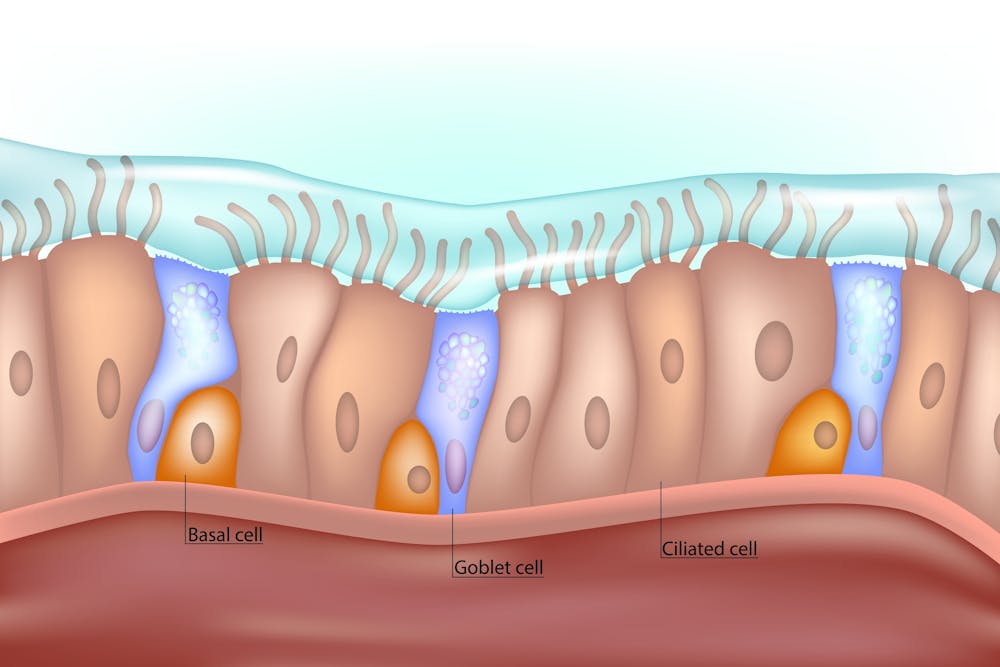
Phlegm, also known as sputum, is the thick, sticky mucus your lungs and windpipe make. This acts as a defensive barrier to protect them.
Its main ingredients are mucins – large, sugar-coated proteins that trap viruses, bacteria, allergens and dust. These mucins also regulate inflammation and the body’s immune response to bacteria and viruses.
We most commonly see phlegm with viral illness during winter. But phlegm is also evident in other medical conditions including asthma and allergies, bacterial infections, such as sinusitis, or with smoking or exposure to air pollution.
In fact, we’re always making phlegm, even when we are healthy. Cells in the lungs secrete mucus to keep surfaces moist and trap irritants. When we encounter something potentially harmful, such as a virus or allergen, immune cells detect the threat and release signals that tell mucus-producing cells to step up their game.
This extra mucus helps trap the invader and move it out of the lungs. Tiny hairs lining the airways (called cilia) then sweep the mucus up to the throat, where we cough it out or swallow it.
The case for spitting
Some people feel better if they spit out phlegm, especially if the phlegm is thick, sticky or irritates the throat.
Spitting also lets you see what’s coming up. If phlegm contains blood, for example, it is important to see a doctor to exclude a more serious underlying illness, such as tuberculosis or cancer.
If you do spit out, do so into a tissue and throw it in the bin. Wash your hands afterwards. This reduces the risk of spreading infection to others via respiratory droplets or contaminated surfaces.
However, spitting out phlegm isn’t always practical, or polite. And for most viral infections, it doesn’t help you get better any faster than swallowing. The aim is to remove phlegm from the lungs, which occurs with either method.
Spitting is also not feasible for young children, who haven’t yet developed the coordination to do so effectively. They’ll generally swallow their phlegm.
How mucus keeps us healthy all year round, even if we’re not sick.The case for swallowing
It might not sound particularly appealing, but swallowing phlegm is a normal process, and harmless. In fact, we often swallow phlegm without realising it.
The lungs generate about 50 millilitres of phlegm daily. It goes unnoticed because it’s thin, blends with saliva and we continuously swallow it. We only become aware of it when it thickens, such as during a viral infection.
After you swallow phlegm, it travels to the stomach, where acid and enzymes break it down, along with any germs it carries.
Swallowing phlegm doesn’t “recycle” the germs, and it won’t result in the infection spreading elsewhere.
In fact, swallowing viruses can even help build immunity. Once inside the gut, immune cells begin to recognise pieces of the virus and start preparing the body to respond more effectively to it in the future. Some important immunisations, such as the oral polio vaccine, work through this very mechanism.
So, what’s the verdict?
Whether you spit or swallow phlegm, both are safe. Spitting can help some people feel better, especially if their cough is associated with thick phlegm that’s causing distress.
But for most healthy people, there’s no need to force a cough or spit out phlegm. Swallowing phlegm is completely safe. And in young children, it’s the only feasible option.
In the end, it won’t matter if you spit or swallow your phlegm this winter. So choose what feels right (and least icky) for you.
Authors: Niall Johnston, Conjoint Associate Lecturer, Faculty of Medicine, UNSW Sydney
Read more https://theconversation.com/spit-or-swallow-whats-the-best-way-to-deal-with-phlegm-256216


















