

2-million-year-old pitted teeth from our ancient relatives reveal secrets about human evolution
- Written by: Ian Towle, Research Fellow in Biological Anthropology, Monash University
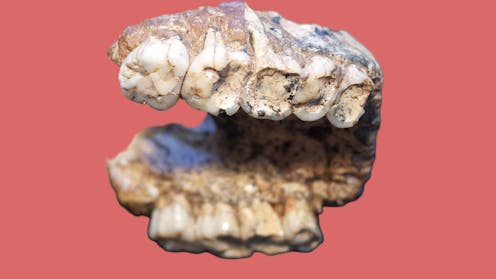
The enamel that forms the outer layer of our teeth might seem like an unlikely place to find clues about evolution. But it tells us more than you’d think about the relationships between our fossil ancestors and relatives.
In our new study, published in the Journal of Human Evolution, we highlight a different aspect of enamel. In fact, we highlight its absence.
Specifically, we show that tiny, shallow pits in fossil teeth may not be signs of malnutrition or disease. Instead, they may carry surprising evolutionary significance.
You might be wondering why this matters. Well, for people like me who try to figure out how humans evolved and how all our ancestors and relatives were related to each other, teeth are very important. And having a new marker to look out for on fossil teeth could give us a new tool to help fit together our family tree.
Uniform, circular and shallow
These pits were first identified in the South African species Paranthropus robustus, a close relative of our own genus Homo. They are highly consistent in shape and size: uniform, circular and shallow.
Initially, we thought the pits might be unique to P. robustus. But our latest research shows this kind of pitting also occurs in other Paranthropus species in eastern Africa. We even found it in some Australopithecus individuals, a genus that may have given rise to both Homo and Paranthropus.
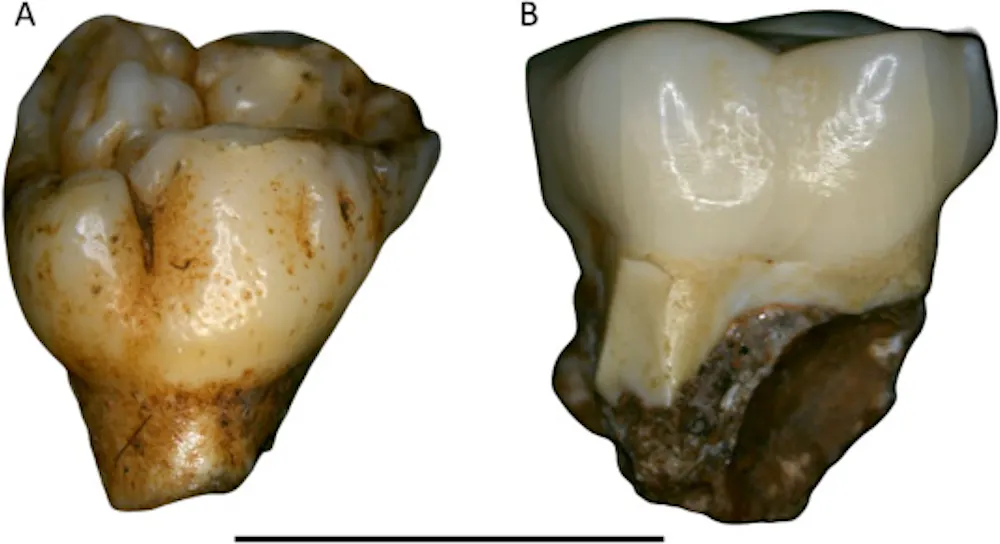
The enamel pits have commonly been assumed to be defects resulting from stresses such as illness or malnutrition during childhood. However, their remarkable consistency across species, time and geography suggests these enamel pits may be something more interesting.
The pitting is subtle, regularly spaced, and often clustered in specific regions of the tooth crown. It appears without any other signs of damage or abnormality.
Two million years of evolution
We looked at fossil teeth from hominins (humans and our closest extinct relatives) from the Omo Valley in Ethiopia, where we can see traces of more than two million years of human evolution, as well as comparisons with sites in southern Africa (Drimolen, Swartkrans and Kromdraai).
The Omo collection includes teeth attributed to Paranthropus, Australopithecus and Homo, the three most recent and well-known hominin genera. This allowed us to track the telltale pitting across different branches of our evolutionary tree.
What we found was unexpected. The uniform pitting appears regularly in both eastern and southern Africa Paranthropus, and also in the earliest eastern African Australopithecus teeth dating back around 3 million years. But among southern Africa Australopithecus and our own genus, Homo, the uniform pitting was notably absent.
A defect … or just a trait?
If the uniform pitting were caused by stress or disease, we might expect it to correlate with tooth size and enamel thickness, and to affect both front and back teeth. But it doesn’t.
What’s more, stress-related defects typically form horizontal bands. They usually affect all teeth developing at the time of the stress, but this is not what we see with this pitting.
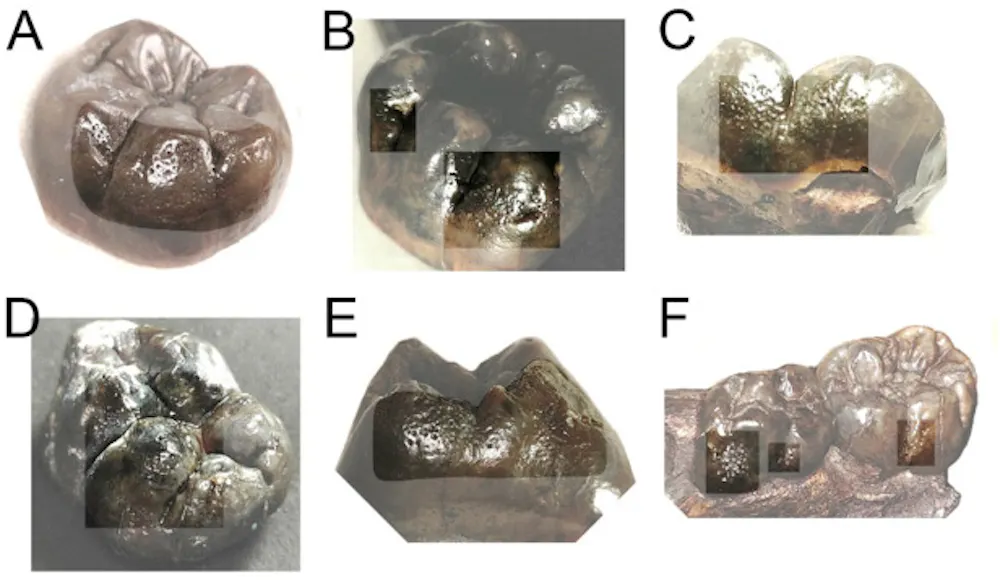
We think this pitting probably has a developmental and genetic origin. It may have emerged as a byproduct of changes in how enamel was formed in these species. It might even have some unknown functional purpose.
In any case, we suggest these uniform, circular pits should be viewed as a trait rather than a defect.
A modern comparison
Further support for the idea of a genetic origin comes from comparisons with a rare condition in humans today called amelogenesis imperfecta, which affects enamel formation.
About one in 1,000 people today have amelogenesis imperfecta. By contrast, the uniform pitting we have seen appears in up to half of Paranthropus individuals.
Although it likely has a genetic basis, we argue the even pitting is too common to be considered a harmful disorder. What’s more, it persisted at similar frequencies for millions of years.
A new evolutionary marker
If this uniform pitting really does have a genetic origin, we may be able to use it to trace evolutionary relationships.
We already use subtle tooth features such as enamel thickness, cusp shape, and wear patterns to help identify species. The uniform pitting may be an additional diagnostic tool.
For example, our findings support the idea that Paranthropus is a “monophyletic group”, meaning all its species descend from a (relatively) recent common ancestor, rather than evolving seperatly from different Australopithecus taxa.
And we did not find this pitting in the southern Africa species Australopithecus africanus, despite a large sample of more than 500 teeth. However, it does appear in the earliest Omo Australopithecus specimens.
So perhaps the pitting could also help pinpoint from where Paranthropus branched off on its own evolutionary path.
An intriguing case
One especially intriguing case is Homo floresiensis, the so-called “hobbit” species from Indonesia. Based on published images, their teeth appear to show similar pitting.
If confirmed, this could suggest an evolutionary history more closely tied to earlier Australopithecus species than to Homo. However, H. floresiensis also shows potential skeletal and dental pathologies, so more research is needed before drawing such conclusions.
More research is also needed to fully understand the processes behind the uniform pitting before it can be used routinely in taxonomic work. But our research shows it is likely a heritable characteristic, one not found in any living primates studied to date, nor in our own genus Homo (rare cases of amelogenesis imperfecta aside).
As such, it offers an exciting new tool for exploring evolutionary relationships among fossil hominins.
Authors: Ian Towle, Research Fellow in Biological Anthropology, Monash University


















